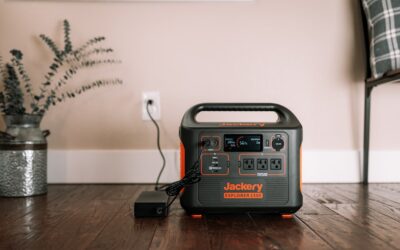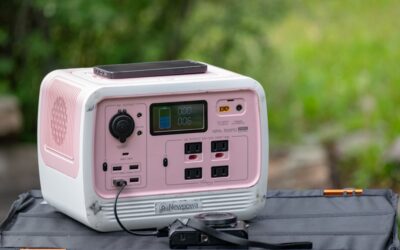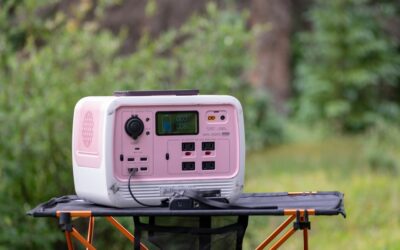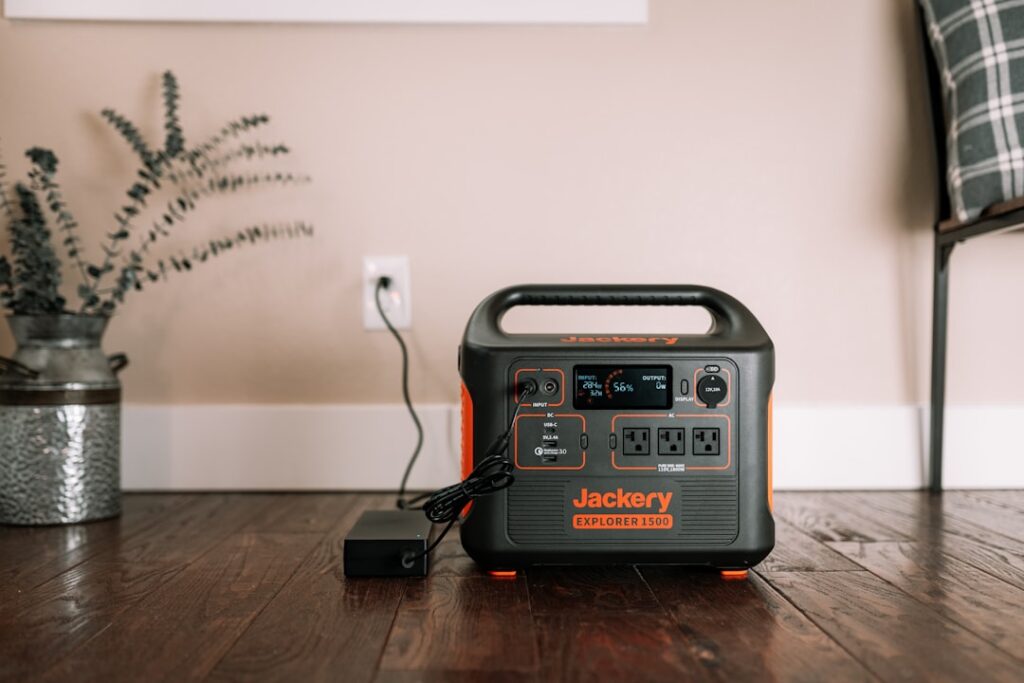
A portable power generator is the difference between riding out a blackout in comfort and emptying a thawing freezer into a cooler at 2 a.m. Sized right, one of these machines keeps your fridge cold, your furnace blower spinning, and your phones charged through a multi-day outage. Choosing a portable power generator comes down to three things: how much wattage you need, what fuel you want to feed it, and how long it has to run between refills. Get those right and everything else falls into place.
Sizing: How Much Wattage You Need
Generators are rated two ways — running watts (the steady draw) and starting watts (the brief surge when a motor kicks on). You size to the starting number because a fridge or well pump can pull two to three times its running wattage for a half-second at startup. Add up what you actually want to power:
- Refrigerator/freezer: 600-800 running watts, ~1,200-2,000 starting
- Furnace blower: 600-800 running, ~1,200-2,300 starting
- Sump pump (1/2 HP): 1,050 running, ~2,150 starting
- Window AC (10,000 BTU): 1,200 running, ~1,800 starting
- Lights, phones, laptop, router: 300-500 running combined
- Well pump (1 HP): 2,000 running, ~4,000 starting
For essentials only — fridge, a few lights, phone charging — a 2,000-watt unit does the job. To add a furnace and a sump pump, step up to 3,500-4,500 watts. If you want to run a well pump or a central AC, you’re in 7,500-10,000 watt territory. Buy about 20% more capacity than your math shows so the generator never runs flat-out; a machine loafing at 60% load lasts longer and burns less fuel.
Inverter vs. Conventional
Two families of portable power generator dominate the market, and the difference matters for sensitive electronics.
Conventional generators run the engine at a fixed 3,600 RPM regardless of load. They’re cheaper per watt, hit higher outputs, and handle heavy tools fine — but their power has more total harmonic distortion (THD), often above 5%, which can glitch laptops, TVs, and modern furnace control boards.
Inverter generators produce raw power, then electronically clean it to a smooth sine wave under 3% THD — safe for anything you’d plug into a wall. They also throttle the engine up and down to match load, so they’re dramatically quieter (often 52-58 decibels versus 70-plus) and sip fuel at partial load. They cost more per watt and top out lower, but for home backup they’re usually the smarter buy.
Fuel Types
What you feed the machine shapes your runtime, storage, and cold-weather reliability:
- Gasoline: Cheapest, available everywhere, but stale gas gums up carburetors after 3-6 months without stabilizer. Most common.
- Propane: Stores indefinitely in tanks, burns clean, easy cold starts. About 10% less power output than gas and you need to keep spare 20-lb tanks on hand.
- Dual-fuel: Runs on either gas or propane with a switch. Best flexibility for outages — worth the small premium.
- Diesel: Rugged and fuel-efficient for long runs, but portable diesel units are heavier and pricier; better suited to job sites and extended off-grid use.
Runtime and Tank Size
Runtime is quoted at a percentage load, usually 25% or 50% — read the fine print. A common 3,500-watt inverter with a 2-gallon tank runs roughly 10-11 hours at 25% load, but only 5-6 hours at half load. Bigger conventional units with 7- to 8-gallon tanks stretch to 10-12 hours at 50% load. For a multi-day outage, propane or dual-fuel wins because you can swap a tank in seconds instead of pouring gasoline in the dark. Plan to refuel at least once a day and keep 5-10 gallons of stabilized fuel (or two spare propane tanks) in reserve.
Price Tiers
Here’s what your money buys in 2026:
- $400-$700: 2,000-2,300 watt inverters for essentials — fridge, lights, phones. Great for camping and light backup.
- $700-$1,200: 3,500-4,500 watt units, often dual-fuel, that add a furnace and sump pump. The sweet spot for most homes.
- $1,200-$2,000: 6,000-8,000 watt machines with electric start and larger tanks; can run a window AC plus essentials.
- $2,000+: 9,000-12,000 watt units, often with a transfer-switch-ready 240V outlet, that approach whole-house coverage.
Don’t forget accessories: a $300-$500 manual transfer switch (installed by an electrician) lets you power hardwired circuits like your furnace safely, and a heavy 10-gauge extension cord runs $40-$80.
Safety: The Rules That Keep You Alive
Carbon monoxide from a portable power generator kills dozens of people every year, and every death is preventable. The rules are non-negotiable:
- Never run it indoors — not in a garage, basement, shed, or crawlspace, even with the door open. CO is invisible and odorless.
- Keep it at least 20 feet from the house with the exhaust pointed away from doors, windows, and vents.
- Buy a unit with a built-in CO shutoff sensor (marketed as CO-Minder, CO-Sense, or similar) and install battery CO alarms inside.
- Never backfeed by plugging the generator into a wall outlet — it can electrocute a lineman and fry your wiring. Use a transfer switch or run appliances off cords directly.
- Let it cool before refueling. Gasoline splashed on a hot engine ignites.
- Keep it dry. Run it under an open, vented canopy in rain — never in an enclosed space to stay dry.
Features Worth Paying For
Beyond raw wattage, a handful of features separate a machine you’ll love from one you’ll fight with:
- Electric start: A push-button or key start beats yanking a recoil cord in the cold. Adds $50 to $150 but worth it on anything over 4,000 watts.
- Built-in CO shutoff: Non-negotiable in my book — the sensor kills the engine if carbon monoxide builds up near the unit.
- Fuel gauge: Sounds trivial until you’re guessing how much runtime is left at midnight.
- Multiple outlet types: Look for standard 120V 20-amp receptacles plus a 30-amp twist-lock (L5-30 or TT-30) to feed a transfer switch.
- Parallel capability: Two smaller inverters linked with a parallel kit give you more power than one, with the flexibility to run just one for light loads.
- Wheel-and-handle kit: A 4,000-watt unit weighs 100-plus pounds. Never-flat wheels earn their keep.
Noise: What the Neighbors Will Hear
Noise is measured in decibels at a set distance, usually 23 feet. A conventional open-frame generator runs 68 to 78 decibels — about as loud as a vacuum cleaner running non-stop, which gets old fast during a multi-day outage and can violate local noise ordinances at night. Inverter models throttle down to 52 to 60 decibels at low load, closer to normal conversation. If you’re in a tight suburban lot, the quieter inverter isn’t a luxury; it’s the difference between neighborly and a knock on the door from code enforcement.
Maintenance and Storage
A generator is only useful if it starts when you need it, and that takes a little upkeep. Change the oil after the first 20-30 hours of break-in, then every 100 hours or annually. Keep a spare air filter and spark plug on the shelf. If you store it with gasoline, add fuel stabilizer and run the engine a few minutes to circulate it, or drain the carburetor entirely — stale gas is the number-one reason a generator won’t start in an emergency. Exercise the machine for 15-20 minutes every three months under a small load. Store it somewhere dry, covered, and out of the weather.
Making the Call
For most homeowners, the smart pick is a 3,500-4,500 watt dual-fuel inverter in the $700-$1,200 range paired with a transfer switch. It’s quiet enough not to enrage the neighbors, clean enough for electronics, flexible on fuel, and powerful enough to carry a fridge, furnace, sump pump, and lights through a two- or three-day outage. Add a couple of CO alarms, stock some stabilized fuel, and run the machine for 20 minutes every few months so it starts on the first pull when the lights actually go out. A portable power generator only earns its keep if it fires up when you need it.