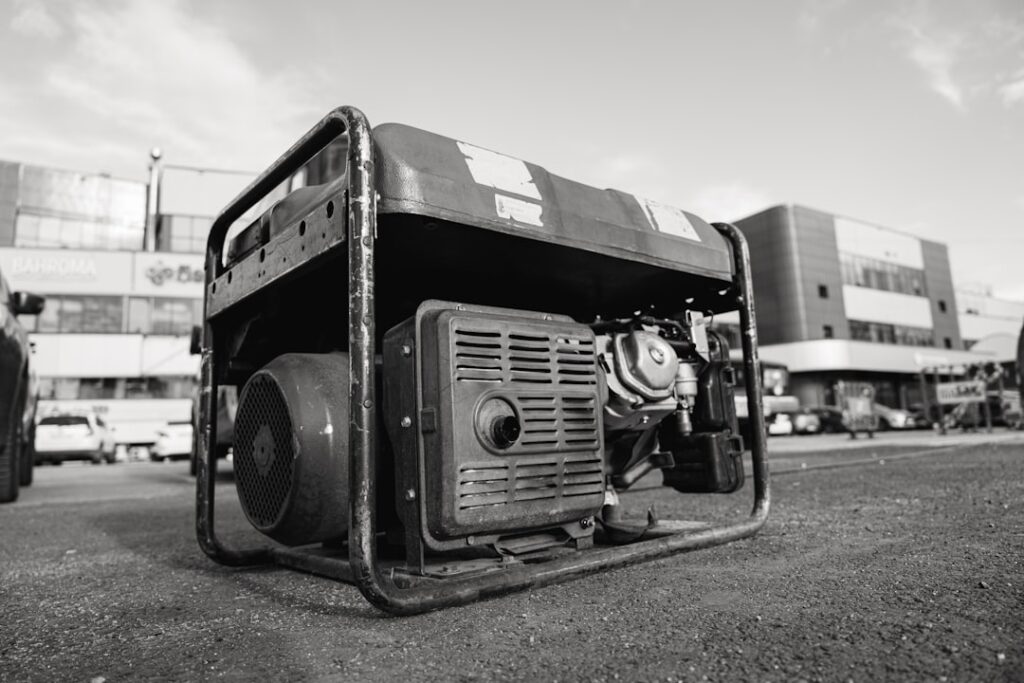
A portable diesel generator is the machine you buy when you need long, reliable runtime and don’t mind trading a little weight and up-front cost for it. Diesel engines run cooler, last longer, and squeeze more hours out of every gallon than gasoline units, which is why they dominate job sites, farms, and off-grid setups. If you’re weighing a portable diesel generator against a gas or propane unit, the decision hinges on how long you plan to run it and how hard you plan to work it.
Why Choose Diesel Over Gas
Diesel engines earn their reputation on three fronts. First, efficiency — a diesel burns roughly 30% less fuel than a comparable gasoline engine at the same load, so a full tank runs far longer. Second, longevity — diesels operate at lower RPM and higher compression, with no spark plugs or carburetor to foul, so they routinely log 10,000-plus hours versus 2,000-3,000 for a gas engine. Third, safety of the fuel itself — diesel is far less volatile than gasoline and won’t ignite from a stray spark, and it stores 12-18 months with a stabilizer versus 3-6 months for gas.
The trade-offs are real: diesel units cost more up front, weigh noticeably more, run louder and rougher, and can be hard to cold-start below 20°F without a glow plug or block heater. Diesel exhaust also carries more soot and particulate than clean-burning propane.
Sizing: Matching Wattage to Your Load
Like any generator, a diesel is rated in running watts (steady output) and starting watts (the surge when a motor spins up). Size to the starting figure. Tally what you plan to run:
- Refrigerator/freezer: 600-800 running watts, ~1,200-2,000 starting
- Furnace blower: 600-800 running, ~1,200-2,300 starting
- Well pump (1 HP): 2,000 running, ~4,000 starting
- Power tools (circular saw, compressor): 1,500-2,400 running, higher on startup
- Central AC (3-ton): 3,500-5,000 running, ~10,000+ starting
For essentials during an outage, a 3,000-4,000 watt diesel covers a fridge, furnace, and lights. Job-site duty or a well pump pushes you to 6,000-8,000 watts. Whole-house coverage with AC lands in the 10,000-15,000 watt range. Size about 20% above your peak so the engine isn’t lugging at full load — and note that diesels actually prefer to run at 50-75% load, where they run cleaner and avoid the wet-stacking (unburned fuel buildup) that plagues under-loaded diesels.
Runtime and Fuel Efficiency
Long runtime is the headline reason to go diesel. A mid-size portable diesel generator around 6,000 watts with a 4- to 5-gallon tank typically runs 10-13 hours at 50% load. Larger units with 7- to 12-gallon tanks stretch past 18-24 hours. Because diesel sips fuel — a 6kW unit burns roughly 0.4-0.5 gallons per hour at half load versus 0.7-0.8 for gas — you refuel far less often. For extended outages or remote work, that means fewer trips to the tank and a machine you can leave running overnight without babysitting.
Price Tiers
Diesel commands a premium over gas at every level. Here’s the 2026 landscape:
- $1,000-$1,800: Small 2,000-4,000 watt portable diesels for essentials and light backup. Fewer models exist at this end — diesel makes less sense for tiny loads.
- $1,800-$3,500: 5,000-7,500 watt units with electric start and larger tanks. The practical range for home backup and light job-site use.
- $3,500-$6,000: 8,000-12,000 watt machines, often on wheeled frames with 240V outlets, built for continuous duty.
- $6,000+: Heavy 12,000-15,000+ watt units approaching whole-house coverage, frequently silenced/enclosed for lower noise.
Budget for extras too: an electrician-installed manual transfer switch ($300-$600) to safely power hardwired circuits, and a block heater ($50-$150) if you live where winters drop below freezing.
Pros and Cons at a Glance
Pros:
- Best-in-class fuel efficiency and long runtime
- Engine longevity of 10,000+ hours
- Fuel stores longer and is less flammable than gasoline
- Handles heavy, continuous loads without strain
Cons:
- Higher purchase price than gas or propane
- Heavier and harder to move
- Louder, with more vibration and exhaust soot
- Cold-start struggles without a block heater; risk of wet-stacking when under-loaded
Safety: Carbon Monoxide and Fuel Handling
Diesel exhaust still contains lethal carbon monoxide, and the same hard rules apply to a portable diesel generator as to any other:
- Never run it indoors — not in a garage, basement, shed, or enclosed porch, even with doors open. CO is odorless and invisible.
- Keep it at least 20 feet from the house with exhaust aimed away from doors, windows, and vents.
- Install battery-powered CO alarms inside your home and check them before any extended run.
- Never backfeed a wall outlet — use a proper transfer switch. Backfeeding can electrocute utility workers and destroy your wiring.
- Let it cool before refueling and keep the fuel area clear of anything hot.
- Shelter it from rain under an open, well-ventilated canopy — never inside an enclosed structure to keep it dry.
Diesel vs. Gas vs. Propane
Choosing a fuel is really choosing a use case. Here’s how a portable diesel generator stacks up against the alternatives:
- Diesel: Best for long runtime, heavy continuous loads, and engine longevity. Higher cost, heavier, louder, cold-start issues.
- Gasoline: Cheapest to buy, fuel available everywhere, lightest. But shorter engine life, fuel goes stale in 3-6 months, and it’s the most flammable.
- Propane: Cleanest burn, stores indefinitely, easy cold starts. About 10% less power and you’re tethered to tank swaps.
The rule of thumb: if you’ll rack up hundreds of hours a year and lean on the machine for real work, diesel’s efficiency and durability pay back. If you fire it up a handful of times a year for outages, a gas or dual-fuel unit is cheaper and lighter with no downside for your usage.
Features Worth Paying For
On a diesel, a few features matter more than on a gas unit:
- Electric start with glow plugs: Essential for cold-weather starting. Skip the pure recoil-start units if you live anywhere with real winter.
- Block heater or built-in preheater: Keeps the engine warm enough to fire below freezing.
- Sound-attenuated enclosure: Diesels are loud; a silenced canopy drops output noise 10-15 decibels.
- Automatic voltage regulation (AVR): Keeps output steady for tools and electronics under changing load.
- Large-capacity tank and fuel gauge: The whole point of diesel is long runs, so a bigger tank multiplies the advantage.
- Wheel kit and lift points: These machines are heavy; you’ll want to move it without a hernia.
Maintenance and Longevity
Diesels reward basic care with astonishing lifespans. Change the oil every 100-250 hours depending on the manual, and keep the fuel clean — diesel is sensitive to water and dirt, so drain the water separator regularly and replace fuel filters on schedule. The biggest rookie mistake is chronic under-loading, which causes wet-stacking: unburned fuel and soot glaze the exhaust and cylinders, robbing power and fouling the engine. Run a diesel at 50-75% load and, if it’s been loafing, load it hard for 30 minutes periodically to burn off deposits. Store with a full tank and stabilizer to prevent condensation, and exercise the machine monthly. Treated well, a quality diesel outlasts two or three gas generators, which is a big part of why the higher sticker price makes sense for heavy users.
Is a Diesel Right for You?
Choose a portable diesel generator if you need to run heavy loads for long stretches — a farm, a remote cabin, a job site, or a home in an area prone to multi-day outages where refueling is a hassle. The higher up-front cost pays back in fuel savings and engine life if you actually rack up hours. If you only need occasional essentials backup a few times a year, a dual-fuel gas/propane inverter is cheaper, lighter, and quieter. But for anyone who runs a generator hard and often, diesel’s efficiency and durability make it the machine that keeps earning its keep for decades.