Ask ten landscapers whether to put fabric under gravel and you will get a heated debate. The honest answer is that it depends entirely on which fabric you use and what you expect it to do. Understanding the real pros and cons of landscape fabric under gravel is the difference between a path that stays crisp for fifteen years and one that turns into a weedy, sunken mess in three. The cheap perforated weed barrier sold in the garden aisle is the source of most horror stories; a proper woven geotextile is a genuine engineering material. They are not the same product, and that distinction drives everything below.
Here is a straight look at what the fabric actually does well, where it fails, and how to decide whether your project needs it at all.
- What the Fabric Is Supposed to Do
- The Pros of Landscape Fabric Under Gravel
- The Cons You Need to Know
- Cheap Weed Barrier vs. a Real Geotextile
- When Fabric Under Gravel Makes Sense
- When to Skip It
- Better Alternatives and Companion Steps
- How to Install Fabric Under Gravel the Right Way
- Maintenance That Keeps Gravel Weed-Free
What the Fabric Is Supposed to Do
Under gravel, fabric has two potential jobs. The first is separation: keeping the gravel from working down into soft soil below, which prevents the stone from disappearing and the surface from rutting. The second is weed suppression: blocking weed seeds already in the soil from germinating up through the stone. Those are different functions, and a lot of confusion comes from expecting one product to nail both forever.
Separation is where fabric earns its keep. Weed suppression is where it eventually disappoints, because the failure mode has nothing to do with weeds coming up from below.
The Pros of Landscape Fabric Under Gravel
Used correctly, fabric delivers real benefits, especially the heavier woven and non-woven geotextiles:
- Separation that lasts: the fabric keeps gravel and native soil from mixing, so your 4 inches of stone stays 4 inches of stone instead of sinking into clay.
- A more stable base: for footpaths, patios, and light driveways, a woven geotextile spreads load and reduces rutting over soft ground.
- Early weed control: for the first few years the fabric blocks weed seeds already in the soil from sprouting up into the gravel.
- Less gravel needed over time: because stone does not migrate into the subsoil, you top up less often.
- Cleaner excavation later: when you do dig, the fabric gives a clean line between stone and soil.
The Cons You Need to Know
The drawbacks are why so many pros are skeptical, and they are worth taking seriously:
- Weeds return from the top: this is the big one. Over a few years, dust, leaves, and organic debris settle into the gravel and rot into a thin layer of soil on top of the fabric. Weed seeds land there and root in the gravel itself, so the fabric does nothing to stop them.
- Clogging and poor drainage: cheap non-woven and perforated barriers clog with silt and fines, which can slow drainage and leave puddles or a boggy base.
- A nightmare to remove: once gravel is on top and roots have grown through, pulling the fabric out is a brutal job that usually shreds it into pieces.
- Gravel still migrates sideways: fabric does nothing to stop loose stone from spreading past the edges without proper edging.
- Roots punch through: aggressive perennial and tree roots eventually breach lightweight fabric anyway.
Cheap Weed Barrier vs. a Real Geotextile
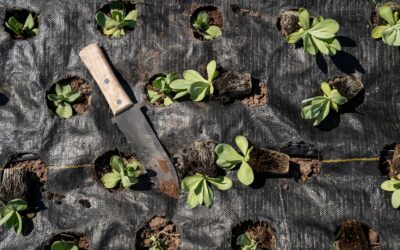
Most of the failures blamed on fabric are really failures of the wrong fabric. The thin, black, spun perforated weed barrier is designed for flower beds, not load-bearing gravel. Under stone it clogs, tears, and disappoints within a few years.
A woven geotextile, rated by pounds of grab tensile strength and sold in weights like 6 to 8 ounces per square yard, is a different animal. It resists puncture, allows water through, and holds up under compaction. Non-woven needle-punched geotextiles, prized for high water flow, are the choice when drainage is the priority, such as under a French drain. If you decide to use fabric under gravel, spend the money on a true woven geotextile and skip the garden-aisle roll entirely.
When Fabric Under Gravel Makes Sense
The strongest case for fabric is separation over soft ground. If you are building a gravel path, patio, or light driveway on clay, silt, or otherwise unstable soil, a woven geotextile between the subgrade and your crushed stone base is worth every penny. It keeps the base intact and dramatically reduces rutting and pumping.
Fabric also makes sense under decorative gravel in low-traffic areas where you accept that its weed control is a first-few-years benefit, not a permanent one. In both cases, the fabric is doing structural separation, which is a job it can hold for decades.
When to Skip It
Skip fabric under gravel when you have well-drained, stable soil and a properly built base, because good compacted crushed stone provides most of the separation on its own. Skip the cheap weed barrier always; it creates more problems than it solves. And reconsider fabric entirely for planting areas where you will disturb the gravel often, since it turns routine changes into a fight.
There is also a legitimate school of thought that on a well-compacted crushed-stone base with proper edging, you can skip fabric and simply maintain the surface, because weeds that root in top debris pull easily and the base stays put on its own.
Better Alternatives and Companion Steps
Fabric is only one tool. To keep a gravel area clean and stable for the long haul, combine strategies rather than relying on a sheet to do everything:
- Build a proper base: excavate 4 to 6 inches, add and compact crushed stone (such as 3/4-inch minus) before the decorative gravel. A solid base does most of the separation work.
- Install edging: steel, aluminum, or paver edging stops gravel from migrating and gives a clean line no fabric provides.
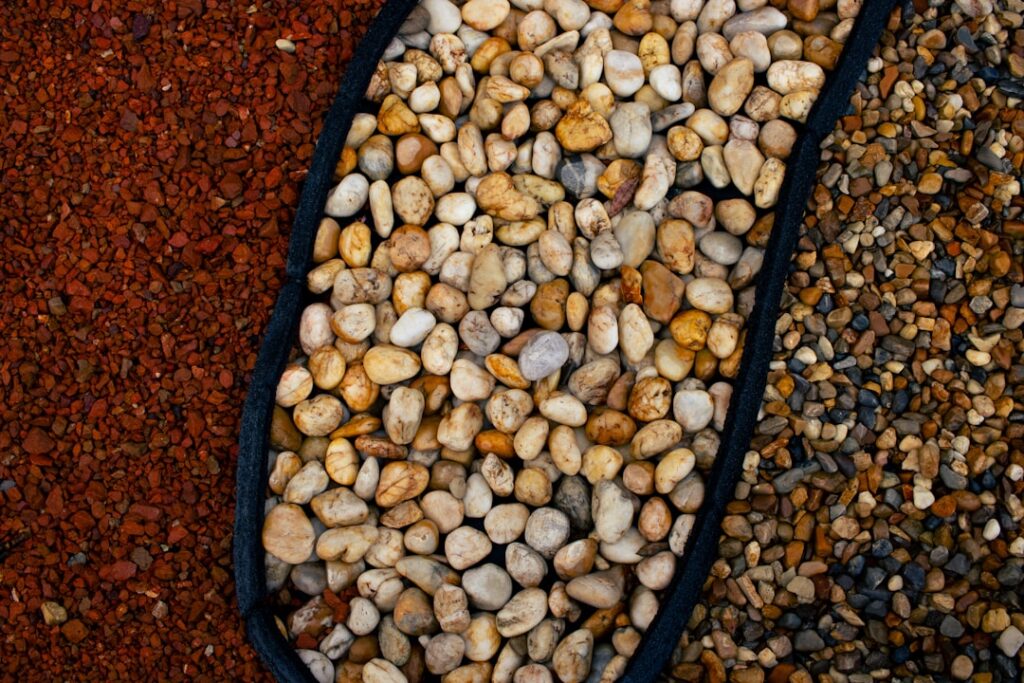
- Choose angular gravel: crushed angular stone locks together and stays put far better than rounded pea gravel.
- Maintain the surface: blow or rake out leaf litter each fall so the organic layer that feeds top-rooting weeds never forms.
Weigh the pros and cons of landscape fabric under gravel against your specific soil, traffic, and tolerance for maintenance. For structural separation on soft ground, a heavy woven geotextile is the right call. For weed-free gravel forever, no fabric delivers that on its own, so plan on a good base, solid edging, and a little seasonal upkeep.
How to Install Fabric Under Gravel the Right Way
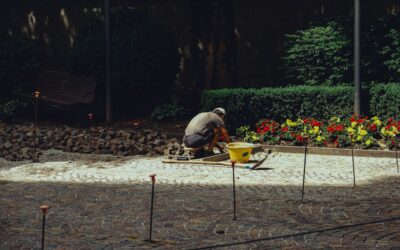
If you decide fabric belongs in your project, installation quality determines whether it lasts. Start by excavating to the depth your project needs, typically 4 inches for a path and 6 to 8 inches for a light driveway, and grade the subsoil smooth so there are no low spots to trap water. Compact the subgrade with a plate compactor before anything goes down; fabric laid over loose soil simply sinks with the gravel.
Roll the woven geotextile out flat across the compacted base, overlapping seams by at least 12 to 18 inches so no gap can open as the stone shifts. Pin the fabric with 6-inch landscape staples every foot or two, then add your crushed-stone base and compact it in 2- to 3-inch lifts. Cap with decorative gravel. Run the fabric a few inches up any edging so soil cannot wash in from the sides. Cutting corners on overlap and compaction is why so many gravel areas fail early.
Maintenance That Keeps Gravel Weed-Free
No matter what sits beneath, the top of a gravel area collects the debris that feeds weeds, so a little upkeep goes a long way. Blow or rake leaves and organic litter off the gravel each fall before it decomposes into a seedbed. Pull the occasional top-rooted weed while it is small, when it lifts easily because there is no soil for it to grip. A quick pass with a flame weeder or a spot treatment of a non-selective herbicide handles stubborn seedlings in cracks and along edges.
Top up the gravel every few years to replace what compacts or scatters, and reset any edging that frost has heaved. Do these small things and a gravel path stays crisp for a decade or more, with or without fabric underneath. Neglect them and even the best geotextile cannot stop the thin layer of organic soil that eventually forms on top from sprouting weeds.