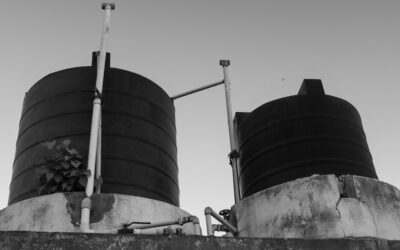
An inch of rain on a 1,500 square foot roof yields roughly 900 gallons of water. A pair of barrels fills in minutes and the rest spills on the ground. That is why serious gardeners and rural homeowners eventually move up to a rainwater collection cistern, a tank of 1,000 gallons or more that stores enough water to carry a yard, garden or livestock through dry weeks.
The main decision is where the tank goes. Above-ground cisterns cost less, are easy to inspect and need only a level pad. Underground tanks stay out of sight, keep water cool and dark, and resist freezing, but they require excavation, utility locating and a tank rated for burial. Either way, you will need a filtered inlet, a properly routed overflow, a pump with float protection and a clear understanding of your local harvesting rules.
- How a Rainwater Collection Cistern System Works
- Tank Types and Materials
- Underground vs Above-Ground
- Site Prep, Pads and Excavation
- Overflow, Inlet and Pump Setup
- Water Quality and Local Rules
- Safety: Never Enter a Cistern
- Troubleshooting and Typical Costs
- When to Call a Licensed Professional
- Frequently Asked Questions
One point up front: harvested rainwater is not safe to drink without proper treatment, and many areas regulate potable use. Plan your system for irrigation, washing and other non-potable uses unless local rules and a qualified designer say otherwise.
How a Rainwater Collection Cistern System Works
Rain runs off the roof into gutters and downspouts, passes through a leaf screen and a first-flush diverter that dumps the dirtiest initial runoff, then enters the cistern through a calmed inlet that keeps settled sediment undisturbed. An overflow pipe carries excess water away when the tank is full. A pump, either submersible or external, draws water from just below the surface using a floating intake, and delivers it to hoses, drip lines or a dedicated non-potable plumbing system.
Sizing starts with two numbers: catchment area and demand. Multiply roof square footage by inches of rain by 0.62 to estimate gallons collected. Then estimate how many gallons per week the garden or other uses need and how many dry weeks you want to bridge. Many homes land between 1,500 and 5,000 gallons.
Tank Types and Materials
- Polyethylene: lightweight, affordable and common in 1,000 to 3,000 gallon sizes. Above-ground poly tanks should be opaque and UV-stabilized. Only tanks specifically rated for burial should go underground, since standard tanks can collapse under soil pressure.
- Fiberglass: strong, corrosion resistant and widely used as an underground water harvesting tank. Higher cost, but long life.
- Concrete: very durable, keeps water cool and can slightly neutralize acidic rain. Heavy, so it usually needs a crane or excavator and a solid base.
- Corrugated steel with a liner: an attractive above-ground option for large volumes. The liner must be rated for water storage.
- Modular underground crates: wrapped in a liner and buried in a shallow wide pit. Good where depth is limited, but need careful installation.
Choose a tank rated for water storage, sealed against light and insects, with a lockable or bolted access lid.
Underground vs Above-Ground
| Factor | Above-ground | Underground |
|---|---|---|
| Installed cost | Lower | Higher (excavation, burial tank) |
| Freeze protection | Needs draining or insulation | Good below frost depth |
| Water quality | Can warm in sun | Cool and dark |
| Yard space | Takes visible space | Hidden, lawn over top |
| Maintenance access | Easy to inspect | Through a riser lid |
A rainwater harvesting cistern above ground is the practical choice for most suburban yards. Go underground when space, looks, climate or very large volumes justify the cost.
Site Prep, Pads and Excavation
Water weighs about 8.3 pounds per gallon, so a full 2,500 gallon tank weighs more than 20,000 pounds. The foundation matters.
Above-ground pad
- Pick a level spot near downspouts, away from septic fields and at least a few feet from the house foundation.
- Remove topsoil and organic material.
- Build a pad of compacted crushed stone 4 to 6 inches deep, or pour a reinforced concrete slab, at least a foot larger than the tank in every direction.
- Check level carefully. A tank on an uneven pad can stress seams or tip.
- In high wind areas, anchor tall tanks as the maker directs, especially when empty.
Underground installation
- Call 811 and wait for buried utilities to be marked before any digging.
- Check soil and groundwater level. High water tables can float an empty tank out of the ground unless it is anchored.
- Excavate to the tank maker’s depth and width specs with a sand or gravel bed.
- Set the tank with equipment, partly fill it with water as you backfill to equalize pressure, and backfill in compacted lifts.
- Add a riser so the access lid sits above grade, and keep vehicles off the area unless the tank is traffic rated.
Excavations deeper than about 5 feet can cave in without warning. Do not enter an unshored trench, and hire an excavation contractor for deep or large tanks.
Overflow, Inlet and Pump Setup
The overflow must be at least as large as the inlet pipe and route water to a safe place such as a rain garden, dry well or swale well away from foundations and neighboring properties. Screen the overflow outlet against insects and animals. Some systems connect the overflow to the storm drain, but that usually requires approval.
For pumping, a submersible cistern pump with a floating intake draws clean water from just below the surface. A float switch or dry-run protection shuts it off before the tank runs dry. A pressure tank or demand controller reduces cycling. Any cross connection to the house plumbing requires backflow protection and clearly labeled non-potable lines, and that work belongs to a licensed plumber.
Electrical safety
Pumps sit in or near water, so the power supply must be GFCI protected and installed outdoors in weather-rated boxes. A new outdoor circuit or outlet for the pump should be installed by a licensed electrician. Before servicing a pump, turn off the breaker and confirm power is off with a non-contact voltage tester. Never pull a submersible pump by its power cord, and never test a pump that is connected to a live circuit while it is in the tank.
Water Quality and Local Rules
Roof runoff picks up bird droppings, dust, pollen and material from roofing. Screening, first flush and a dark sealed tank keep stored water usable for gardens. Drinking, cooking or bathing with it requires a properly designed treatment system with filtration and disinfection, and many jurisdictions regulate or restrict potable rainwater use. Check state and local rules too. Some places limit the volume you can collect, require permits for buried tanks, or set rules for indoor non-potable use such as toilet flushing.
Safety: Never Enter a Cistern
A cistern is a confined space. Air inside can be low in oxygen or hold harmful gases, and people have died climbing in to clean or retrieve a fallen pump. Never enter a tank, and never lean in or put your head through the opening. Keep lids locked or bolted so children and pets cannot fall in. For cleaning or interior repairs, hire a professional with confined-space equipment and training.
Troubleshooting and Typical Costs
- Water smells: organic debris is decaying. Improve the leaf screen and first flush, and have sludge pumped out.
- Pump short-cycles: check the pressure tank charge and look for leaks.
- Tank fills slowly: clogged gutters or screens, or downspouts not all connected.
- Overflow erodes the yard: extend it and add a stone splash area or rain garden.
As a general guide, an above-ground 1,500 to 3,000 gallon system with pad, filters and pump often runs in a range of $2,000 to $8,000. Buried systems commonly cost $8,000 to $25,000 or more once excavation, a burial-rated tank, risers and electrical are included.
When to Call a Licensed Professional
Bring in a licensed electrician for pump circuits and GFCI protection, a licensed plumber for any connection to household plumbing or backflow devices, and an excavation contractor for buried tanks. Ask the building department about permits for underground tanks, overflow connections and any indoor use. A rainwater harvesting designer can help size the system and confirm treatment needs if you are considering potable use.
Frequently Asked Questions
How big should a rainwater collection cistern be?
Most homes use 1,500 to 5,000 gallons. Size it from roof area, local rainfall and how many dry weeks of water you need to cover.
Can you drink water from a cistern?
Not without proper treatment such as filtration and disinfection, and many areas regulate potable use. Plan for irrigation and other non-potable uses.
Is an underground cistern better than an above-ground tank?
Underground tanks stay cool, hidden and freeze resistant but cost more. Above-ground tanks are cheaper and easier to inspect.
What kind of pump does a cistern need?
A submersible pump with a floating intake and dry-run protection is common. It must be on a GFCI-protected circuit installed by a licensed electrician.
Do I need a permit for a rainwater cistern?
Many areas require permits for buried tanks, overflow connections or indoor non-potable use, and some regulate collection volumes. Check locally first.