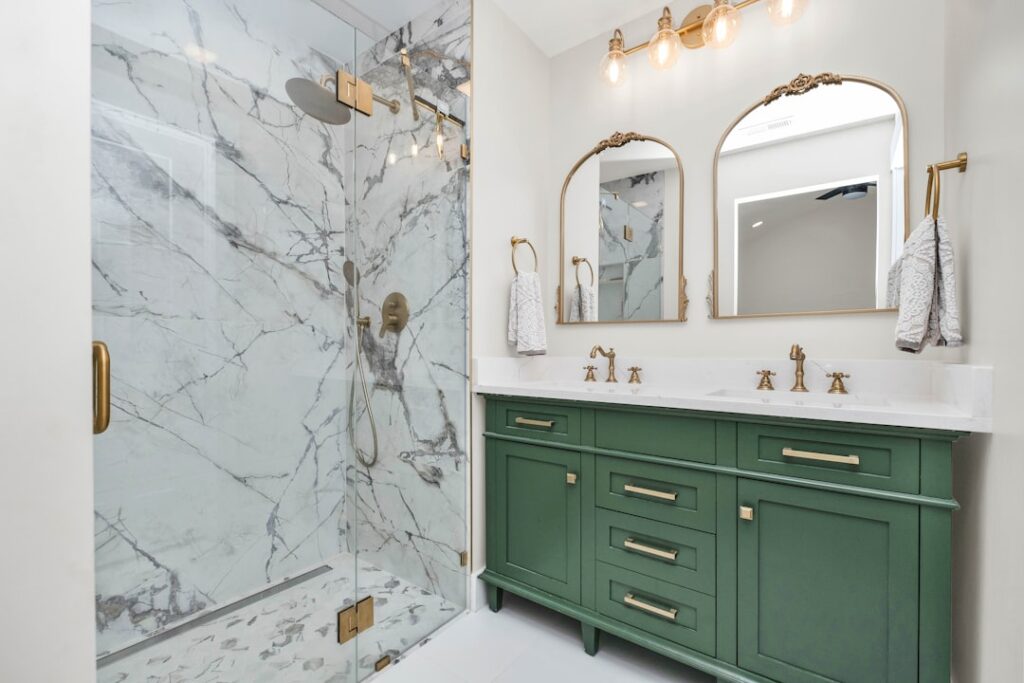
The hotel-style overhead spray that homeowners now expect in any midrange remodel goes by a few names, but the most common search term is rainwater shower head, and the category is far more nuanced than the marketing photos suggest. A 12-inch ceiling-mounted rain head that looks stunning in a Pinterest photo can produce a tepid, low-pressure trickle in a real bathroom with 45 psi water pressure and a long supply run. Choosing well requires matching the head to the plumbing, the ceiling height, and the bathroom layout, not just to the design aesthetic. Here is what to know before you buy and install one.
Part of our Bathroom Remodeling & Flooring guide — explore the full guide →
What a Rainwater Shower Head Actually Is
The category covers any oversize, downward-facing shower head designed to deliver an even, gentle, large-area spray meant to mimic falling rain. Sizes range from 8 inches to 24 inches in diameter, with 10 to 12 inches being the residential sweet spot. Common shapes are round, square, and rectangular slim profiles for narrow walk-in showers.
The two main mount types are ceiling-mounted (water comes straight down) and wall-mounted on an extended arm (water angles 5 to 15 degrees off vertical). Ceiling mounts give a true rain experience but require pulling water lines up through the ceiling, which is significantly more work in a remodel. Wall-arm mounts are the more practical choice in roughly 70 percent of residential installations.
Pressure and Flow: The Numbers That Decide Comfort
Federal regulation caps US shower heads at 2.5 GPM at 80 psi. California and Colorado are stricter at 1.8 GPM. Within those limits, manufacturers split the flow across different numbers of spray nozzles. A 12-inch rain head with 200 small nozzles spreads 2.5 GPM across a wide area, which means each individual stream has less force than a focused 5-inch traditional head with 60 nozzles.
This is why a rainwater shower head needs adequate water pressure to feel right. Below 40 psi at the head, the spray feels limp. The sweet spot is 50 to 65 psi delivered at the fixture, which usually means measuring static pressure at the hose bib outside, then accounting for pressure drop through 3/4-inch and 1/2-inch supply runs.
Pros of Adding a Rain Head
- Spa-like experience: Larger spray coverage produces a more immersive feel than a focused traditional head.
- Resale appeal: Real estate listings showing rain head installations get more click-throughs in midrange and upper-tier markets.
- Coverage for tall users: Ceiling-mounted heads handle anyone over 6 feet without crouching.
- Customizable diverters: Most installs pair a rain head with a hand-held shower wand for practical washing.
- Material variety: Brushed nickel, matte black, polished chrome, and brass finishes all available across price points.
Cons and Practical Limits
Three downsides come up consistently. First, water temperature loss. Water leaves a ceiling-mounted head colder than a traditional head because it travels farther through air before reaching the user, particularly in tall bathrooms with 9 to 10 foot ceilings. Setting the shower 2 to 4 degrees warmer than usual is the standard fix.
Second, pressure inconsistency. Rain heads amplify any pressure deficit in the home plumbing. If you have ever felt the shower drop when someone flushes a toilet, that issue gets worse with a rain head. A pressure-balancing or thermostatic shower valve is essentially mandatory.
Third, splash pattern. Wall-arm mounts at full extension can throw water onto walls, glass, and bathroom doors that smaller heads do not reach. Plan glass enclosure dimensions or curtain coverage with that wider spray pattern in mind.
Top Brands and What They Cost
- Moen, Delta, Pfister: Mainstream pricing at $80 to $300 for a 10 to 12 inch rain head with 5 to 10 year warranty.
- Kohler, Hansgrohe Croma: Mid-premium tier at $250 to $600, better build quality and finish options.
- Grohe Rainshower, Hansgrohe Raindance: Premium at $400 to $1,200, with multi-spray modes and air-injection technology that improves pressure feel.
- Brizo, Kallista, Watermark: Luxury at $800 to $2,500, designer finishes, custom sizes, and architectural ceiling integration.
- Budget brands (Speakman entry, generic Amazon): $40 to $90, suitable for guest baths but expect shorter lifespan and finish wear within 3 to 5 years.
Installation Realities
A wall-arm rain head is generally a one-hour install for a competent plumber, costing $100 to $250 in labor on top of the fixture. A ceiling-mounted rain head requires opening the ceiling, running new water supply lines through joists, installing blocking, and patching, which lands at $400 to $1,200 in plumbing labor plus $200 to $500 for drywall and paint repair on top of the fixture cost.
The supply line size also matters. Half-inch copper feeds a 2.5 GPM head adequately, but a 3/4-inch line at the wall reduced to 1/2-inch only at the fixture produces noticeably better flow. If walls are open during a remodel, ask the plumber to run 3/4-inch as far as practical.
Buying Considerations Before You Order
Five questions should drive the purchase. What is your home’s static water pressure? (Test with a $12 hose-bib gauge.) What is your ceiling height in the shower? (Below 8 feet, a wall arm is usually better.) Do you have a thermostatic or pressure-balancing valve already? (If not, budget $300 to $700 to add one.) Does local code require a water-saving 1.8 GPM cap? (Many west coast jurisdictions do.) And does the head’s design pair with the rest of the bathroom’s fixture finishes? Mixing brushed nickel and matte black across a single bath looks deliberate when planned, sloppy when accidental.
Maintenance and Long-Term Care
A rainwater shower head is more vulnerable to mineral buildup than a small focused head because of its larger nozzle count. In hard-water regions (most of the southwestern US, Texas, and Florida), expect to clean the spray face every 3 to 6 months by soaking it in a 50/50 white vinegar and water solution for 30 minutes, then rinsing thoroughly. Many premium heads from Hansgrohe and Grohe include silicone nub nozzles that wipe clean by hand without disassembly, which is one of the quiet reasons their warranties run longer than budget brands. A whole-house water softener also extends fixture life dramatically. Replace the head’s flow restrictor only if local code allows; otherwise, address pressure issues at the valve, not the fixture.