Linoleum got buried under a vinyl rebrand in the 1970s, then revived as a sustainable material in the early 2000s once buyers learned the original product is made from linseed oil, pine rosin, cork dust, wood flour, and limestone on a jute backing. Red is the color where the material shows its history best: from Mid-Century Modern kitchens to 1940s diners to contemporary schools. Red linoleum flooring is back as a design choice, and the catalog is wider than most homeowners expect.
- What Real Linoleum Actually Is
- Brand Options in Red
- Cost Tiers and Install Pricing
- Red Shade Selection
- Where Red Linoleum Belongs
- Installation Notes
- Performance Numbers
- Maintenance Routine
- Drawbacks to Know Before You Buy
- Sustainability Profile
- Linoleum Versus Sheet Vinyl: The Real Difference
- Is Red Linoleum Right for You?
What Real Linoleum Actually Is
Linoleum is not vinyl. The two share visual format (sheet or tile) but nothing else chemically. Linoleum is a biopolymer floor where linseed oil oxidizes over months to form a tough natural polymer. The color goes all the way through the wear layer because pigment is mixed into the doughy raw material before calendering. This means a worn linoleum floor does not lose its color, unlike a vinyl floor where the print layer wears through.
Brand Options in Red
Forbo Marmoleum is the dominant brand globally. Their reds include Marmoleum Real 3127 Bleeckerstreet, Marble 3625 Rosato, and Concrete 3741 Lipstick. Sheet pricing runs $5.50 to $8.00 per sq ft material only, click panels run $6.50 to $9.50. Armstrong Linoleum (Armstrong Flooring’s commercial line) carries similar reds at slightly lower prices in the $5.00 to $7.00 range. Tarkett Veneto and Domo Eternity round out the major brand selection, mostly aimed at commercial designers.
Cost Tiers and Install Pricing
- $5.50-$7.00 per sq ft installed: builder-grade sheet linoleum, glue-down, no decorative cuts.
- $7.00-$10.00: premium sheet with custom inlay or border, heat-welded seams.
- $9.00-$13.00: Marmoleum click panels over a 5 mm HDF substrate, floating install.
- $14.00-$22.00: hand-cut inlay or marquetry patterns by a specialist installer.
Material cost is only one piece. The install labor for sheet linoleum is roughly 35-45% higher than vinyl because the material is stiffer to work and the seams require more careful preparation.
Red Shade Selection
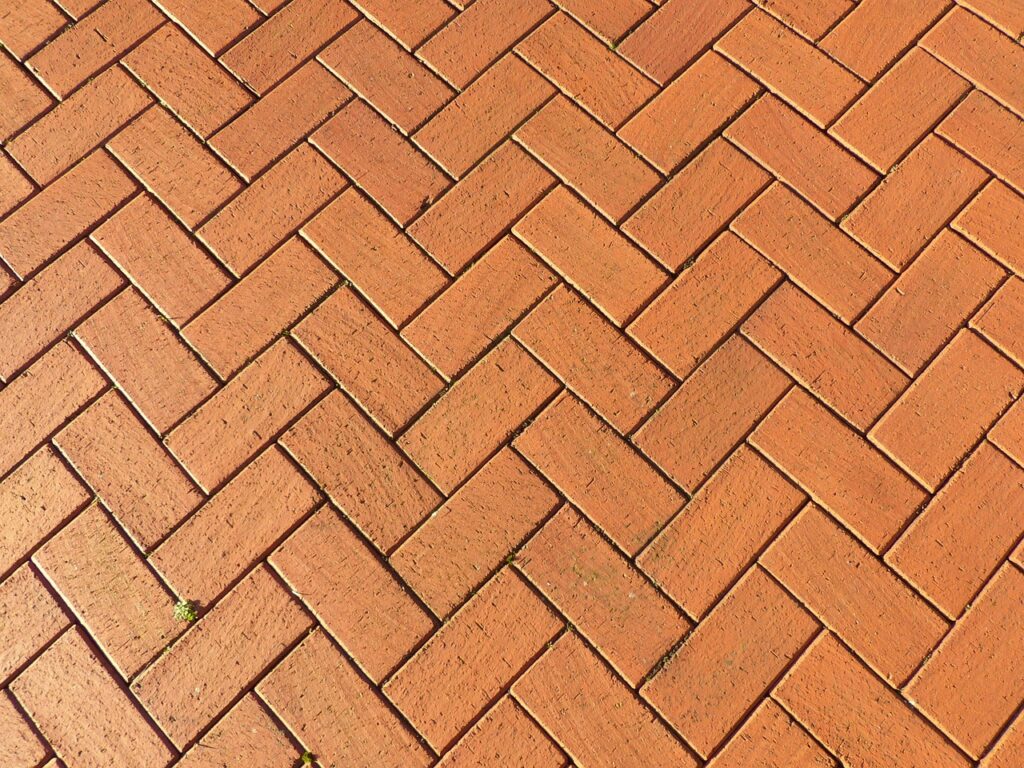
Three reds dominate this category. Tomato red leans warm orange, photographs cheerful, pairs with white cabinets, and reads 1950s diner. Cherry red leans cool, almost pink in low light, and works in retro kitchens or feature laundry rooms. Brick red is the muted oxide tone, pairs with butter yellow walls, and reads Frank Lloyd Wright Usonian. Always pull a 12×12 inch sample, lay it in the actual room, and evaluate against trim and cabinet colors before ordering.
Where Red Linoleum Belongs
Vintage and Mid-Century Modern kitchens, period laundry rooms, retro diners and ice cream shops, school cafeterias, art studios, and feature mudrooms. The strong color is too dominant for most living rooms, but a 60 sq ft pantry or powder room becomes the photographed surface of the house. Designers often use red linoleum as a contrast field with white subway tile and stainless steel.
Installation Notes
- Acclimate rolls 48-72 hours flat (not standing) in the installation space.
- Verify subfloor flatness to 3/16 inch over 10 ft and moisture under 75% RH per ASTM F2170.
- Apply linoleum-specific adhesive (Forbo L885 or Sustain 1195) with a 1/16 x 1/16 V-notch trowel.
- Lay sheet, immediately roll with 100 lb roller in both directions.
- Heat-weld seams at 24-48 hours using Forbo welding rod and a 750°F gun, then plane flush with a Mozart trimmer.
DIY installation is possible for click panels but sheet linoleum should be left to a certified installer. Bad seams ruin the look and undercut the moisture seal.
Performance Numbers
Marmoleum sheet carries a 20-year manufacturer warranty. Real-world lifespan is 30 to 40 years with annual maintenance. The surface resists abrasion at over 200,000 cycles on EN 660 testing. DCOF wet is 0.55 with the Topshield 2 finish, well above the 0.42 threshold. VOC emissions test under 60 µg/m³ at 14 days per CDPH Section 01350, qualifying for LEED v4 IEQ credit. Antimicrobial performance against MRSA and E. coli is intrinsic to the oxidized linseed oil chemistry, not a topical treatment.
Maintenance Routine
Sweep or microfiber dust mop daily. Damp mop weekly with a pH-neutral cleaner like Forbo Monel or 1:64 Spartan Damp Mop. Burnish the Topshield 2 finish quarterly with a 1500 rpm machine to restore sheen. Avoid solvent-based cleaners, citrus oils, and acidic chemistry; these strip the oxidized oil layer. Spot-recoat high-traffic zones every 5-7 years with a single Forbo Monel finish application.
Drawbacks to Know Before You Buy
Linoleum yellows under direct UV until the linseed oil cures fully (3-6 months from install). This is normal and the color stabilizes once oxidation completes. The surface dents under sharp point loads more than vinyl: stiletto heels and dropped knives leave marks. Linoleum hates standing water for more than 12 hours; a slow refrigerator leak can curl seams within a week. Spec heat-welded seams and inspect appliances quarterly.
Sustainability Profile
Real linoleum is 97% naturally derived, biodegradable at end of life, and Cradle to Cradle Bronze certified. Forbo Marmoleum’s manufacturing in the Netherlands runs on renewable electricity. For LEED v4, Marmoleum delivers points across IEQ Low-Emitting Materials and MR Building Product Disclosure. This is one of the few floors where the environmental claims survive scrutiny.
Linoleum Versus Sheet Vinyl: The Real Difference
Most homeowners use the terms interchangeably and they should not. Sheet vinyl is petroleum-based PVC with a printed decor layer and a wear-layer coating. Linoleum is biopolymer with color throughout the entire thickness. Vinyl lasts 10-15 years before the print layer fails. Linoleum lasts 30-40 years and gains depth as the linseed oil cures. Vinyl off-gases phthalates for the first year. Linoleum off-gases a vegetal linseed scent for the first 90 days then nothing. Vinyl costs less upfront, linoleum costs less per year of service over a 30-year hold. The two products are not equivalent despite identical install methods.
Is Red Linoleum Right for You?
If the design intent is vintage charm, sustainable materials, and a floor that lasts 30+ years, red linoleum is one of the few products that delivers all three. For minimalist contemporary kitchens, the color is too active. For period homes, school renovations, and retro restaurants, nothing else captures the same feeling.
Prefer to explore on your own?
See how new flooring looks in your actual room in seconds — free, no signup.
Try the free Floor Studio →