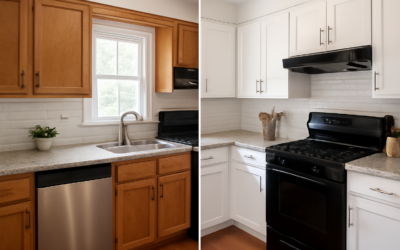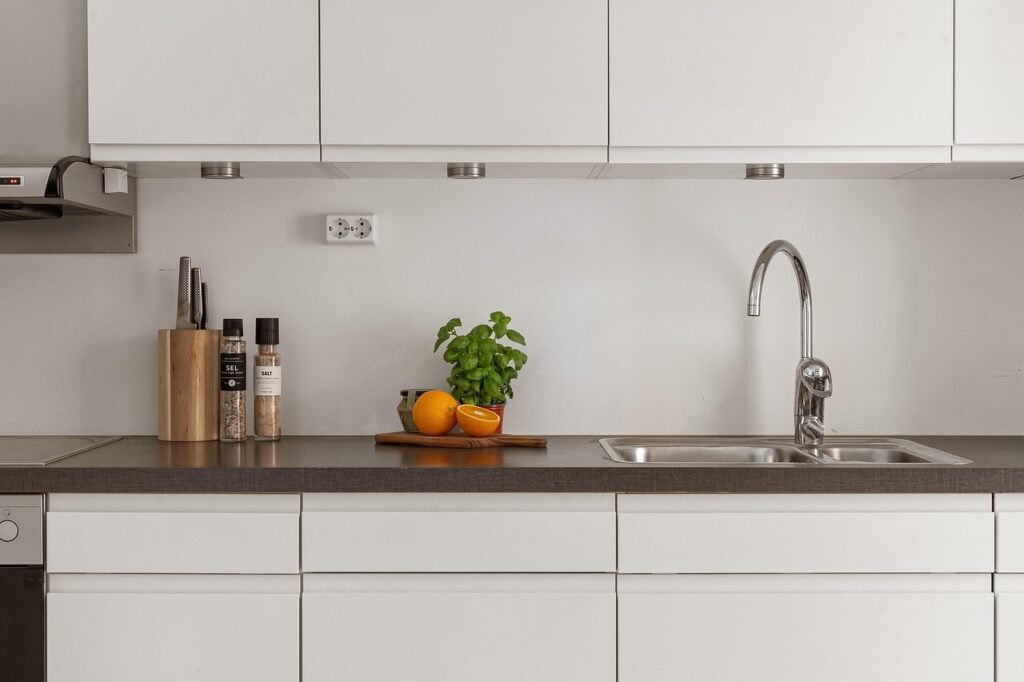
A full cabinet replacement can swallow $12,000 to $30,000 of a kitchen budget, yet the cabinet boxes themselves are often perfectly sound. When you reface kitchen cabinet doors, you keep those solid boxes and update only the parts you see, cutting the cost by half or more while delivering a dramatically new look. Refacing has become the go-to move for homeowners who want a modern kitchen without the demolition, the dumpster, and the weeks of chaos that a gut renovation brings.
Part of our Kitchen Remodeling guide — explore the full guide →
This guide explains the refacing methods available, what materials to choose, realistic costs, and how to decide whether refacing beats replacing in your kitchen.
What Refacing Actually Involves
Refacing means replacing the doors and drawer fronts, then covering the visible face frames and cabinet ends with a matching veneer or laminate so everything looks new and coordinated. The interior boxes, shelves, and cabinet layout stay exactly where they are. Done well, the result is indistinguishable from brand-new cabinetry because every surface you can see has been renewed.
This is different from simply painting your existing doors, which keeps the old door style, and different from a full replacement, which tears everything out. Refacing lives in the productive middle: new style, new finish, same footprint.
The Three Main Refacing Approaches
Homeowners generally choose among three paths depending on budget and skill.
- Professional refacing: A crew replaces doors and drawer fronts with new custom pieces and applies wood veneer or rigid thermofoil to the boxes. Costs $4,000 to $10,000 for a typical kitchen.
- DIY veneer refacing: You buy new doors plus peel-and-stick wood veneer sheets and do the labor yourself. Materials run $1,000 to $3,000.
- Rigid thermofoil (RTF) or laminate refacing: Uses a heat-fused plastic surface over MDF doors and laminate on the boxes. Durable, affordable, and available in many colors.
Professional refacing buys you speed and a warranty, usually finishing in three to five days. DIY saves the most money but demands patience and precision, especially when trimming veneer around face frames.
Choosing Your New Door Material
The door is the star of the show, so choose a material that fits your look and your kitchen’s demands.
- Solid wood: Warm, timeless, and refinishable. Best for traditional and transitional kitchens, though it moves with humidity.
- MDF with painted finish: Dead-flat, seam-free surface ideal for painted Shaker doors. Resists the joint cracking that painted wood can show.
- Thermofoil: A vinyl film heat-pressed onto MDF. Easy to clean and inexpensive, though it can peel near heat sources over many years.
- Laminate and acrylic: High-gloss or matte modern finishes in bold colors, popular for contemporary designs.
For a clean modern kitchen, a painted MDF Shaker or a flat-slab acrylic door is hard to beat. For warmth, solid maple or oak keeps the natural grain.
Step-by-Step DIY Refacing Overview
If you are handy and want to reface kitchen cabinet doors yourself, here is the general sequence.
- Remove all old doors, drawer fronts, hinges, and hardware. Label everything so it goes back in the right place.
- Clean the face frames thoroughly with a degreaser, then lightly sand so veneer adhesive bonds well.
- Fill any old hardware holes or damage with wood filler and sand flush.
- Apply peel-and-stick veneer to the face frames and exposed cabinet ends, trimming precisely with a sharp utility knife and a straightedge.
- Hang the new doors using adjustable concealed hinges, dialing in even 1/8-inch gaps.
- Attach new drawer fronts, then install new pulls and knobs.
Take the veneer step slowly. A steady hand with a fresh blade is the difference between crisp corners and peeling edges.
What It Costs Versus Replacing
The savings are the whole point. A midsize kitchen with 20 to 30 doors and drawers typically runs $4,000 to $10,000 for professional refacing, compared with $12,000 to $30,000 for new semi-custom cabinets. DIY refacing can come in under $3,000 if you supply the labor. Even factoring in new hardware at $100 to $400 and possibly new hinges, refacing consistently lands at 40 to 60 percent of replacement cost.
The timeline advantage matters too. Refacing usually wraps in under a week, while a full cabinet replacement can sideline your kitchen for two to four weeks.
When Refacing Is the Wrong Choice
Refacing only makes sense when the cabinet boxes are structurally sound. If your boxes are water-damaged, sagging, made of crumbling particleboard, or riddled with failing joints, you are polishing a foundation that will let you down. Likewise, if you dislike your current kitchen layout and want to move cabinets, add an island, or change cabinet heights, refacing cannot help because it preserves the existing configuration. In those cases, replacement is the smarter investment.
Inspect your boxes honestly before committing. Open a door, tug on a shelf, and check the bottom of the sink cabinet for water damage. Solid boxes make refacing a fantastic value; failing boxes make it a waste.
Maximizing the New Look
To get the most from a refacing project, treat it as a mini design refresh. Swap in new hardware that suits the door style, add under-cabinet lighting while the doors are off, and consider new hinges with soft-close so the whole kitchen feels upgraded, not just resurfaced. If your budget allows, refacing pairs beautifully with a new countertop or backsplash, since those surfaces meet the cabinets and together they transform the room far beyond what doors alone can do.
How Long Refacing Takes
Timeline is one of refacing’s biggest selling points, but it varies by method. A professional crew refacing a midsize kitchen typically works in a two-to-five-day window: one day to remove old doors and prep surfaces, a day or two to apply veneer to the boxes, and the final days to hang new doors, drawer fronts, and hardware. Because the kitchen stays largely functional the whole time, you keep your appliances and sink in service throughout, unlike a full remodel that can leave you cooking on a hot plate for weeks.
A DIY refacing job stretches longer because you are learning as you go and working around your daily schedule. Most homeowners spread it across two or three weekends, allowing time for careful veneer trimming, glue to set, and hardware installation. Rushing the veneer step is the classic DIY mistake, so budget generously and work in sections rather than trying to finish in a single marathon day.
Preparing for a Refacing Project
A little preparation makes any refacing job go smoother. Start by emptying and cleaning the cabinets you plan to reface, and clear the countertops so you have a workspace. Take detailed measurements of every door and drawer front, noting the overlay style and hinge type, then order your new doors and veneer with a bit of extra material to cover mistakes. Confirm your door samples in person, because paint colors and wood tones look different in your kitchen light than on a screen.
Decide up front whether you are keeping your existing hinges or upgrading to new soft-close concealed hinges, since ordering doors pre-bored for the correct 35mm hinge cup saves enormous hassle. Gather your tools before you begin: a sharp utility knife with spare blades, a straightedge, a drill, a level, and painter’s tape. Having everything staged means you can keep momentum once the old doors come off, which matters when your kitchen is mid-transformation.
Final Thoughts
Refacing kitchen cabinet doors is one of the smartest remodeling values available, delivering a new-kitchen look for a fraction of replacement cost and a fraction of the disruption. Confirm your boxes are solid, choose a door material that fits your style and climate, and decide honestly whether you have the patience for DIY veneer work or would rather pay a crew to finish it in days. Get those calls right and you end up with a kitchen that looks freshly renovated, all while keeping the bones you already paid for.