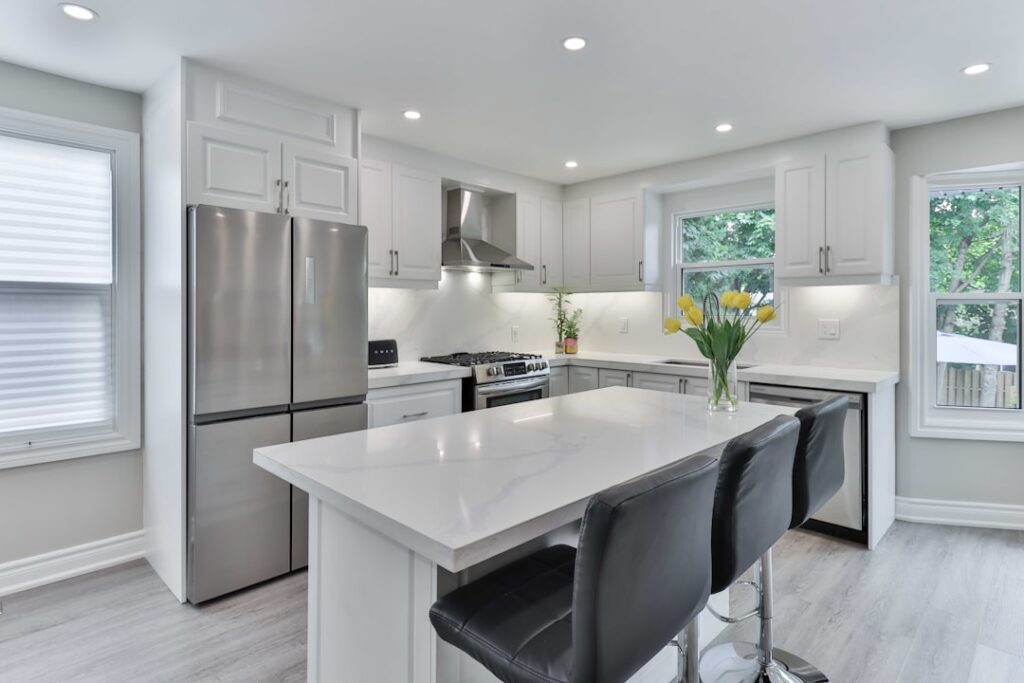
Cabinets define a kitchen’s look and function, so remodeling kitchen cabinets is often the highest-impact update a homeowner can make. Whether you paint, reface, or fully replace, understanding your options, costs, and timelines helps you get the biggest transformation for your budget without unnecessary disruption.
- Assessing Your Existing Cabinets
- Option One: Painting
- Option Two: Refacing
- Option Three: Full Replacement
- Comparing the Costs
- Choosing a Door Style
- Updating the Layout
- Hardware and Interior Upgrades
- Timeline Expectations
- DIY vs Hiring a Pro
- Planning and Budgeting
- Refinishing vs Refacing
- Choosing Countertops to Match
- Handling Electrical and Plumbing
- Living Through the Remodel
- Common Mistakes to Avoid
- Reusing vs Replacing Hardware
- Getting Accurate Quotes
- Maximizing Return on Investment
- Final Thoughts
Assessing Your Existing Cabinets
Start by evaluating what you have. Open and close doors, check for water damage, and press on the boxes to test structural soundness. If the boxes are solid plywood and the layout works, painting or refacing makes sense. If the boxes are crumbling particleboard, sagging, or the layout is dysfunctional, full replacement is the smarter investment despite the higher cost.
Option One: Painting
Painting is the most budget-friendly refresh, typically costing $1,000 to $4,000 for a professional job or a few hundred in materials for a DIY effort. It works only if the boxes and doors are in good shape. Proper prep, including cleaning, sanding, and a bonding primer, is essential for durability. A quality cabinet enamel cures hard and resists chipping.
Option Two: Refacing
Refacing keeps the existing cabinet boxes but replaces the doors, drawer fronts, and hardware, and applies a matching veneer to the visible box surfaces. This delivers a near-new look for roughly $4,000 to $10,000, about half the cost of replacement. It suits kitchens with a functional layout and sound boxes, and it generates far less mess and downtime.
Option Three: Full Replacement
Replacing cabinets entirely lets you change the layout, add features, and choose any style. It is the most expensive route, commonly $12,000 to $30,000 or more with installation, but it is the only option that fixes a bad layout or failing boxes. New cabinets also let you add modern conveniences like deep drawers, pull-outs, and soft-close hardware throughout.
Comparing the Costs
As a rule of thumb, painting costs the least, refacing lands in the middle at roughly 50 to 70 percent of replacement, and new cabinets cost the most. Consider the value of your time for DIY work and the potential resale return. In many markets, a mid-range kitchen remodel recoups a significant share of its cost at sale.
Choosing a Door Style
Whichever route you choose, the door style sets the tone. Shaker doors remain the most versatile and popular. Slab doors read modern, while raised panels feel traditional. If you are refacing or replacing, this is your chance to update to a timeless style that will not feel dated in a few years, since cabinets are a long-term surface.
Updating the Layout
Full replacement opens the door to layout improvements. Consider extending cabinets to the ceiling for more storage, adding an island, or reworking the corner with a lazy Susan or pull-out. Improving the work triangle between sink, stove, and refrigerator boosts daily usability. Even small changes, like relocating the microwave to a drawer, can transform how the kitchen functions.
Hardware and Interior Upgrades
New pulls and knobs instantly modernize any remodel and cost little. Inside, add pull-out trash bins, tray dividers, deep pot drawers, and under-sink organizers. Soft-close hinges and full-extension glides upgrade the feel of even budget boxes. These functional touches deliver daily satisfaction and are worth prioritizing regardless of which remodeling route you take.
Timeline Expectations
DIY painting spans a week or two including cure time between coats. Professional refacing usually takes three to five days. Full replacement runs two to four weeks or longer once you include demolition, any electrical or plumbing changes, countertop templating, and installation. Order cabinets well in advance, since custom lead times can stretch six to twelve weeks.
DIY vs Hiring a Pro
Painting is the most DIY-friendly project and saves the most money. Refacing veneer work and door hanging are doable for skilled handy homeowners but demand precision. Full cabinet installation, involving leveling, shimming, and securing to studs, is best left to professionals unless you have carpentry experience. Be honest about your skills to avoid costly do-overs.
Planning and Budgeting
Set a realistic budget with a 10 to 20 percent contingency for surprises like hidden water damage. Get multiple quotes for professional work. Decide which features are must-haves versus wish-list items. Sequencing matters too: finalize cabinets before ordering countertops, since counters are templated to the installed boxes.
Refinishing vs Refacing
These two terms are often confused. Refinishing means stripping or sanding the existing doors and boxes and applying a new stain or paint, keeping every original piece. Refacing goes further, replacing the doors and drawer fronts entirely and covering the boxes with new veneer. Refinishing costs less and suits solid-wood cabinets in good shape, while refacing lets you change the door style and is better when the existing doors are dated or damaged.
Choosing Countertops to Match
Cabinets and countertops are a package, and the counter choice shapes both budget and look. Laminate is the least expensive at $15 to $40 per square foot, quartz and granite run $50 to $120 installed, and premium natural stone climbs higher. Because counters are templated to the installed cabinets, finalize cabinet layout first. A contrasting counter can make new or repainted cabinets pop, so consider the pairing as one design decision.
Handling Electrical and Plumbing
Layout changes often trigger electrical and plumbing work. Relocating a sink means moving supply and drain lines, and adding an island cooktop or outlets requires new circuits. Building codes typically mandate GFCI-protected outlets along countertops and dedicated circuits for major appliances. Budget for a licensed electrician and plumber when moving these systems, since permits and inspections usually apply and DIY errors here are costly and hazardous.
Living Through the Remodel
A full cabinet replacement leaves the kitchen unusable for one to three weeks. Plan a temporary setup with a microwave, coffee maker, and mini-fridge in another room, and stock easy meals. Refacing and painting are less disruptive, often letting you keep partial use of the kitchen. Sequencing the work and setting realistic expectations with your household prevents the mid-project frustration that catches many first-time remodelers off guard.
Common Mistakes to Avoid
Painting over grease without proper cleaning causes peeling. Refacing failing boxes wastes money on a doomed foundation. Ordering countertops before cabinets are installed risks costly remeasures. And skipping the contingency fund leaves you stranded when hidden problems appear. Match the remodeling method to the true condition of your cabinets, not just your budget.
Reusing vs Replacing Hardware
Hardware is the jewelry of a cabinet remodel and one of the cheapest ways to modernize. If you are painting or refinishing, updating pulls and knobs to a current finish like matte black or brushed brass transforms the look for a few hundred dollars. When switching from knobs to pulls, you may need to drill new holes and fill the old ones, a task best done before the final paint coat. Coordinating hardware with faucets and lighting ties the whole kitchen together.
Getting Accurate Quotes
For professional work, gather at least three detailed written quotes and make sure each covers the same scope, from demolition and disposal to installation and cleanup. Ask what grade of cabinets, hardware, and finish is included, since a low bid may hide cheaper materials. Verify licensing, insurance, and references, and confirm the timeline in writing. Comparing apples to apples prevents surprise change orders and helps you judge which contractor offers the best real value.
Maximizing Return on Investment
Kitchen updates consistently rank among the best home improvements for resale, but the smartest spend depends on your goals. If you plan to sell soon, a refresh through painting or refacing recoups a larger share of its cost than a lavish full replacement. For a long-term home, invest in quality boxes, durable finishes, and functional storage you will enjoy daily. Matching the level of investment to how long you will stay keeps the remodel financially sensible.
Final Thoughts
Successful remodeling kitchen cabinets starts with an honest assessment of what you have, then choosing among painting, refacing, or replacement based on box condition, layout needs, and budget. Prioritize a timeless door style and functional interior upgrades, plan the timeline carefully, and your kitchen will feel transformed for years to come.