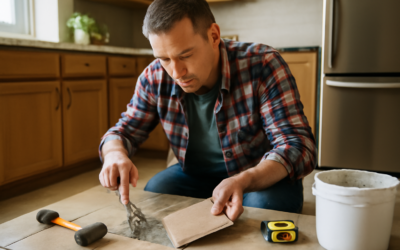
Before you tear out a tired floor and start over, it is worth asking whether you can bring it back to life for a fraction of the cost. Renew flooring covers the methods and services that refresh, refinish, or recoat an existing floor instead of replacing it, and for many homeowners it is the smartest money they spend on a room. A dull, scratched hardwood that looks ready for the dumpster is often just one screen-and-recoat away from looking new again.
This guide explains what renewing a floor actually involves, when it works and when replacement is the better call, what it costs, and how to evaluate a renew product or service so you are not oversold.
- What “Renewing” a Floor Means
- Common Renewal Methods
- Refinish vs Replace: Making the Call
- What Renewing a Floor Costs
- Pros of Renewing Instead of Replacing
- Cons and Limitations
- How to Evaluate a Renew Product or Service
- Renewing Floors Other Than Hardwood
- DIY vs Hiring a Pro
- Is Renewing Your Floor Worth It?
What “Renewing” a Floor Means
Renewing is an umbrella term for restoring a floor’s surface and appearance without removing the existing material. Depending on the floor and its condition, that can mean a light buff and recoat, a full sand and refinish, a deep clean and polish, or applying a renewal coating designed to bond over the old finish.
The key idea is reuse. Rather than paying for demolition, disposal, and all-new material, you treat the surface you already have. That saves money, reduces waste, and keeps a floor with character in place. It only works, though, when the underlying floor is structurally sound.
Common Renewal Methods
The right method depends entirely on the floor type and how worn it is. The main approaches are:
- Screen and recoat: The fastest option for hardwood. A light abrasion of the existing finish followed by a fresh coat of polyurethane revives sheen and protection in a day or two. Best when the wood itself is not damaged.
- Full sand and refinish: Sanding hardwood down to bare wood, then staining and finishing. This removes deep scratches, gouges, and old stain, essentially resetting the floor.
- Deep clean and polish: For tile, stone, and some vinyl, professional cleaning and a polish or sealer can restore shine without resurfacing.
- Renewal coatings: Liquid products that bond over an existing finish to add gloss and protection, useful for floors that cannot be sanded.
Refinish vs Replace: Making the Call
The decision comes down to the condition of the floor beneath the finish. If a hardwood floor is sound, with surface scratches and faded finish but no rot, warping, or widespread damage, renewing it is almost always cheaper and just as attractive as replacement.
Replacement makes more sense when the floor has structural problems: water damage, deep cupping or crowning, pet stains soaked into the wood, or boards too thin to sand again. Engineered wood with a very thin veneer and most laminate cannot be sanded, so for those a recoat or replacement are the realistic choices. A good contractor will tell you honestly which side of that line your floor falls on.
What Renewing a Floor Costs
The savings are the headline. A screen-and-recoat on hardwood typically runs about $1 to $2.50 per square foot, while a full sand and refinish runs roughly $3 to $8 per square foot depending on stain and region. Compare that to new hardwood installed, which often lands at $8 to $15 or more per square foot once you add material, demolition, and labor.
For a 300-square-foot room, a recoat might cost a few hundred dollars and a full refinish around $1,000 to $2,000, versus several thousand to replace. That gap is why renewing is so appealing when the floor qualifies.
Pros of Renewing Instead of Replacing
- Major cost savings compared to a full tear-out and new install.
- Less mess and downtime, especially with a quick recoat.
- Keeps original character, valuable in older homes with vintage wood.
- Eco-friendly, since it avoids landfill waste and new manufacturing.
- Adds protection, with a fresh finish guarding the floor for years to come.
Cons and Limitations
- Not for damaged floors: Rot, deep water damage, or warping need replacement.
- Limited sandings: Solid wood can only be sanded a finite number of times before it gets too thin.
- Material restrictions: Thin-veneer engineered wood and laminate generally cannot be sanded.
- Dust and fumes: Full sanding creates dust, and finishes off-gas, so ventilation and cure time are required.
- Color limits: A recoat keeps the existing color; only a full refinish lets you change the stain.
How to Evaluate a Renew Product or Service
Whether you hire a pro or buy a DIY renewal coating, verify the claims before you commit. Ask which method they recommend for your specific floor and why, and be wary of anyone who pushes a single product for every situation. For coatings, confirm compatibility with your existing finish, since the wrong product can peel or fail to bond.
- Check references and photos of past floors similar to yours.
- Confirm the prep, because adhesion depends on proper cleaning and abrasion.
- Ask about cure time and when furniture and foot traffic can return.
- Get the warranty in writing, including what voids it.
- Test a small area first with any DIY product to confirm the result.
Renewing Floors Other Than Hardwood
Hardwood gets most of the attention, but other surfaces can be renewed too. Tile and natural stone often look tired simply because the grout is stained and the sealer has worn off; a deep grout cleaning, color-sealing the grout lines, and re-sealing porous stone can transform a floor without replacing a single tile. Concrete floors respond well to grinding, polishing, and resealing, turning a dull slab into a smooth, low-maintenance surface.
Vinyl and linoleum are trickier, since most cannot be sanded, but a thorough strip-and-wax on older sheet products restores shine, and some surfaces accept a compatible renewal coating. Laminate generally cannot be refinished at all, so for a worn laminate floor the realistic options are replacement or, for minor issues, repair kits and touch-up pens. Knowing which approach fits your material prevents wasted money on a method that will not bond or last.
DIY vs Hiring a Pro
Light renewal jobs are within reach of a confident DIYer. A screen-and-recoat on hardwood, a grout cleaning and seal, or a strip-and-wax on vinyl can all be done with rented equipment and patience. The key is meticulous prep, since adhesion of any new coat depends entirely on a clean, properly abraded surface.
- Hire a pro for full sanding, because uneven sanding leaves permanent waves and burns.
- DIY a recoat if the existing finish is sound and you follow the product directions closely.
- Always test compatibility in a hidden area before coating the whole floor.
- Respect cure times, keeping traffic and furniture off until the finish fully hardens.
Is Renewing Your Floor Worth It?
If your floor is structurally sound and simply looks tired, renewing it is one of the best-value home improvements available, delivering a near-new appearance for a fraction of replacement cost and far less disruption. Reserve full replacement for floors with real damage or materials that cannot be resurfaced. Match the method to the floor, vet the product or contractor carefully, and a renew approach can give a worn surface another decade or more of good-looking, well-protected life.
Prefer to explore on your own?
See how new flooring looks in your actual room in seconds — free, no signup.
Try the free Floor Studio →