A torn screen is a five-dollar mesh repair — but a bent, corroded, or missing frame means you need the whole assembly, and that is a different shopping trip. Replacement window screens with frames are complete drop-in units: aluminum frame, spline-held mesh, and the corner hardware and tension pins that hold the screen in your window’s track. They cost $20 to $90 each depending on size and mesh, and the entire challenge of the project is measurement and hardware matching, because a screen that is right in every dimension but wrong in its mounting clips simply falls out. This guide covers measuring, ordering standard versus custom, mesh and frame choices, and installation.
Part of our Windows & Doors guide — explore the full guide →
When You Need the Full Frame, Not Just Mesh
Re-screening an intact frame — new mesh rolled into the old spline channel — costs $5 to $15 in materials and beats buying anything. Buy the complete framed screen instead when the frame is bent from a fall or a ladder strike, when corners have cracked or pulled apart, when decades of oxidation have chalked and pitted the aluminum past straightening, when the screen is simply missing (the classic move-in discovery), or when the plunger pins, lift tabs, or spring hardware have broken off and no longer hold the unit in its track. Frames are light extrusions; once one is kinked, it never again sits flat in the track, and a screen that bows lets every mosquito in the county find the gap.
Measuring: The Step That Decides Everything
Measure the old screen if it exists: width and height of the frame itself, corner to corner, to the nearest 1/16 inch, plus the frame thickness — 5/16 inch and 7/16 inch are the two common standards, with 3/4-inch frames on some older and specialty windows. If the screen is missing, measure the opening it must fill: the channel-to-channel dimension where the screen seats, then subtract the manufacturer’s recommended clearance (typically 1/8 inch overall) so the unit drops in without forcing. Measure both diagonals too; more than 1/8 inch of difference means a racked opening, worth knowing before you order. Finally, photograph the hardware on a surviving sibling screen — spring-loaded plunger pins, flat springs on one rail, lift tabs, or turn clips — and note which rail carries them and how far from the corners they sit. Window brands are consistent within a house, so one good reference screen usually documents the whole job.
Standard, Custom, and Kit: Three Ways to Buy
- Stock sizes ($15-$35): Big-box stores carry framed screens in common dimensions and adjustable-width models that telescope to fit a range. Fine for approximate fits in forgiving wood-frame windows, less fine in extruded vinyl tracks that demand precision.
- Custom-made ($25-$90): Online fabricators and local glass shops build to your exact 1/16-inch dimensions with your choice of frame color, thickness, mesh, and hardware, typically shipping in one to two weeks. For most vinyl and aluminum replacement windows this is the correct answer — the price gap over stock is small and the fit is permanent.
- DIY frame kits ($12-$25 per screen): Cut-to-length frame stock, corner keys, spline, and mesh assemble with a hacksaw and a $6 spline roller in about twenty minutes per screen. The cheapest route to many screens — a whole house’s worth for a few hundred dollars — and the only quick answer for oddball sizes when you cannot wait for custom fabrication.
Ordering from the window manufacturer is a fourth path worth checking for newer windows: brands like Andersen, Pella, and Milgard sell exact OEM screens by unit serial number (etched on the glass spacer or frame label), which eliminates every measurement and hardware question at a 20 to 40 percent price premium.
Choosing Mesh: More Consequential Than It Looks
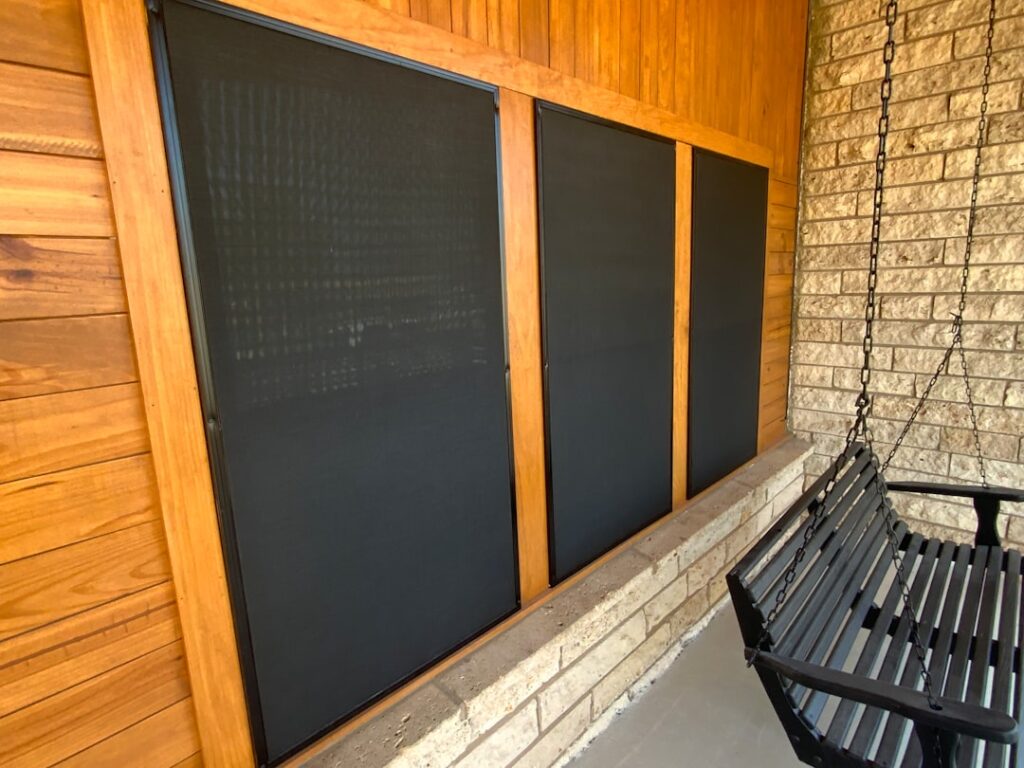
Standard fiberglass mesh (18×16 weave, charcoal) is the default for good reason — cheap, glare-free, easy to work, and invisible from ten feet. Aluminum mesh costs slightly more and resists sagging and small impacts better but dents permanently and can oxidize. Beyond the defaults, the upgrades solve real problems: pet-resistant polyester mesh (about 7 times stronger) for doors and low windows that cats and dogs test; fine 20×30 no-see-um mesh in lake and coastal country where standard weave is a colander; solar-shading mesh that blocks 65 to 90 percent of solar heat gain on west-facing glass, cutting summer cooling load noticeably; and high-visibility ultra-fine stainless or PVS-coated meshes that nearly disappear for view-critical picture windows. Mesh choice changes a custom screen’s price by $5 to $30 — modest money against ten-plus years of daily service.
Frame Details Worth Matching
Match frame thickness to your track first — a 7/16-inch frame will not seat in a 5/16-inch channel, and the reverse rattles. Match color second: white, bronze, gray, and mill (silver) cover nearly all US windows, and a mismatched frame reads from the curb. Corner construction separates quality tiers — plastic corner keys are standard and fine; metal corners and rolled-frame designs resist racking on large screens. For big openings over about 36 inches wide, specify a center support bar or heavier 7/16 or 3/4 frame stock, because long unsupported spans of light extrusion bow in wind and sag under mesh tension. And insist the hardware matches your photos: plunger pins at the same rail positions, or the same flat-spring style, in the same locations. Reputable custom shops ask for exactly this; if an order form never mentions hardware, that is a red flag.
What Complete Screens Cost, By Route
Real-world pricing clusters tightly once you pick a path. Stock adjustable screens run $15 to $25 at Home Depot and Lowe’s, and fixed stock sizes $15 to $35. Custom fabrication online prices by the square foot plus options: a typical 32×54-inch double-hung screen in charcoal fiberglass with standard hardware lands at $30 to $45 shipped, the same screen in pet mesh at $45 to $65, and in solar mesh at $50 to $75. Local glass and screen shops quote similar numbers and often beat shipping time — many turn screens around in two or three days, and they will copy your old frame’s hardware exactly from the sample you carry in. OEM screens from the window brand run $50 to $120 each but arrive guaranteed to fit. Kit-built screens cost $12 to $25 in parts per window once you own the $6 spline roller. For a whole house of, say, fourteen windows, that spread is the difference between a $250 weekend of kit assembly and a $1,200 OEM order — with custom fabrication at roughly $500 to $700 sitting in the value sweet spot for most homes.
Installing and Maintaining Drop-In Screens
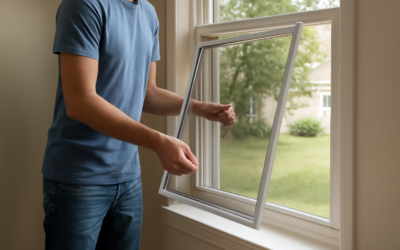
Installation is genuinely two minutes per window once the unit is right. For plunger-pin screens: retract the pins, set the opposite rail (usually the top) into its channel, compress, and release the pins into their holes. Spring-rail screens compress the spring side first, then swing the fixed side in. Work from inside for double-hung and slider windows; casement exterior screens on some brands hang from clips at the top and secure at the bottom. If a new screen fights you, stop and compare it against the reference photos rather than forcing — bent pins on day one shorten the screen’s life to one season.
Maintenance is annual and boring, which is the point. Vacuum mesh with a brush attachment each spring, wash with a soft brush and soapy water when pollen cakes it, and check corner joints and pins for looseness. Store removed screens flat in the garage over winter if you take them down; screens stored on edge against a wall for years develop the exact frame bow you just paid to eliminate. Handled this way, replacement window screens with frames are a 10-to-20-year purchase, and the measuring hour you invested up front is why every one of them clicks into its track like it grew there.