Rug glue solves a handful of nagging problems at once: rugs that creep across the floor, corners that curl into tripping hazards, and frayed edges that unravel a little more every week. Used correctly, the right adhesive keeps a rug flat and stable without ruining the floor underneath or the rug itself.
Not all rug glue is the same, though, and choosing the wrong product can leave behind sticky residue, discolor a hardwood finish, or bond so aggressively that you damage the rug when you try to lift it. This guide breaks down the main types, where each one belongs, how to apply it cleanly, and how to remove it when the time comes.
Why Use Rug Glue at All
A rug that slides is more than annoying. On hard flooring, a shifting rug becomes a slip hazard, especially at the top of stairs or in busy hallways. Curling corners catch toes and vacuum heads. Edges that fray spread quickly once a few threads let go. Adhesive products address all of these issues and can also help an area rug lie perfectly flat for a cleaner, more finished look.
That said, glue is not always the answer. For many situations a non-adhesive grip pad does the job with zero residue. Reach for actual rug glue when you need a more permanent hold, when you are repairing an edge, or when a pad alone is not enough on a heavily trafficked surface.
Types of Rug Glue and Adhesives
Understanding the categories helps you match the product to the task:
- Carpet and rug seam adhesive: a latex-based glue used to join sections or bind a cut edge so it does not fray.
- Double-sided rug tape: technically a tape, not a liquid, but the most common DIY choice for holding a rug to hard floors or to carpet. Easy to apply and usually removable.
- Latex liquid adhesive: brushed or troweled onto subfloor for full-spread installation of broadloom or large rugs. This is a more permanent, professional-grade approach.
- Anti-fray and edge sealant: a thinner liquid that soaks into raw rug edges to lock fibers in place and stop unraveling.
- Hot-melt seam tape: activated with an iron, used mainly for wall-to-wall carpet seams rather than loose rugs.
For loose area rugs, most homeowners get the best results from double-sided rug tape or a non-slip pad. Liquid latex adhesives are best left to permanent installations where you do not plan to move the rug.
Matching the Glue to Your Floor
Your flooring type matters as much as the rug. On sealed hardwood, choose a product labeled safe for finished wood and test it first, because some adhesives can cloud or soften a polyurethane finish over time. On luxury vinyl and laminate, avoid solvent-heavy glues that can react with the surface or leave staining. Tile and concrete tolerate stronger adhesives, but you still want something removable unless the placement is permanent.
When a rug sits on top of carpet, a rug-on-carpet tape with a grippy backing keeps the smaller rug from migrating. Whatever the surface, read the manufacturer’s compatibility list before you commit, and always test in an inconspicuous corner.
How to Apply Double-Sided Rug Tape
For the most common job, securing a loose rug, follow these steps:
- Vacuum and clean both the floor and the back of the rug. Adhesive will not bond to dust or grease, so let everything dry fully.
- Lay the rug exactly where you want it and fold back one half.
- Apply tape along the rug’s perimeter and add a few strips through the middle, pressing it to the floor first.
- Peel the top liner, then smooth the rug down from the center outward to push out air and wrinkles.
- Repeat with the other half. Walk the rug firmly to seat the bond.
Work in a well-ventilated room and keep the rug squared as you go, since repositioning after the tape grabs can lift fibers.
Using Liquid Rug Glue and Edge Sealant
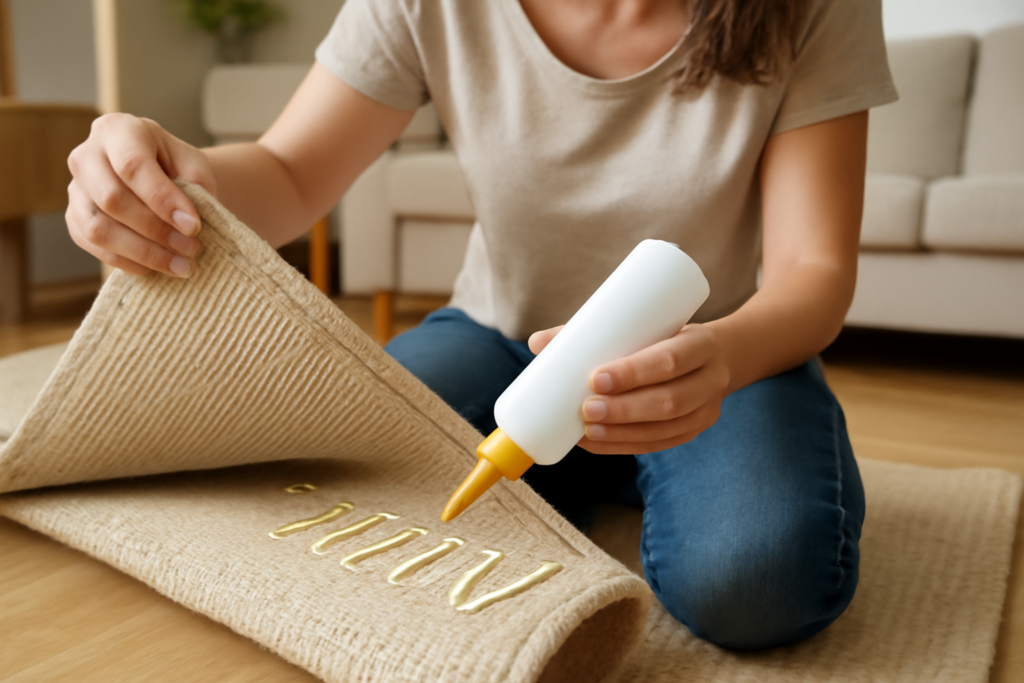
Liquid latex adhesive calls for more care. Spread a thin, even layer with a notched trowel or stiff brush according to the label, and respect the open time the manufacturer specifies before setting the rug. Too much glue squeezes up between fibers and is nearly impossible to remove. For binding a frayed edge, apply a small bead of anti-fray sealant along the raw threads, work it in with a gloved finger, and let it cure fully before walking on it.
Whenever you use a liquid rug glue, open windows, run a fan, and wear gloves. Some formulas give off strong fumes until they cure, and skin contact with wet adhesive is best avoided. Follow the drying and ventilation directions on the container exactly.
Safety and Best Practices
Adhesives are chemical products, so treat them accordingly. Always read and follow the manufacturer’s instructions for application, cure time, and surface compatibility. Ventilate the space, wear gloves and eye protection where the label advises, and keep children and pets out of the room until the glue is fully cured. Never mix adhesive products or thin them with solvents the maker does not approve.
If you are installing a large rug or wall-to-wall carpet with permanent adhesive, or working over radiant-heated floors, consider hiring a licensed flooring professional. The cost of a botched full-spread glue job, in both materials and floor damage, often exceeds the price of doing it right the first time.
Removing Rug Glue Without Damage
Tape and many residues come up with patience. Peel slowly to lift as much adhesive as possible, then warm stubborn spots gently with a hair dryer to soften the bond. A plastic scraper lifts softened residue without gouging the floor. For remaining film, a small amount of an adhesive remover rated for your flooring type usually works, but test it in a hidden area first and wipe it away promptly.
Cured liquid latex is far harder to remove and may require a professional, particularly on wood. The takeaway is simple: choose the least aggressive rug glue that will do the job, test before you commit, and you will keep both your rug and your floor in good shape.