Porcelain glue is the catch-all term homeowners use for the adhesives that bond porcelain and ceramic, whether you are setting new floor tile, re-securing a loose piece, or mending a cracked vase. The trouble is that “porcelain glue” actually covers several very different products, and using the wrong one leads to bonds that fail, stain, or simply will not hold.
Part of our Tile & Grout guide — explore the full guide →
Get the match right and porcelain bonds beautifully. Its dense, glassy surface is non-porous, which is both why it is so durable and why it demands the correct adhesive chemistry.
The Two Jobs People Mean by “Porcelain Glue”
Before buying anything, decide which task you face, because they call for opposite products.
- Installing tile: Setting porcelain floor or wall tile means thin-set mortar, not a tube of glue. Mortar bonds large areas and handles structural loads.
- Repairing objects or single tiles: Fixing a chipped mug, a broken figurine, or one popped-up tile means a true adhesive such as epoxy, cyanoacrylate, or polyurethane glue.
Confusing these is the classic mistake. Super glue will never hold a 12-inch floor tile, and thin-set will never mend a teacup.
Adhesives for Setting Porcelain Tile
For installations, modified thin-set mortar is the industry standard. Porcelain’s low porosity means you want a polymer-modified thin-set specifically rated for porcelain, since standard unmodified mortar struggles to grip its slick back. Look for the ANSI A118.4 or A118.15 designation on the bag.
For smaller wall jobs or backsplashes, premixed tile adhesive (mastic) in a tub is convenient, but it is not suitable for floors, wet areas, or large-format tiles. Mastic stays slightly flexible and can hold moisture, so keep it to dry vertical surfaces only.
Adhesives for Repairs
When you are mending a broken object or re-bonding a single loose tile, three glues dominate.
- Two-part epoxy: The strongest, most water-resistant choice. Ideal for load-bearing repairs, outdoor pieces, and anything that will get wet. Mix equal parts and use within the working time, usually 5 to 30 minutes depending on formula.
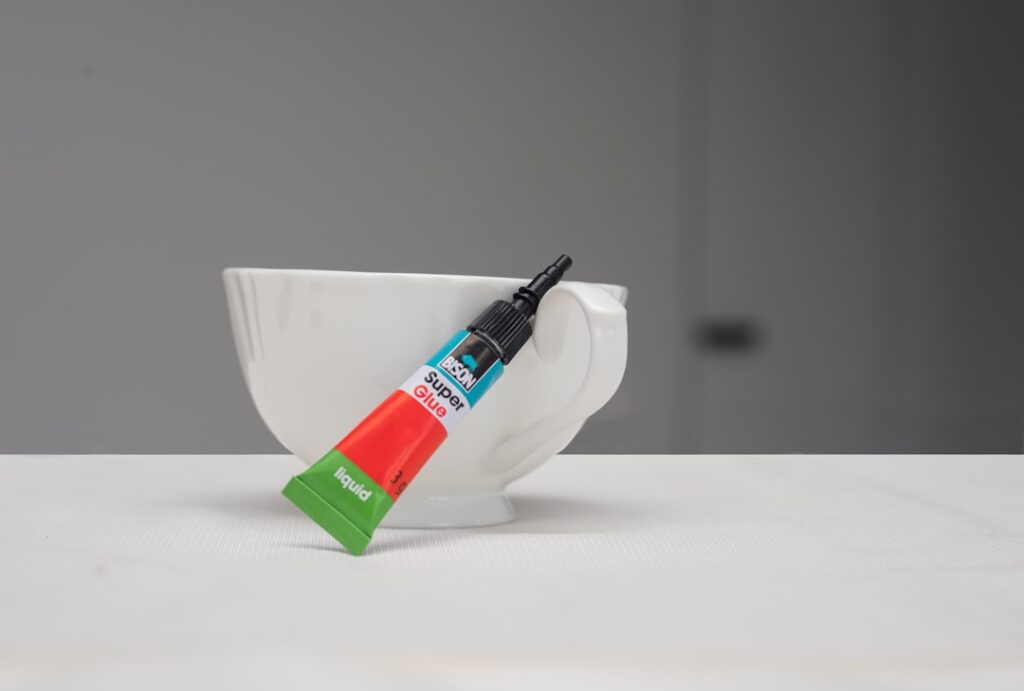
- Cyanoacrylate (super glue): Fast and great for tiny, clean breaks on decorative items that will not bear weight or sit in water. Bonds in seconds but is brittle and not waterproof.
- Polyurethane glue: Expands as it cures and bridges small gaps, useful for irregular breaks, though it requires clamping and cleanup of foam-out.
How to Apply Porcelain Glue for Repairs
Surface prep determines whether a repair lasts a week or a lifetime.
- Clean both broken faces with rubbing alcohol and let them dry completely. Oils and dust ruin adhesion.
- Dry-fit the pieces first so you know exactly how they align before any glue is wet.
- Mix or apply a thin, even layer. More glue is not stronger; a thick line creates a weak, visible seam.
- Press the pieces together firmly and wipe away squeeze-out immediately with a cotton swab and alcohol.
- Clamp or tape the joint and leave it undisturbed for the full cure time.
Patience is everything. Epoxy may feel set in an hour but often needs 24 hours to reach full strength, and water-exposed repairs benefit from a few days before use.
Re-Bonding a Loose Floor Tile
A single tile that has popped loose but is otherwise intact can be reset without redoing the whole floor. Carefully lift it, scrape the old mortar from both the tile back and the substrate, and vacuum the cavity. Apply fresh polymer-modified thin-set with a notched trowel, set the tile flush with its neighbors, and weight it down while it cures. Re-grout the joints once the mortar has set, usually after 24 hours.
Common Mistakes to Avoid
Most failed porcelain repairs trace back to a handful of errors. Skipping the cleaning step tops the list, since the slightest film of oil or dust prevents a real bond on porcelain’s slick surface. Using too much glue is a close second; excess adhesive squeezes into a thick, weak, visible line rather than pulling the pieces tight.
Other frequent missteps include rushing the cure, which leaves the joint brittle, and choosing the wrong chemistry, such as super glue on a load-bearing or wet-exposed repair. Failing to dry-fit before applying glue often leads to misaligned pieces that set crooked, and once epoxy cures, that mistake is permanent. A few minutes of preparation prevents nearly all of these problems.
Working With Large-Format Porcelain Tile
Large-format porcelain, the increasingly popular slabs and oversized tiles, deserves special mention because their weight and slick backs make adhesion challenging. These tiles demand a high-performance polymer-modified thin-set rated for large and heavy tile, applied with the proper notched trowel and back-buttered to ensure full coverage behind the tile.
Voids behind a large tile create weak spots that crack under impact, so aim for as close to complete mortar coverage as you can achieve, generally at least 80 percent for dry areas and full coverage for wet ones. For floors and showers with big-format porcelain, this is a job where many homeowners are better served hiring an experienced tile setter, since the margin for error is small and the material is expensive.
Safety and Ventilation
Epoxies, cyanoacrylates, and polyurethanes all release fumes and can irritate skin and eyes. Work in a well-ventilated space, wear nitrile gloves, and keep cyanoacrylate away from cotton and skin, since it cures with heat on contact. Always follow the manufacturer’s instructions on the package; cure times and mixing ratios vary by brand and are not interchangeable. For food-contact repairs like dishware, confirm the adhesive is rated food-safe, and remember that many are not.
Choosing the Right Product
Match the glue to the job and the conditions. Think about three things before you buy: the load the joint will carry, whether it will get wet, and how visible the seam will be. Indoor decorative fix that stays dry? Epoxy or super glue. Anything exposed to water, heat, or stress? Two-part epoxy. Installing new tile? Polymer-modified thin-set rated for porcelain. When a repair is structural, valuable, or beyond your comfort, a professional tile setter or restoration specialist is money well spent. Picking the correct porcelain glue from the start saves you from doing the same job twice.
Prefer to explore on your own?
See how new flooring looks in your actual room in seconds — free, no signup.
Try the free Floor Studio →