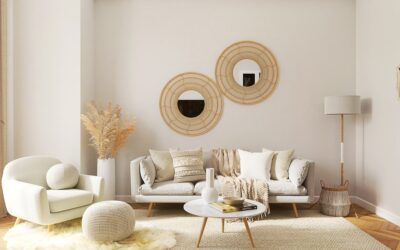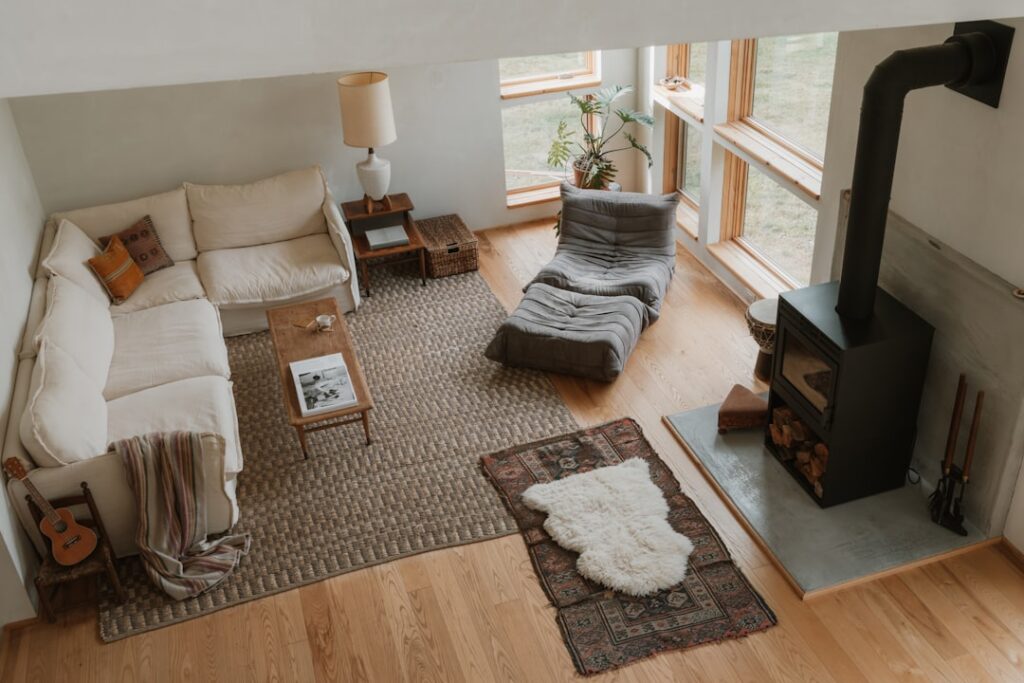
The most common decorating mistake with a big sofa is floating a tiny rug in front of it, which makes the whole room look off-balance. Getting the rug size for living room with sectional right anchors the seating, defines the space, and makes the room feel intentional and larger. Because sectionals are big, L-shaped, and often the focal point, the rug has to relate to the whole piece, not just the middle of it. Here is how to size and place it so it looks professionally styled.
- The Front-Legs-On Rule
- Common Rug Sizes and When to Use Them
- How to Measure for Your Sectional
- Placement Tips That Make It Work
- Special Layout Situations
- Don't Forget the Details
- Layering Rugs for Large or Awkward Rooms
- Rug Shape and Sectional Configuration
- Choosing Material and Pile for the Space
- Getting It Right
The Front-Legs-On Rule
The single most useful guideline is the front-legs-on rule: the rug should be large enough that at least the front legs of the sectional rest on it. This visually ties the furniture to the rug and grounds the arrangement, rather than leaving the sofa marooned on bare floor. For the best look in most living rooms, aim for the front legs on the rug all the way around the L, with the rug extending into the open seating area.
An even more luxurious option is an all-legs-on layout, where the entire sectional sits on an oversized rug, which works beautifully in large rooms.
Common Rug Sizes and When to Use Them
Standard rug sizes make shopping easier once you know which fits your setup.
- 8×10 feet: a good fit for smaller sectionals and modest rooms, catching the front legs of a compact L-shape.
- 9×12 feet: the workhorse size for average to large living rooms and most full-size sectionals.
- 10×14 feet or larger: for oversized sectionals or great rooms where you want all legs on and a generous border.
When you are between sizes, go larger. An undersized rug is the most common error and instantly makes a room feel cramped; a slightly larger rug almost always looks better.
How to Measure for Your Sectional
Do not guess. Measure your actual sectional and room before buying.
- Measure the full width and depth of the sectional, including both legs of the L.
- Plan for the rug to extend beyond the front edge of the seating so the front legs sit on it.
- Leave a border of open floor around the rug, ideally 8 to 18 inches between the rug edge and the walls.
- Tape out the rug dimensions on the floor to visualize the fit before ordering.
Taping the outline is the trick professional designers use, and it takes the guesswork out of choosing between two sizes.
Placement Tips That Make It Work
Size is only half of it; placement pulls the look together. Center the rug on the primary seating zone so the coffee table sits comfortably in the middle. The rug should run parallel to the longest section of the sofa and extend into the room, not tuck entirely under the furniture. If your sectional floats in the middle of the room rather than against a wall, size up so all legs land on the rug and the piece reads as one grounded island.
Special Layout Situations
Sectionals create a few unique challenges worth planning for:
- Chaise or extended leg: make sure the rug reaches under or up to the chaise so that section is not left off the rug.
- Open-concept spaces: use the rug to define the living zone within a larger room, choosing a size big enough to visually separate it from the dining area.
- Small rooms: a rug that runs closer to the walls can actually make a small room feel bigger, as long as you keep a consistent border.
Match the rug shape to the seating; rectangular rugs suit almost every sectional, while a large square can work under a symmetrical U-shaped sectional.
Don’t Forget the Details
Once size and placement are set, a few practical points keep the rug looking and performing its best. Use a quality rug pad underneath to prevent sliding, add cushioning, and protect the floor beneath. Consider the pile and material for your traffic level, since a busy family room benefits from a durable, low-pile, easy-clean rug. And leave enough rug in front of the seating that feet land on it comfortably, which is part of why bigger usually wins.
Layering Rugs for Large or Awkward Rooms
When a single rug in the size you need is out of budget or hard to find, layering offers a stylish workaround. Place a large, affordable natural-fiber rug like jute as the base, then center a smaller decorative rug on top under the coffee table. This gives you the grounded, front-legs-on coverage of a big rug while adding texture and color where it counts. Layering also rescues awkward proportions, letting you build a larger visual footprint from pieces you can actually source. Keep the base rug neutral so the top rug stays the star, and use a pad between them to stop shifting.
Rug Shape and Sectional Configuration
The shape of your rug should follow the shape of your seating. A rectangular rug is the safe, versatile choice that suits nearly every L-shaped and U-shaped sectional. If your sectional wraps into a deep U, a large square rug can fill the interior more evenly. Avoid round rugs with big rectangular sectionals, since the curves fight the straight lines and leave corners of furniture floating off the rug. Orient the rug so its long dimension runs the same direction as the longest run of the sofa, which keeps the proportions balanced and the coffee table centered.
Choosing Material and Pile for the Space
Because a living room with a sectional is usually a high-use gathering spot, the rug’s construction matters as much as its size. In busy family rooms, a low-pile, tightly woven rug resists crushing under furniture legs and cleans up easily after spills and pet traffic. Plush high-pile rugs feel wonderful underfoot but show furniture dents and wear faster in traffic lanes. Consider stain-resistant synthetics or durable wool for longevity, and always use a rug pad to add cushioning, prevent sliding, and extend the rug’s life. Matching the material to your household keeps the rug looking good long after the initial styling.
Getting It Right
Choosing the correct rug size for living room with sectional comes down to a few simple moves: apply the front-legs-on rule, lean toward 9×12 for most rooms, measure and tape before you buy, and size up when in doubt. Do that and the rug will anchor your sectional, balance the room, and make the whole space feel pulled together instead of pieced together. If you only remember one thing, remember that the most common regret is buying too small, so when your measurements land between two sizes, choose the larger every time. A rug that extends generously beyond the seating makes even a modest room feel intentional and complete, while a small rug marooned under the coffee table quietly undermines an otherwise beautiful setup. Measure, tape it out, and commit to the bigger footprint. Your sectional and the whole living room will look grounded, cohesive, and finished in a way an undersized rug can never deliver.
Prefer to explore on your own?
See how new flooring looks in your actual room in seconds — free, no signup.
Try the free Floor Studio →