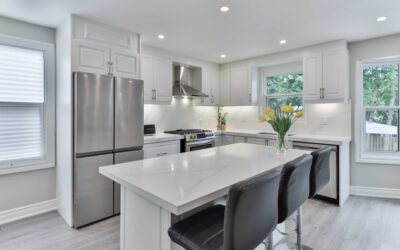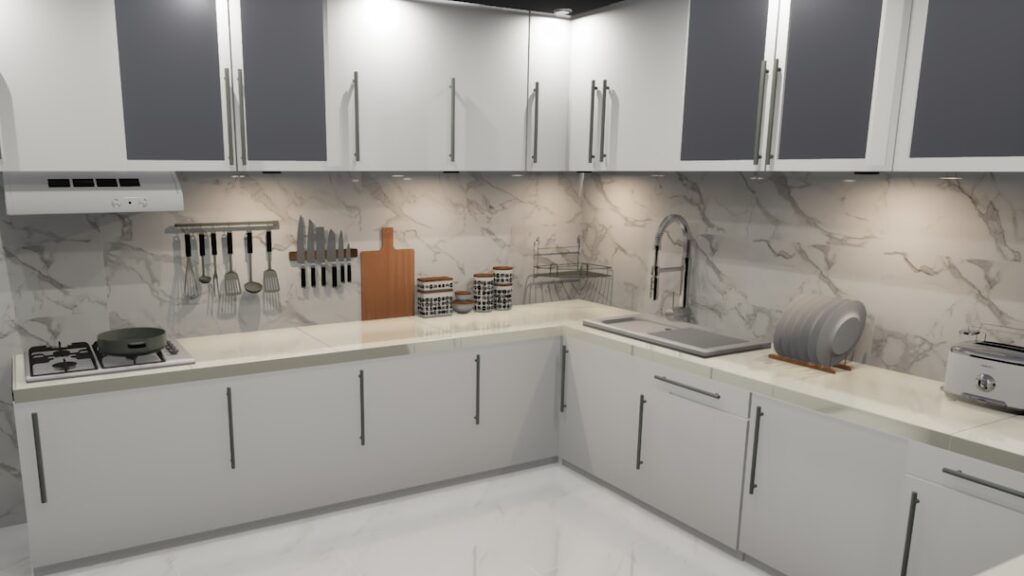
The combination of sage green and grey has quietly become the most-requested kitchen palette of the past three years—and unlike pure white or all-grey trends, this one shows real staying power. A well-executed sage green and grey kitchen reads as calm, sophisticated, and unmistakably modern without feeling cold. The trick is balancing the two colors correctly. Lean too heavily on sage and the room feels like a rustic English cottage. Lean too heavily on grey and you lose the warmth that makes the palette work in the first place.
Part of our Kitchen Remodeling guide — explore the full guide →
Why This Color Combination Works
Sage is a muted, slightly grey-green that sits firmly in the “neutral with personality” category. Pure greys read cold in north-facing kitchens because they have no warm undertones. Adding sage—even just on lower cabinets or an island—introduces enough warmth to balance the room without committing to a strong color.
Sage also pairs naturally with materials found in most kitchens: brass, brushed nickel, white oak, walnut, marble, and quartz with grey veining. That flexibility is why interior designers keep returning to it. The palette absorbs new accessories and seasonal decor without clashing.
Picking the Right Sage
“Sage” covers a range of green shades. Some lean grey, others lean yellow, and a few border on olive. Test 2×2 ft samples in your kitchen lighting before buying gallons.
- Benjamin Moore Saybrook Sage (HC-114): Classic muted sage. Works in nearly any kitchen.
- Sherwin-Williams Evergreen Fog (SW 9130): 2022 Color of the Year. Slightly warmer, more grey undertone.
- Farrow and Ball Mizzle (No. 266): Premium, soft sage with a subtle blue cast. Best for traditional and English-style kitchens.
- Benjamin Moore October Mist (1495): 2022 Color of the Year. Subtle, lighter sage that works as the dominant color.
- Sherwin-Williams Halcyon Green (SW 6213): Deeper, leaning toward olive. Best for accent walls or islands rather than full cabinetry.
Sage shifts dramatically with lighting. Under warm LED bulbs (2700K), sage appears more yellow-green. Under cool daylight bulbs (4000K), it appears more blue-grey. Choose your bulbs first, then test paint.
Picking the Right Grey
The grey in this palette should have warm undertones to match sage. Cool blue-greys clash. The goal is “greige”—a grey with subtle warm beige underneath.
- Benjamin Moore Revere Pewter (HC-172): The reliable greige. Pairs effortlessly with most sage shades.
- Sherwin-Williams Repose Gray (SW 7015): Slightly cooler than Revere Pewter but still warm enough to work.
- Benjamin Moore Classic Gray (OC-23): Lighter, brighter option for ceilings and trim.
- Sherwin-Williams Mindful Gray (SW 7016): A deeper, more saturated greige. Works well on lower cabinets paired with sage uppers.
The 70/30 Cabinet Rule
The most reliable approach is roughly 70% of one color and 30% of the other. The dominant color sets the room’s mood; the accent provides contrast and interest.
Sage as Dominant (Approach A)
Sage on all base and upper cabinets, with a grey island or grey lower cabinets only. This works well in larger, well-lit kitchens. The sage becomes the room’s personality.
Grey as Dominant (Approach B)
Grey on perimeter cabinets with sage only on the island, range hood, or open shelving. Best for smaller kitchens or those with limited natural light, where too much sage can feel heavy.
Either approach beats splitting cabinets 50/50, which creates a competing, busy look without a clear focal point.
Countertop Pairings
Countertops anchor the palette. Three combinations consistently look polished:
- White quartz with grey veining (Calacatta-style): Cambria Brittanica, Caesarstone Calacatta Nuvo. Bright, classic, $70 to $90 per sq ft installed.
- Honed soapstone: Deep grey-black, develops a natural patina. $90 to $130 per sq ft installed. Beautiful with sage but requires periodic oiling.
- White or cream quartz with no veining: Caesarstone Pure White, Silestone Iconic White. Clean and timeless. $55 to $75 per sq ft installed.
Avoid heavy gold-and-brown granites. The warm browns fight sage rather than complement it. Avoid pure black countertops too—they overwhelm the muted palette.
Hardware and Fixtures
Brass, especially unlacquered or aged brass, is the most flattering hardware for this palette. The warmth of brass picks up sage’s underlying yellow-green and warms the grey cabinetry. Brushed brass from Rejuvenation, Schoolhouse, or Top Knobs runs $8 to $25 per pull.
For homeowners who want a quieter look, matte black or oil-rubbed bronze works too. Avoid polished chrome and stainless—they read as cold next to warm greige, breaking the palette’s coherence.
Faucets follow the same logic. A bridge faucet in unlacquered brass (Waterworks Easton or Newport Brass options run $400 to $1200) feels timeless. A modern matte black gooseneck (Delta Trinsic, $250 to $400) gives a cleaner contemporary look.
Flooring That Works
Three flooring choices consistently complement sage and grey:
- White oak hardwood with natural or light stain: The warm wood tones tie everything together. Roughly $8 to $14 per sq ft installed.
- Wide-plank LVP in light oak or warm grey: Budget-friendly at $4 to $7 per sq ft installed, and waterproof for kitchen splashes.
- Large-format porcelain tile in soft greige: Lasts decades, $7 to $12 per sq ft installed.
Skip orange-toned woods (red oak, cherry) and very dark espresso floors. Both compete with the cabinetry color rather than supporting it.
Backsplash and Lighting
Keep the backsplash quiet so the cabinetry remains the focal point. White subway tile in 3×6 or 3×12 with light grey grout is the safest choice. For more interest, zellige tile in soft cream or pale grey adds texture without competing for attention.
Lighting completes the palette. Skip recessed-only setups in favor of two or three pendants over the island in brushed brass or matte black, plus under-cabinet LED strips at 2700K to 3000K to keep the warmth. The combination of soft pendant glow and warm undercabinet light makes sage feel intentional rather than muddy.