Carpet tiles took over commercial offices for one reason: any installer with a utility knife can put them down and any janitor can swap out a damaged square. Self stick carpet tiles bring that same logic to residential basements, playrooms, and rental units, but the residential versions have specific quirks worth knowing before you load up a cart at the home center.
Part of our Tile & Grout guide — explore the full guide →
Expect to pay between $1.20 and $4.50 per square foot for peel-and-stick carpet tiles depending on pile density and warranty length. A 12-foot by 14-foot basement comes in around $400 in materials, no underlayment required.
How Self Stick Carpet Tiles Actually Work
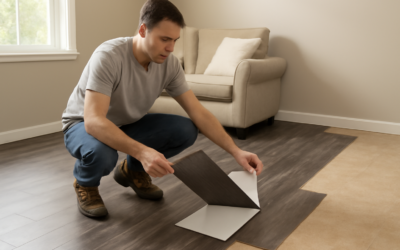
Each tile arrives with a pressure-sensitive adhesive on the back, protected by a release liner. Peel the liner, position the tile, and press firmly with a J-roller or your foot. The bond strengthens for the first 24 hours as the adhesive flows into the substrate texture.
Most tiles measure 18 by 18 inches or 24 by 24 inches. The smaller size makes seams more visible but allows tighter pattern matching around obstacles. Foot traffic and ambient temperature both affect long-term adhesion, which is why you should not install them over radiant heat without checking the manufacturer’s spec sheet.
Where They Work Best
Basements top the list because the concrete slab is flat, the temperature is stable, and you can lift damaged tiles without disturbing the rest of the floor. Home offices and craft rooms also benefit since you can replace a single ink-stained tile in five minutes for under $5.
Rental properties make excellent candidates. Landlords like the per-tile replacement cost and tenants appreciate the cushion underfoot compared to bare laminate. Avoid bathrooms, kitchens, and entryways where standing water defeats even the best adhesive.
Top Brands Worth Considering
Several manufacturers dominate the residential peel-and-stick category. Pricing assumes standard 18 or 24-inch squares.
- Foss Floors Ozite: $1.20-$1.80 per sq ft, basic loop pile, good for utility spaces
- Achim Nexus: $1.50-$2.20 per sq ft, 12×12 inch, easier for small bathrooms or laundry rooms
- TrafficMaster Elevations: $1.80-$2.60 per sq ft, denser face weight, fades less in sunlight
- Mohawk Aladdin: $3.00-$4.50 per sq ft, commercial-grade backing, 15-year wear warranty
Mohawk and Shaw both sell residential-grade peel-and-stick lines that originated in their commercial divisions. These hold up better than the bargain brands but require a flatter substrate to avoid telegraphing seams.
Prepping the Subfloor
Adhesion lives or dies with substrate prep. Vacuum the floor twice, then wipe with a damp microfiber mop to lift fine dust. Allow the floor to dry completely before opening any tile cartons.
Concrete slabs need a moisture test (tape a 2-foot poly square down for 48 hours). Plywood and OSB subfloors should be flat within 3/16 inch over 10 feet. Sand high spots with 60-grit and fill low spots with a self-leveling underlayment. Avoid installing over existing carpet, vinyl with embossing deeper than 1/16 inch, or freshly painted floors that have not cured for 30 days.
Installation Step by Step
Snap chalk lines from the center of the room in both directions, dividing the space into four quadrants. Working from the center outward keeps cut tiles at the perimeter where they tuck under baseboards.
Peel the release liner from one tile, align it to your chalk lines, and press down with steady hand pressure. Set the next tile with a hairline gap (about the thickness of a credit card) so adjacent edges do not bunch as they expand. Continue outward in a pyramid pattern. Cut perimeter tiles by scoring the back with a utility knife and snapping along a straightedge.
Pattern Options That Hide Seams
Quarter-turn (also called ashlar) installation rotates every other tile 90 degrees, breaking up the grid and disguising any pile-direction mismatches. This is the easiest professional-looking layout for beginners.
Monolithic installation keeps all tiles facing the same direction for a wall-to-wall carpet look. It is the least forgiving of pile inconsistencies between dye lots. Brick or herringbone patterns work with rectangular tiles like 12 by 24 inches and add visual interest without raising material cost.
Maintenance and Stain Removal
Vacuum twice weekly with a brush-roll vacuum to keep loop pile from matting. Spot-clean spills with a clean white cloth and a 1:10 mix of dish soap to warm water, blotting from the edge of the spill inward. Avoid soaking the tile since liquid can seep under the edges and weaken the adhesive.
For ground-in stains, pop the affected tile up, clean it in a utility sink, let it dry flat for 24 hours, and stick it back down. If the adhesive has lost its grip, use a few dabs of pressure-sensitive carpet tile adhesive (FloorMuffler PSA works well) to re-seat it.
How Long They Actually Last
In a typical residential basement with moderate foot traffic, expect 7 to 10 years before the face fiber shows wear paths. The adhesive itself often outlasts the carpet face. In heavier-traffic spaces like family rooms, plan on 5 to 7 years.
UV exposure is the silent killer. Tiles installed near south-facing windows fade unevenly within two years. Rotate tiles every 18 months in sunlit areas, or move furniture occasionally to even out the wear pattern. Done right, self stick carpet tiles deliver real value for spaces where wall-to-wall installation would cost three times as much.
Keep at least a dozen leftover tiles in the original carton, stored flat in a closet. Dye lots shift between production runs, so matching a stain or burn mark five years from now requires having reserves on hand. Treat the spare tiles as part of the investment, not as packaging you toss after the install. That single habit extends the realistic useful life of the floor by another two to three years.