Peel-and-stick tile has matured from craft-fair gimmick to legitimate finish material in less than a decade. The 2026 market includes vinyl planks, gel-coat tiles, metal, fabric-backed, and even thin ceramic versions, and the price spread runs from $0.99 to $14 per sq ft. Whether stick tile is the right call depends on the surface you are covering, how long you need it to last, and how much surface prep you are willing to do. The honest verdict: it is excellent for renters, low-water backsplashes, and budget-driven kitchen refreshes; it is a poor substitute for real tile in showers, on floors with heavy traffic, or anywhere subject to continuous moisture.
Part of our Tile & Grout guide — explore the full guide →
What Stick Tile Actually Is
The category covers four distinct material families:
- Vinyl peel-and-stick: the budget category, $0.99 to $3 per sq ft
- Gel-coat 3D tile: thicker resin tiles that mimic ceramic, $4 to $8 per sq ft
- Metal mosaic stick tile: aluminum or stainless backsplash sheets, $8 to $14 per sq ft
- Real stone or ceramic with adhesive backing: thinnest segment, $6 to $12 per sq ft
The adhesive layer is typically a high-tack acrylic. Better products use 3M-grade adhesive that holds for 5 to 10 years on prepared surfaces. Cheap products use no-name adhesives that release in 12 to 18 months, especially in humid environments.
Where Stick Tile Works Best
Three applications consistently succeed. Kitchen backsplashes above counters that do not see direct water contact perform well for 5 to 8 years. Laundry room and powder room walls hold up if water exposure is occasional. Furniture and cabinet refacing (kick plates, drawer fronts, sides of islands) gets a refresh with minimal commitment.
Renters and short-term homeowners gain the most value. The cost of a 30 sq ft backsplash refresh runs $90 to $250 in materials and 2 hours of work, versus $1,200 to $2,400 for a real tile install.
Where It Fails
Some applications consistently disappoint. Shower walls and tub surrounds are not safe homes for stick tile. The adhesive fails behind 6 months of daily steam exposure. Kitchen floors take real abuse from chair scrapes, dropped pans, and water leaks; stick tile lifts at the seams within a year.
Outdoor patios, garages, and basements with humidity issues all chew through stick tile. Behind ranges where temperatures hit 200°F+ during heavy cooking, the adhesive softens and the tiles slide. Mudrooms with snow boots track grit that scrapes the surface coating off.
Surface Preparation Is Everything
The success or failure of stick tile is determined before the first piece goes up. The wall must be smooth, clean, dry, and free of grease residue. For kitchen backsplashes, cleanup with TSP (trisodium phosphate) substitute, then a 50/50 isopropyl alcohol wipe, removes the cooking residue that is invisible but adhesive-killing.
Textured walls (knockdown, orange peel) need a skim coat of joint compound, sanded smooth, before stick tile will hold. Skipping this step is the number one reason backsplashes fail at 6 months. Painted walls work fine if the paint is fully cured (30+ days) and not a glossy sheen, which the adhesive struggles to grip.
Top Brands in 2026
Quality varies wildly. Reliable brands worth the premium:
- Smart Tiles: gel-coat 3D tiles, $7 to $9 per sq ft, 7-year longevity in real installs
- Aspect: real metal mosaic, $10 to $14 per sq ft, robust for backsplashes
- FloorPops: vinyl floor tiles, $1.50 to $3 per sq ft, decent for secondary spaces
- Funlife: vinyl wall tiles, $2 to $4 per sq ft, strong adhesive performance
- StickTiles: ceramic-backed, $9 to $12 per sq ft, premium of the category
Big-box generic brands at $0.99 per sq ft typically last 1 to 3 years before edges curl or color fades.
Installation Step by Step
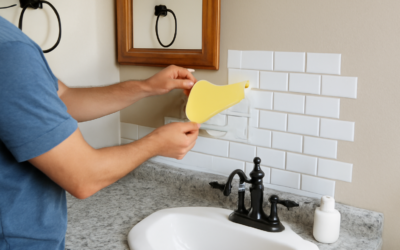
The process is forgiving but rewards patience. Wash the surface with TSP substitute. Wipe with alcohol. Let dry 30 minutes. Snap a level chalk line for the first row. Peel the backing on the first tile only halfway, position it against the line, then press the rest down using a J-roller from the center outward.
Cut tiles around outlets and edges with a sharp utility knife and a straightedge. Measure twice. Replace the knife blade every 8 to 10 cuts; dull blades tear the vinyl rather than cut it. Caulk the perimeter at countertops and edges with paintable caulk to seal moisture entry points.
Cleaning and Maintenance
Wipe with a damp microfiber cloth and mild soap. Avoid abrasive sponges, which scratch the surface coating, and avoid bleach, which yellows vinyl over time. For grout-line texture, a soft brush gets into the simulated grout patterns without damage.
Inspect edges quarterly. Lifting corners can be re-secured with a dab of clear silicone or specialty adhesive before they curl further. Once an edge curls more than 1/8 inch, the entire tile usually needs replacement.
Removal and Damage Concerns
Stick tile is removable, but how cleanly depends on the wall surface and how long the tile has been there. Painted drywall under 2 years of installation usually peels off with minimal damage. Older installs (5+ years) can pull paint off in chunks, requiring spackle and repaint.
Use a hair dryer on medium heat to soften the adhesive, then peel the tile off slowly at a low angle. Residual adhesive comes off with Goo Gone or rubbing alcohol on a microfiber cloth. Test in a small area first to see what you are dealing with.
Cost-Per-Year Comparison
Real ceramic backsplash: $30 per sq ft installed, lasts 25+ years, costs $1.20 per sq ft per year. Quality stick tile (Smart Tiles, Aspect): $9 per sq ft total, lasts 7 years on average, costs $1.29 per sq ft per year. Budget stick tile: $2 per sq ft, lasts 18 months, costs $1.33 per sq ft per year.
The math reveals the truth. Long term, real tile is barely more expensive on a per-year basis. The savings of stick tile come from the upfront budget and the renter-friendly removal.
The Honest Verdict
For renters, dorm rooms, short-term updates before a sale, and budget-conscious refreshes in low-stress areas, stick tile is a legitimate choice in 2026. Pick a quality brand, prep the wall properly, and skip wet zones. For kitchens and bathrooms in long-term homes, save up for real tile or hire a pro to do a proper install. The look of stick tile under casual viewing is good. Up close and over years, the difference shows.
Prefer to explore on your own?
See how new flooring looks in your actual room in seconds — free, no signup.
Try the free Floor Studio →