When the first real snow of the season hits and you’re staring at a driveway you don’t want to shovel, price matters. The senix snow blower line has quietly become one of the better value plays in single-stage snow clearing, offering both gas and 58V cordless machines that undercut the big names without feeling like toys. I’ve cleared plenty of driveways with borrowed and owned units over the years, and here’s how these hold up.
SENIX is a value-focused outdoor power brand that shows up at retailers like Lowe’s and online. They don’t make the deep, two-stage beasts you’d want for a 300-foot rural driveway. What they do well is the single-stage segment: light, maneuverable machines for the average suburban driveway and a couple of walkways.
The SENIX Lineup at a Glance
Two families matter here. On the gas side, you get single-stage snow blowers with clearing widths in the 20 to 24-inch range, driven by a small four-stroke or two-cycle engine. On the battery side, the 58V cordless line brings the same single-stage form factor with a brushless motor and lithium-ion packs. Pricing lands roughly between $300 and $600 depending on width, power source, and whether batteries are included.
That price band is the whole pitch. A comparable Toro single-stage runs $450 to $750, and a Snow Joe cordless sits in a similar range to SENIX but with a different feature mix. SENIX slots in as the budget-conscious middle child, and for a lot of driveways that’s exactly right.
Single-Stage Gas: The Workhorse
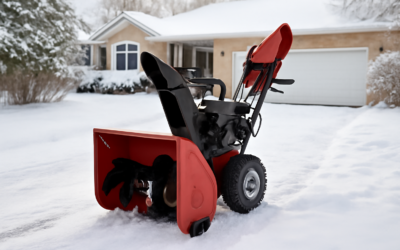
The gas single-stage is the classic tool for this job. A rubber-tipped auger contacts the pavement, scrapes down to the surface, and throws snow in one motion, which is why single-stage machines clear so cleanly on flat concrete and asphalt. Expect a clearing width around 22 inches and an intake height of roughly 12 to 13 inches on the typical unit.
These handle fresh snowfalls up to about 8 to 12 inches comfortably. Push them into deep, heavy, end-of-driveway plow piles and any single-stage machine, SENIX or otherwise, will struggle. That’s not a brand flaw; it’s the physics of a single-stage auger. For the routine 3 to 8-inch snows that make up most of what falls, it chews through quickly.
Many models feature an easy-start setup, sometimes with a primer and choke, sometimes with an electric-start option you plug into a wall outlet before you head out. The rubber auger paddles are wear items, so budget on replacing them every few seasons of heavy use. A throw distance of 20 to 30 feet is typical, plenty for clearing a two-car driveway to one side.
The 58V Cordless Models
Battery snow blowers have come a long way, and the 58V SENIX cordless is a legitimate option for smaller jobs. No gas, no oil, no pull cord, no fumes in the garage. You pull the trigger and the brushless motor spins up instantly. For folks who dread yanking a cold engine to life at 6 a.m., that alone sells it.
Runtime is the honest limitation. A single charge on a 4.0Ah pack gets you roughly a two-car driveway of moderate snow before you need a swap or a recharge. Cold weather saps lithium-ion capacity, so on a bitter morning you’ll get less than the spec sheet promises. If you go cordless, I’d strongly suggest buying a second battery so you can clear, swap, and keep moving instead of standing around a charger.
The trade-off is clear. Cordless wins on convenience, noise, and maintenance. Gas wins on sustained runtime and raw throwing power in heavy snow. For a small, flat suburban driveway that sees light-to-moderate snow, the 58V is genuinely all most people need.
One more point on the batteries. The 58V platform typically shares packs across other SENIX cordless yard tools, so if you already own a string trimmer or blower on the same voltage, you’ve got spares on hand and the snow blower gets cheaper to justify. Charge times on the standard charger run somewhere around 60 to 90 minutes for a full pack, which is why that second battery matters so much when snow is still falling and you can’t wait around.
Snow Depth and Conditions It Handles
Set expectations by the snow, not the brand. Any single-stage snow blower, including SENIX, is happiest with:
- Fresh, dry to moderately wet snow up to about 8 to 12 inches deep.
- Flat, paved surfaces where the auger can scrape to the pavement.
- Driveways and walkways rather than gravel, since the auger touches the ground and will fling stones on loose surfaces.
Where it will disappoint you: hard-packed plow piles at the end of the driveway, wet slush deeper than a foot, and gravel or dirt surfaces. For those, you want a two-stage machine with an impeller and a non-contact auger, which SENIX doesn’t really compete in. Know your typical snowfall before you buy, and don’t ask a single-stage tool to do a two-stage job.
A practical tip from the field: don’t wait until the storm ends and 10 inches have piled up and started to compact. Single-stage machines are far happier taking two passes at 4 inches than one heroic pass at 8. If a big system is dumping snow all day, go out mid-storm and clear it once, then finish after. You’ll save the auger, save the motor, and finish faster than fighting a settled, heavy pile.
How It Compares to Toro and Snow Joe
Toro’s single-stage machines, particularly the Power Clear line, are the benchmark. They throw a little farther, feel more refined, and hold resale value, but you pay $150 to $250 more for that polish. If you clear snow daily all winter in a heavy-snow region, that premium is worth it.
Snow Joe plays in the same budget-cordless space as SENIX and often competes on price and battery ecosystem. Against both, SENIX’s edge is straightforward value: solid clearing width, decent build, real warranty coverage, at a friendlier price. It’s not the most refined machine on the block, but for occasional-to-moderate use it delivers most of the performance for meaningfully less money.
Storage and Off-Season Care
How you put it away in April determines how it starts next December. For the gas models, this matters enormously:
- Run the tank dry or add fuel stabilizer before long-term storage. Stale ethanol gas is the number-one killer of small engines.
- Change or top off the oil on four-stroke units at season’s end.
- Wipe down the auger and housing, and touch up any bare metal to prevent rust.
- Store it somewhere dry; a damp shed floor rusts the auger paddles and chute fast.
For the 58V cordless, remove the battery and store the pack indoors at room temperature, ideally around a 40 to 60 percent charge rather than fully drained or fully topped off. Never leave a lithium pack sitting dead all summer; it can degrade past recovery. A quick spray of silicone on the chute keeps snow from sticking and clogging when you fire it back up.
The Verdict: Who Should Buy One
A SENIX snow blower is the right call if you have a standard suburban driveway, you see light-to-moderate snowfalls, and you’d rather not spend Toro money. The gas single-stage is the pick for reliable runtime and heavier snows; the 58V cordless is the pick for convenience, quiet operation, and skipping gas altogether, provided you buy a spare battery.
Look elsewhere if you have a long rural driveway, gravel surfaces, or you regularly face deep, wet, plow-packed snow. Those jobs demand a two-stage machine. But for the millions of ordinary driveways that just need a fresh 6 inches cleared before work, SENIX hits the value sweet spot. It clears snow well, costs less than the premium names, and asks little of you beyond basic seasonal care.