
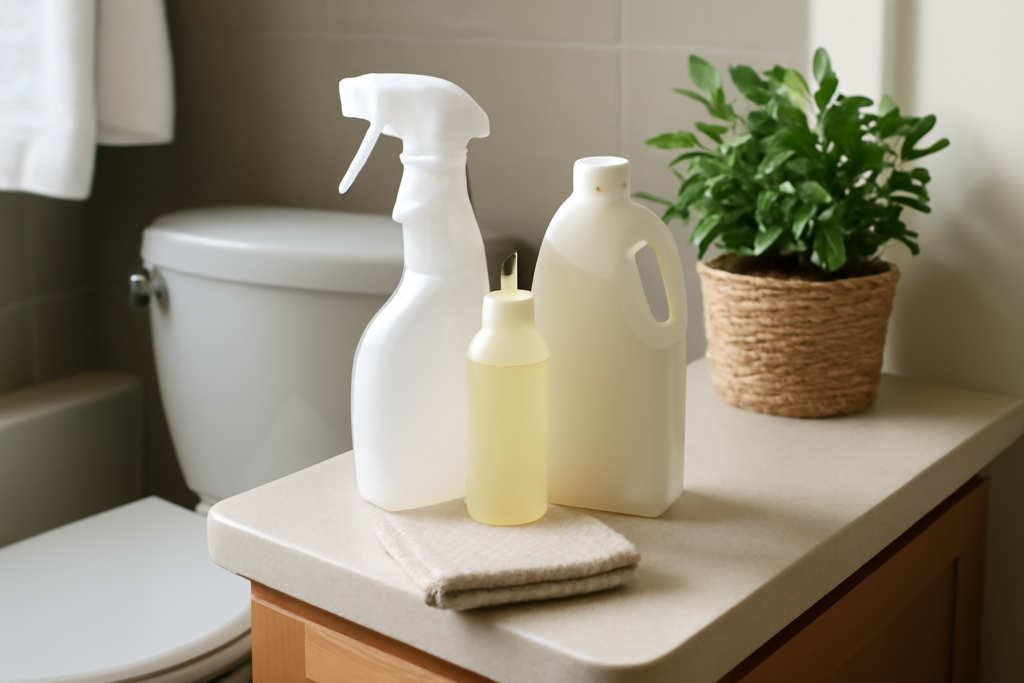
Your septic system runs on living bacteria, and the wrong bathroom cleaner can wipe them out one flush at a time. Septic safe bathroom cleaners are simply products that clean effectively without killing the microbial colony in your tank that breaks down waste. When that colony crashes, solids stop digesting, the tank fills faster, and you face backups and pricey pump-outs. The good news is that keeping a system healthy mostly means avoiding a few harsh ingredients rather than buying anything exotic.
- How Cleaners Affect a Septic Tank
- Ingredients to Avoid
- Septic-Friendly Product Types
- Cleaning the Toilet Safely
- Showers, Tubs, and Sinks
- Honest Guidance on Drain Care
- What About Additive Products
- Making Your Own Septic-Safe Cleaners
- Reading Labels Like a Pro
- Protecting the Whole System
- Building Better Habits
How Cleaners Affect a Septic Tank
A septic tank is essentially a controlled ecosystem. Beneficial bacteria digest organic solids so liquid can flow out to the drain field. Harsh antibacterial and antimicrobial chemicals do not know the difference between bathroom germs and the helpful bacteria in your tank; they kill both. Send enough down the drain and you slow or halt the digestion that keeps the whole system working. Occasional small amounts usually recover, but routine heavy use is the problem.
Ingredients to Avoid
Watch labels for the culprits that stress a septic system.
- Chlorine bleach in large or frequent doses, which sanitizes the tank and disrupts bacteria.
- Antibacterial and disinfecting agents like quaternary ammonium compounds used as everyday cleaners.
- Ammonia and strong acids or alkalis used repeatedly.
- Automatic toilet bowl tablets that release bleach or blue chemical with every flush, all day long.
Note the theme: it is frequency and volume that hurt. A one-time light cleaning rarely dooms a tank, but daily antibacterial habits do.
Septic-Friendly Product Types
Reach for cleaners that clean by physical and gentle chemical action rather than by sterilizing everything.
- Enzyme-based cleaners: use natural enzymes and bacteria to break down grime and organic buildup, and they complement rather than harm the tank.
- Plant-based and biodegradable cleaners: formulated to break down safely and marketed as septic-safe.
- Simple household staples: baking soda, mild dish soap, and small amounts of vinegar handle most bathroom cleaning.
Many mainstream brands now label products as septic safe bathroom cleaners, so look for that wording along with a short, recognizable ingredient list.
Cleaning the Toilet Safely
The toilet is where septic mistakes happen most. Skip the in-tank bleach tablets and reach for a septic-safe bowl cleaner or a simple baking-soda-and-mild-detergent scrub with a brush. For hard water rings, a modest amount of vinegar left to sit works without carpet-bombing the tank. If you must disinfect occasionally, do it sparingly and rinse well, rather than making it a daily ritual.
Showers, Tubs, and Sinks
Soap scum and mildew respond well to gentle methods. A baking soda paste scrubs tubs and tile without abrasive damage or harsh chemistry. Enzyme sprays tackle organic residue in drains and on surfaces while feeding rather than fighting your tank. For glass and mirrors, a diluted plant-based cleaner does the job. Rinse surfaces so residues do not build up, and ventilate the bathroom to discourage mildew in the first place, which cuts how much cleaning you need.
Honest Guidance on Drain Care
Chemical drain openers are especially rough on septic systems and pipes. For slow drains, use a hair catcher, hot water, and enzyme drain treatments rather than caustic openers. If a clog is stubborn, a drain snake clears it mechanically with zero impact on your tank. This mechanical-first approach protects both your plumbing and your bacteria.
What About Additive Products
You will see bottles of septic tank additives promising to boost bacteria. Many experts consider them unnecessary for a normally functioning system, since a healthy tank maintains its own population from regular use. The most reliable maintenance is simple: avoid harsh cleaners, do not flush non-degradable items, spread out laundry and water use, and get the tank pumped on schedule by a professional.
Making Your Own Septic-Safe Cleaners
You do not need a cabinet full of specialty bottles. A few simple mixes handle nearly everything in a bathroom while staying gentle on your tank.
- All-purpose spray: mild dish soap in warm water for counters, sinks, and general wipe-downs.
- Scrubbing paste: baking soda moistened with a little water for tubs, tile, and toilet bowls.
- Mineral and soap-scum treatment: a modest amount of vinegar left to dwell, then rinsed, used occasionally rather than daily.
- Deodorizing: baking soda sprinkled in drains and on surfaces to neutralize odors naturally.
These cost pennies, contain nothing that sterilizes your tank, and cover the vast majority of routine cleaning. Reserve any stronger commercial product for the rare deep clean, and even then choose one labeled septic-safe.
Reading Labels Like a Pro
Marketing language can be misleading, so learn to scan for the signals that matter. A genuinely septic-friendly product tends to have a short, recognizable ingredient list and avoids the words “antibacterial,” “disinfectant,” and “bleach” front and center. Look for third-party eco certifications and explicit “septic safe” or “safe for septic systems” wording. Be wary of anything promising to kill 99.9 percent of germs as an everyday cleaner, because that germ-killing power does not stop at the drain; it continues into your tank. Occasional disinfection has its place, but daily use of those products is where systems get into trouble.
Protecting the Whole System
Cleaner choice is one piece of a larger picture. What you flush and how you use water affect the tank just as much. Never flush wipes, even those labeled flushable, since they do not break down and clog both pipes and pumps. Spread laundry loads across the week rather than running many back to back, which can flood the drain field. Fix running toilets and dripping faucets promptly, because a constant trickle overloads the system. And stick to a regular professional pumping schedule based on your tank size and household. These habits, paired with gentle cleaners, keep the whole system healthy for the long haul.
Building Better Habits
Protecting a septic system is less about a single miracle product and more about consistent choices. Favor enzyme and plant-based cleaners, keep bleach and antibacterial products to rare, small doses, and never treat the toilet as a trash can. Do that and septic safe bathroom cleaners become an easy default rather than a chore, keeping your tank healthy, your drain field working, and expensive service calls far apart. Think of it as protecting an investment: a drain field replacement is one of the most costly repairs a homeowner can face, and it often traces back to years of small, avoidable habits. Gentle cleaners, mindful flushing, and steady water use cost you nothing extra yet add years to the life of the system. Once these choices become routine, you rarely have to think about the tank at all, which is exactly the goal. A quietly working septic system is one you never notice, and that peace of mind is worth far more than the marginal cleaning power of the harshest products on the shelf.


