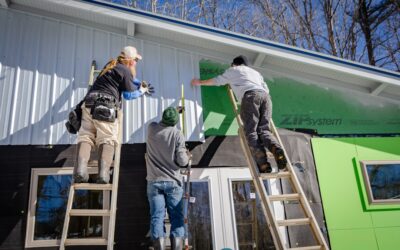
Demolition is the cheapest phase of any re-siding project on paper, but it accounts for the highest rate of injury and surprise costs. Siding removal averages $0.85 to $2.20 per square foot for vinyl, aluminum, and wood lap, jumping to $4 to $9 per square foot when asbestos cement siding is involved and abatement protocols kick in. A typical 1,800 sq ft single-story home runs $1,500 to $4,000 for removal alone, and that’s before the new siding material or installation labor hits the budget.
Identifying Your Siding Type
The first step is knowing what you’re pulling off. Vinyl siding has horizontal panels that lock together at the top edge and slide into J-channels at openings — most homes built after 1985. Aluminum siding looks similar to vinyl but feels heavier and has a chalky oxidized surface — common 1965-1985. Wood lap (clapboard, beveled cedar, redwood) is solid wood nailed directly through the face — common pre-1980 and again in custom construction post-2010. Engineered wood (LP SmartSide, James Hardie HardiePlank) looks like wood but is composite — used widely since 2000. Asbestos cement siding is heavy, brittle, often 12 by 24 inch shingle format — exclusively pre-1980 homes.
If you can’t identify the siding visually, send a sample to a certified lab like EMSL Analytical for $35 to $75 before starting removal, especially on homes built between 1930 and 1980.
Tools Needed for DIY Removal
- Vinyl zip tool — $8 to $15, releases the top lock of vinyl panels without breaking them
- Cat’s paw or pry bar — $12 to $30, lifts wood lap nails without damaging the sheathing
- Reciprocating saw — $80 to $250, cuts nails and stuck panels in tight spots
- Roofing shovel or siding ripper — $20 to $45, fast removal of nailed lap siding
- Extension ladder — 28-foot minimum, $200 to $450 to rent or own
- Heavy work gloves, safety glasses, N95 dust masks — $40 to $80 for full PPE kit
- Magnetic nail sweeper — $25 to $60, picks up dropped nails from the lawn after the job
Step-by-Step for Vinyl Siding
Start at a top corner. Slide the vinyl zip tool up under the bottom edge of the top panel, hook into the lock, and pull horizontally to release the seam. Once the top panel is unlocked, pull it down and out — it slides cleanly through the J-channel at each end. Work down the wall row by row. Most vinyl panels weigh 1 to 2 lb each and stack flat on a tarp. Pull the nails from the wall studs as you go using a cat’s paw.
A two-person crew can strip an 1,800 sq ft single-story home of vinyl in 6 to 10 hours. Single DIYer expect 12 to 16 hours. Save undamaged panels — they can be donated to Habitat ReStore or used for future patch repairs.
Step-by-Step for Wood Lap and Engineered Wood
Wood removal is slower because each board is face-nailed. Start at the top course. Wedge a flat pry bar under the bottom edge and lift gently — most cedar and redwood lifts cleanly. Pull each board down and out. Newer engineered wood (HardiePlank, LP SmartSide) is heavier and more brittle, especially LP after 8-plus years of weather exposure. Wear long sleeves and respirator — Hardie dust contains crystalline silica that requires N95 minimum protection. Bag dust regularly to keep it from migrating to neighboring lots.
A 1,500 sq ft single-story home in cedar lap takes a two-person crew 12 to 20 hours. HardiePlank takes 30% to 50% longer due to weight and brittleness.
Asbestos Siding: When to Stop and Call a Pro
If your home was built before 1980 and the siding is grey-cement shingle, gray-painted cement lap, or transite board, treat it as asbestos until tested. Federal EPA regulations under NESHAP allow homeowners to remove asbestos siding from their own single-family home without licensing, but most state and local codes restrict it. Worker safety rules require full Tyvek suits, P100 half-face respirators, and HEPA-vacuum debris control. Even a single broken asbestos shingle releases enough fibers to contaminate a yard.
Licensed asbestos abatement runs $4 to $9 per square foot — roughly 3 to 5 times the cost of standard siding removal. The 30% to 50% premium over self-removal buys legal disposal, proper PPE, and air clearance testing.
Disposal Costs and Methods
- Vinyl siding: most landfills accept it as construction debris, $40 to $90 per ton, roughly $80 to $200 for an 1,800 sq ft house
- Aluminum siding: scrap value is $0.20 to $0.45 per pound at metal recyclers, often pays back removal labor
- Wood siding (unpainted): $30 to $70 per ton at C&D landfills; some yards accept clean wood for free
- Painted or pre-1980 wood: treat as universal waste, $70 to $140 per ton; lead paint testing recommended
- Engineered wood (HardiePlank, LP): $50 to $120 per ton; some Hardie products contain bound silica
- Asbestos: $250 to $600 per ton at specialized disposal sites, manifest required, transport restricted
- Roll-off dumpster (10 to 30 yd): $300 to $750 for one-week rental including delivery, drop, and haul
What’s Under the Old Siding
Removing siding exposes the sheathing, housewrap, and framing — often the first time those layers see daylight in 30 to 70 years. Common findings: water damage around windows and at base of walls, missing or damaged housewrap, mouse nests in stud bays, electrical wiring run improperly through siding cavity, original 1970s house wrap (felt paper) that’s brittle and torn. Plan for 15% to 25% of the budget to go toward unexpected repairs revealed during demo.
Take photos of every wall section before the new siding goes up. These document construction details, plumbing and electrical runs, and any repairs made — invaluable for future renovations or insurance claims.
When to Hire a Pro Versus DIY
DIY makes sense for single-story homes with vinyl, aluminum, or thin wood lap, where ladder work stays under 12 feet. Hire a pro for two-story homes (fall risk above 20 feet), any asbestos suspicion, HardiePlank over 8 years old (high breakage rate), and homes with mature landscaping where falling debris could damage shrubs and gardens. Professional removal averages $0.85 to $2.20 per square foot for standard materials and includes haul-away in most quotes. Get three bids and confirm dumpster fees aren’t billed separately.