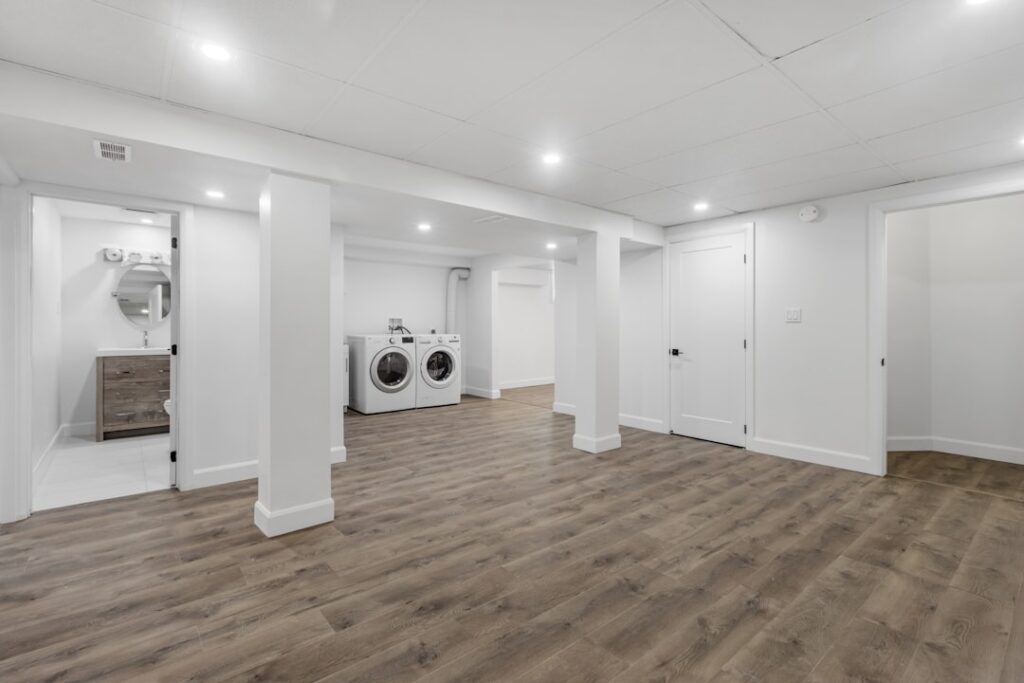
A finished basement can add some of the most affordable square footage in your home, yet many sit empty because owners assume a full remodel is the only option. The best simple basement ideas prove otherwise. With smart choices around flooring, lighting, and layout, you can turn a dim storage zone into a comfortable, usable room without a contractor-sized budget. Here is how to do it the easy way.
- Tackle Moisture Before Anything Else
- Choose Basement-Friendly Flooring
- Brighten a Dim Space
- Easy Ways to Define the Space
- Low-Cost Wall and Ceiling Fixes
- Functional Room Ideas
- Smart Storage Without Clutter
- Heating and Comfort Below Grade
- Budgeting Your Basement Project
- Avoiding Common Basement Mistakes
- Finishing Touches That Add Warmth
Tackle Moisture Before Anything Else
No basement project succeeds if the space is damp. Before you spend a dollar on finishes, address moisture. Look for water stains, musty smells, or efflorescence on walls, and fix the source first. Direct downspouts away from the foundation, seal minor cracks, and run a dehumidifier to keep humidity below 60 percent. For ongoing dampness, waterproofing paint on masonry walls and a quality sump pump provide peace of mind. Getting this right protects every upgrade that follows.
Choose Basement-Friendly Flooring
Flooring sets the tone and must handle below-grade conditions. Skip solid hardwood, which reacts badly to moisture. Better options include:
- Luxury vinyl plank (LVP): The top pick for basements. It is waterproof, warm underfoot, easy to install as a floating floor, and looks like wood. Expect roughly $2 to $5 per square foot for materials.
- Sealed concrete: The most budget-friendly route. Stain, epoxy, or simply seal the existing slab for an industrial, modern look.
- Carpet tiles: Soft, warm, and easy to replace one square at a time if a section gets wet.
- Interlocking foam or rubber tiles: Great for playrooms and home gyms, and they go down in an afternoon.
Brighten a Dim Space
Low natural light is the basement’s biggest challenge, but layered lighting solves it cheaply. Add recessed LED can lights or surface-mount LED fixtures for even ceiling coverage, then supplement with floor and table lamps to soften shadows. Paint walls a light, warm white to bounce light around, and use mirrors to amplify whatever daylight reaches the room. If you have small windows, keep treatments minimal to let every bit of sunshine in.
Easy Ways to Define the Space
You do not need to frame walls to create zones. Simple dividers make a single basement feel like distinct rooms.
- Area rugs: Anchor a seating area or play zone with a large rug.
- Furniture placement: A sofa back or a console table can separate a lounge from a workspace.
- Open shelving: A freestanding bookshelf divides space while adding storage and display.
- Curtains or sliding panels: Hang a curtain track to hide storage or close off a guest sleeping area.
Low-Cost Wall and Ceiling Fixes
Bare foundation walls and exposed joists can look intentional with a little effort. Paint masonry walls with a light color or a waterproofing primer for a clean backdrop. For ceilings, painting the exposed joists, ductwork, and pipes a single dark or matte color creates a trendy industrial look that costs only the price of paint, while keeping access to utilities. If you want a more finished feel, a simple drop ceiling hides mechanicals and dampens sound.
Functional Room Ideas
Match the basement to how your household actually lives. Popular and easy conversions include a casual family lounge with a sectional and a TV, a home office tucked into a quiet corner, a play area with soft flooring and storage bins, a home gym over rubber tiles, or a guest space with a daybed and a curtain for privacy. A small bar cart or a counter with a mini fridge turns a corner into an entertainment hub without plumbing.
Smart Storage Without Clutter
Basements often double as storage, so plan it in rather than letting boxes pile up. Use closed cabinets and labeled bins along one wall, add a few wall-mounted shelves to keep the floor clear, and consider built-in benches with hidden storage in a seating area. Keeping storage organized and concealed lets the rest of the room feel like genuine living space.
Heating and Comfort Below Grade
Basements run cooler than the rest of the house because they sit against the earth, so plan for comfort. If your existing HVAC reaches the basement, make sure supply and return vents are open and balanced. Where ductwork falls short, a ductless mini-split, an electric baseboard heater, or even a quality space heater takes the chill off. Insulating the rim joists and any exposed exterior walls makes a noticeable difference in both warmth and energy use. Warm flooring choices like LVP or carpet tiles, plus an area rug, also help the space feel cozy rather than cold and cavernous.
Budgeting Your Basement Project
One of the appeals of finishing a basement is the flexibility to scale the budget to your goals. A light refresh, painting the walls and ceiling, sealing the floor, adding lighting and furniture, can come together for a few hundred to a couple thousand dollars. A mid-level finish with new flooring, defined zones, and storage might run several thousand. Prioritize spending on the essentials first: moisture control, flooring, and lighting deliver the biggest impact for the money. Cosmetic touches and furniture can be added over time as the budget allows, which keeps the project manageable.
Avoiding Common Basement Mistakes
A few missteps trip up many first-time basement projects. Ignoring moisture is the biggest, since even a beautiful finish fails when dampness takes hold. Installing the wrong flooring, such as solid hardwood or porous materials, invites trouble below grade. Skimping on lighting leaves the space feeling like a cave no matter how nicely it is decorated. Blocking access to shutoff valves, the electrical panel, or cleanouts behind permanent finishes creates headaches later. Plan around these pitfalls from the start, and your simple basement upgrade will stay trouble-free and genuinely usable.
Finishing Touches That Add Warmth
The details make a basement feel like part of the home rather than an afterthought. Soft textiles such as a rug, throw pillows, and a blanket combat the cool, hard surfaces. Add some greenery with low-light plants, hang a few pieces of art at eye level, and bring in a space heater or warm-toned lighting if the room runs cold. These small layers turn a finished shell into a place people actually want to spend time.
Simple basement ideas are about working with the space you have, controlling moisture, brightening the room, and adding comfort in stages. Start with the essentials of a dry, well-lit floor, then layer in zones, storage, and cozy finishes. Done thoughtfully, even a modest budget can reclaim an entire level of your home.