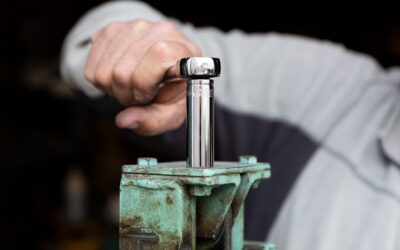
If you have ever laid on your back inside a vanity trying to loosen a faucet nut with a regular wrench, you already know why a specialty sink wrench exists. The awkward 3-inch space between the back of the sink basin and the wall makes standard tools useless. A basin wrench or faucet socket tool turns that 90-minute wrestling match into a 5-minute swap. This guide covers the main sink wrench types, which to buy, how to use them correctly, and realistic prices across quality tiers.
Why a Regular Wrench Will Not Work
Under a typical bathroom or kitchen sink, the supply line nuts and faucet mounting nuts sit 10 to 14 inches above the cabinet floor, surrounded by the sink bowl on top and drain pipes below. The working space is usually 3 to 4 inches of vertical clearance, and the nuts themselves hide directly above the reach of a straight wrench handle.
A standard adjustable wrench cannot turn in that space because the handle hits the sink bowl. A pipe wrench is too bulky. A socket set cannot reach over the plumbing. Specialty sink wrenches solve all three geometry problems with long shafts and pivoting jaws that work in cramped vertical spaces.
The Classic Basin Wrench
The basin wrench is the original sink wrench. A long T-handle shaft, usually 11 to 17 inches, carries a swiveling jaw head at the top that grips the nut while you turn the T-handle down below in open space. The jaw pivots to lock onto the nut and reverses for loosening or tightening.
Quality basin wrenches include the Ridgid 1017 at $45, the Husky Telescoping Basin Wrench at $20, and the Superior Tool 03860 at $30. For most homeowners, the Husky telescoping model is the sweet spot, extending from 10 to 16 inches to match different cabinet depths.
Faucet and Supply Line Nuts
Most kitchen and bathroom faucets mount with plastic or brass hex nuts 1 inch to 1.5 inches in diameter. Supply line couplings are smaller, typically 1/2 inch to 5/8 inch. Most faucet nuts have small wings or ribs rather than standard hex flats, which is why a basin wrench with serrated jaws grips better than a smooth-jaw alternative.
- Faucet mounting nut: 1 to 1.5 inches, usually plastic on new faucets.
- Supply line coupling nut: 1/2 inch to 5/8 inch, brass or chrome.
- Sink strainer lock nut: 3 to 4 inches, flat or slotted.
- Pop-up drain retaining nut: 1.25 to 1.5 inches, plastic or brass.
Faucet Installation Sockets
A newer type of sink wrench is the faucet installation socket, often called a dumbbell tool because of its shape. Brands like Ridgid FaucetTool, Husky Faucet Installation Tool, and Milwaukee Plumbing Socket combine four to six common nut sizes into one tool that attaches to a standard 3/8-inch drive extension.
These tools cost $15 to $40 and work with a regular ratchet or cordless drill set to low torque. They handle 99 percent of modern faucet installations faster than a basin wrench, but struggle with corroded or oddly sized nuts where the basin wrench still wins.
Strap Wrenches for Plastic Nuts
Modern plastic supply line nuts and PEX fittings snap under too much pressure. A strap wrench uses a rubber or nylon strap that wraps around the nut and tightens as you pull the handle. No metal teeth, no crushed plastic.
The Ridgid 5 Strap Wrench at $25 and the Boa Constrictor at $18 handle plastic fittings without damage. Use these anywhere you see plastic nuts on a faucet or toilet supply line, which is almost every fixture sold in the last 15 years.
Step-by-Step Use of a Basin Wrench
Using a basin wrench takes some practice. Here is the correct sequence for removing a faucet mounting nut:
Turn off the water at the shutoff valves. Disconnect the supply lines with an adjustable wrench. Position yourself on your back inside the cabinet with the faucet nut visible above. Extend the basin wrench shaft to reach the nut. Flip the jaw so it opens toward you for loosening (counter-clockwise). Seat the jaw around the nut, making sure the teeth grip the flats or ribs.
Now here is the key step: slide the tommy bar out to one side to create a T-handle, and turn counter-clockwise. The wrench will try to slip off at first. Apply upward pressure on the shaft while turning to keep the jaw engaged. Once the nut breaks free, spin it off by hand using the T-handle rotation.
When to Use a Powered Option
Cordless drills with faucet socket attachments speed up installs dramatically, especially when removing multiple fixtures during a full bathroom remodel. The Milwaukee M12 Installation Drill Driver with the faucet socket kit does in 10 minutes what a manual basin wrench takes 30 minutes to accomplish.
Set the drill clutch to the lowest torque setting, usually 2 or 3 out of 20. Too much torque cracks plastic nuts instantly. For loosening, hand-crack the nut first with the basin wrench, then switch to the drill once it moves freely. For tightening, never use the drill for the final snug turn, finish by hand to feel when the gasket seats.
Sink Drain and P-Trap Wrenches
Sink drains have their own wrench needs. The slip nuts that hold the P-trap together use smooth plastic and hand-tighten in most cases. If they leak, a strap wrench or plumber’s slip-joint pliers with padded jaws prevents marring.
For the kitchen sink strainer lock nut, a 3-inch internal nut buried up under the sink, you need either a strainer wrench (a Y-shaped tool that hooks into the slots of the nut) or locking pliers like Channellock 440s. A quality strainer wrench runs $10 to $20 and saves the 15 minutes you would otherwise spend trying to grip the slots with channel-lock pliers.
Building a Complete Sink Tool Kit
For under $100, you can build a sink tool kit that handles any household plumbing job. Include a telescoping basin wrench, a 5-in-1 faucet installation socket, a strap wrench for plastic nuts, channel-lock pliers with 12-inch handles, a tube of plumber’s putty, Teflon tape, and a pair of rubber-grip gloves.
Add a portable LED work light like the Milwaukee 2362-20 Underhood Light ($70) and you have better lighting than most professional plumbers bring to the job. Store the kit in a small tote that fits under the sink so the next time a faucet drips, you are not searching the garage for tools at 11 pm on a Saturday night. The right sink wrench transforms a stressful plumbing job into a predictable 30-minute fix.