The latch on a typical sliding glass door is a small hook that can often be defeated with a screwdriver in under 30 seconds. That is why burglars favor patio doors at the back of the house, away from street view. A sliding patio door security bar is one of the cheapest and most effective upgrades you can make: it physically blocks the moving panel from sliding open even if the latch fails. Choosing the right style, sizing it correctly, and pairing it with a few inexpensive anti-lift measures turns a weak point into a solid barrier.
Part of our Decks & Outdoor guide — explore the full guide →
How a Sliding Patio Door Security Bar Works
Every sliding patio door has one fixed panel and one operating panel that rolls along a bottom track. When closed, the operating panel sits against the side jamb, and the only thing holding it there is the latch. A security bar fills the gap between the operating panel and the opposite frame so the panel has nowhere to go. Even if someone pries the latch or cuts it, the door cannot slide open more than a fraction of an inch.
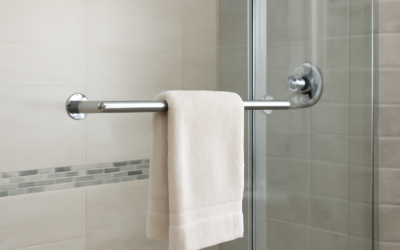
Bars are placed either in the bottom track or at mid-height across the door. A mid-height bar, mounted about 30 to 36 inches off the floor, is harder to dislodge and serves as a visible deterrent. Track bars are nearly invisible but can be knocked out of position if someone lifts the door or reaches through broken glass.
What a security bar does not do is stop a door from being lifted off its track, and it does not stop someone from breaking the glass. It is one layer of protection that works best alongside anti-lift pins, a better lock, and security film.
Types of Patio Door Security Bars
Adjustable Mid-Height Bars
The most popular style is a telescoping steel bar, usually 27 to 48 inches long, that mounts with a bracket on the fixed frame or door panel and swings down into a saddle bracket on the sliding panel. When not in use, it pivots up and clips out of the way. Prices range from $25 to $80. Look for heavy-gauge steel, not thin aluminum, and a locking pin or thumb screw that sets the length.
Track Bars and Dowels
A cut length of 1-inch hardwood dowel or a steel track bar laid in the bottom track is the old-school method. It costs $5 to $25 and works well as a backup, but it must be cut precisely so there is no more than 1/8 inch of play. Aluminum or steel track bars with rubber end caps and a length adjuster are sturdier than wood.
Floor-Braced Bars
Free-standing bars wedge between the floor and the door handle at an angle, similar to door jammers used on hinged doors. Some designs work on sliders by bracing against the frame. They require no drilling, which is useful for renters, but they are less reliable because they rely on friction.
Foot-Operated Locks and Pin Locks
Not technically bars, these devices drill through the operating panel into the fixed panel or the track. A foot-operated bolt lock mounted at the bottom of the door costs $15 to $45 and drops a steel pin into a hole in the track. They are fast to use and hard to defeat, and many homeowners install one alongside a bar.
Choosing the Right Sliding Patio Door Security Bar
Start by measuring the gap. Close the door, then measure from the edge of the operating panel to the side jamb or the edge of the fixed panel at the height where you plan to mount the bar. For a track bar, measure along the bottom track from the operating panel’s frame to the jamb. Most standard 6-foot sliding doors need a 26 to 34-inch bar; 8-foot doors may need 40 to 48 inches.
Next, look at the door material. Vinyl and aluminum frames accept screw-mounted brackets, but vinyl frames are hollow, so use screws long enough to hit the reinforcement channel or add a plastic anchor. Wood and fiberglass frames hold screws well. For clad wood doors, avoid drilling through the cladding into the glass area; most manufacturers mark a safe zone.
Finally, consider how often you use the door. A frequently used patio door is a good candidate for a hinged mid-height bar that swings up easily. A door that is rarely used, such as one to a side yard, can have a track bar left in place permanently.
- Steel construction with a wall thickness of at least 1/16 inch.
- Rubber or vinyl end caps to prevent scratches and rattles.
- Positive locking adjustment rather than a friction clamp.
- Child-safe release if kids use the door, so they cannot get trapped outside but also cannot remove it easily.
How to Install a Mid-Height Security Bar
- Pick the height. Choose a point 30 to 36 inches above the floor where both the fixed frame and the operating panel have solid material for screws.
- Mount the pivot bracket. Hold the bracket on the fixed frame or jamb, mark screw holes, drill pilot holes (typically 1/8 inch for #8 screws), and fasten.
- Attach the bar. Connect the bar to the pivot bracket with the supplied pin or bolt.
- Set the saddle. Lower the bar horizontally to the operating panel, extend it until snug, mark the saddle position, drill, and attach.
- Adjust and lock. Tighten the length adjuster so there is no more than 1/8 inch of movement when you try to slide the door.
- Test. Push the door firmly. It should not move. Lift the bar and confirm it clips up securely when not in use.
Installation takes about 20 minutes with a drill and a tape measure. If you cannot find solid material for screws on a vinyl frame, use an adhesive-backed mounting plate rated for security hardware, though screws are always better.
Anti-Lift Measures That Complete the Protection
Most sliding doors can be lifted out of their track when open or even when closed if the upper channel has space. Anti-lift fixes close that loophole and cost very little.
- Screws in the top track: Drive two or three #10 pan-head screws into the header above the operating panel, leaving the heads just clear of the door top by about 1/8 inch. This prevents the panel from lifting.
- Anti-lift blocks: Plastic or metal blocks that clip into the upper track do the same job without drilling into the frame.
- Adjust the rollers: Many sliders have roller adjustment screws at the bottom edge. Raising the door slightly reduces the top gap.
Also check the fixed panel. It is usually screwed into the frame from the inside, but some older aluminum doors have fixed panels held only by clips. Adding screws through the fixed panel frame into the jamb prevents it from being popped out.
Upgrading Locks, Glass, and Alarms
A security bar works best as part of a layered system. Replace the stock hook latch with a keyed double-bolt mortise lock ($40 to $120) that engages at two points. Apply 8 to 12-mil security window film to the glass; it will not make glass unbreakable, but it holds shards together and slows entry significantly. Professional installation costs $8 to $15 per sq ft, or around $150 to $300 for a standard 6-foot door.
A door or glass-break sensor from any home alarm system adds an alert layer. Motion-sensor floodlights over the patio, typically $40 to $120, reduce the cover darkness gives. Trimming shrubs within 3 feet of the door removes hiding spots.
Costs and Maintenance
A complete patio door security upgrade can be done for under $250:
| Item | Typical Cost |
|---|---|
| Mid-height security bar | $25-$80 |
| Track bar or dowel | $5-$25 |
| Foot-operated bolt lock | $15-$45 |
| Anti-lift blocks or screws | $5-$20 |
| Upgraded keyed lock | $40-$120 |
Maintenance is minimal. Wipe the track clean monthly so debris does not keep the door from closing fully, which leaves a gap the bar cannot fill. Check that mounting screws are tight twice a year, and lubricate the pivot with a dry silicone spray. If the door starts to drag, adjust the rollers rather than forcing it, because a sagging panel changes the gap and affects how well the bar fits.
Fire Safety and Egress
A secured patio door is still an exit in an emergency. Make sure every family member can remove the bar quickly in the dark. Hinged bars that lift with one hand are better than bars that require unscrewing. Avoid keyed locks that need a key to open from the inside unless a key is kept near the door, since codes in many areas discourage double-keyed deadbolts on exit doors. If the patio door is the only exit from a bedroom or basement living area, ask a licensed locksmith or your local fire marshal about compliant security options before permanently blocking it.
Installed thoughtfully, a sliding patio door security bar costs less than a dinner out, takes minutes to put up, and closes off the easiest way into many homes. Combine it with anti-lift screws and a better lock, and your patio door moves from the weakest point in your house to one of the harder ones to breach.