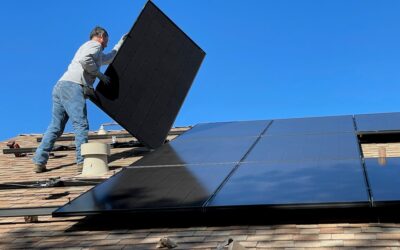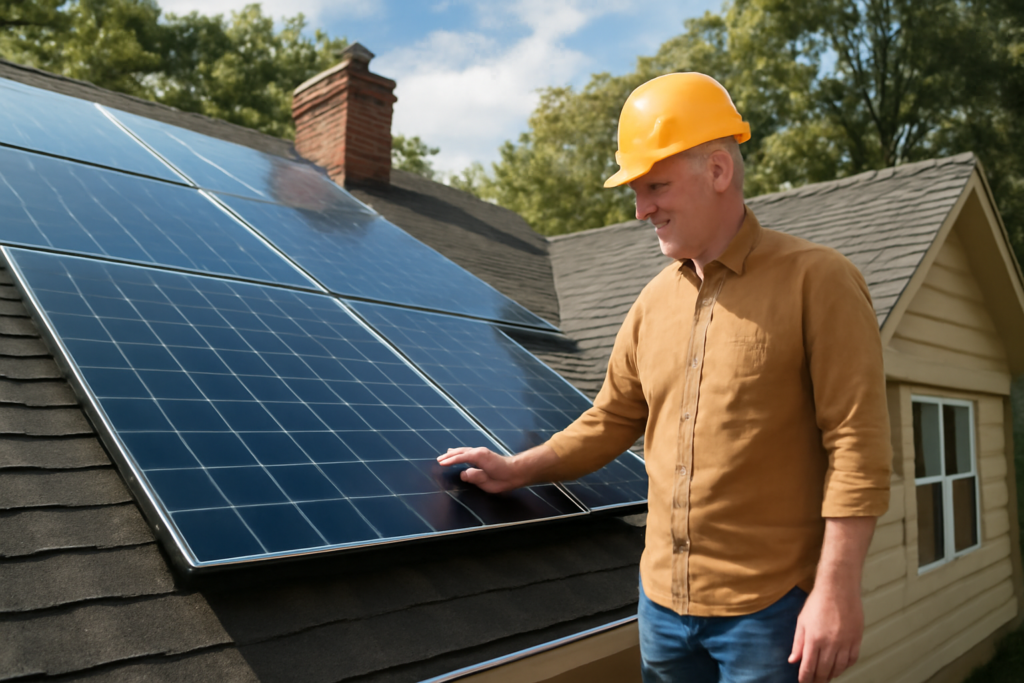
Electricity from the grid keeps getting more expensive, and that single fact is why solar roof systems have moved from a fringe upgrade to a mainstream home improvement. A well-designed system can offset most or all of a household’s power bill and add measurable resale value. Before you sign with an installer, though, you need to understand how solar roof systems are sized, what they cost after incentives, and which type fits your roof. This guide lays it out the way a good energy consultant would.
Part of our Roofing guide — explore the full guide →
How Solar Roof Systems Work
At its core, a solar system converts sunlight into direct current (DC) electricity through photovoltaic cells, then uses an inverter to change that into the alternating current (AC) your home runs on. Any surplus flows back to the grid or into a battery. When the sun is down, you draw from stored battery power or from the utility, depending on your setup.
A complete system has four main parts: the solar collectors on the roof, one or more inverters, a monitoring system, and optionally a battery bank. The roof-mounted collectors are what most people picture, but the inverter is the workhorse that determines efficiency and how well the system handles partial shade.
Traditional Panels vs Solar Shingles
You have two broad choices for the roof itself. Standard rack-mounted panels are the familiar rectangular modules bolted to rails above your existing shingles. Solar shingles, sometimes called a solar roof, integrate the photovoltaic material into roofing tiles that replace conventional shingles entirely.
- Rack-mounted panels: lower cost per watt, higher efficiency (20 to 22 percent on premium modules), faster to install, and easy to service. The trade-off is appearance, since they sit visibly above the roofline.
- Solar shingles: a sleek, integrated look that many homeowners prefer, and they double as your actual roof. The catch is price, often 2 to 3 times the cost per watt, and fewer qualified installers.
For pure economics, rack-mounted panels win almost every time. Solar shingles make sense when you are already replacing the roof and want the aesthetic, or when an HOA restricts visible panels.
Sizing a System to Your Home
System size is measured in kilowatts (kW). The average US home uses about 10,500 kilowatt-hours (kWh) per year, which typically calls for a 6 to 9 kW system, or roughly 15 to 24 panels at 400 watts each. Your exact size depends on your electric usage, your roof’s usable area, and how much sun your region gets.
Pull twelve months of utility bills and total your annual kWh. An installer divides that by your local “sun hours” (a measure of usable daily sunlight, ranging from about 4 in the Pacific Northwest to over 6 in the Southwest) to size the array. A south-facing roof with a 15 to 40 degree pitch and no shade is ideal; east and west faces still work at reduced output, while heavy tree shade can cut production enough to change the whole calculation.
Real Costs and Federal Incentives
In 2026, installed residential solar averages $2.75 to $3.50 per watt before incentives. That puts a typical 7 kW system at roughly $19,000 to $24,500 gross. Solar shingle systems run considerably higher, often $35,000 to $60,000 for comparable output.
The federal residential clean energy credit historically covered 30 percent of the total system cost, and many states, utilities, and municipalities layer on additional rebates or performance payments. Check current federal and state programs before you budget, since these incentives change and directly determine your net price. After a 30 percent credit, that $22,000 system nets around $15,400. Batteries add $8,000 to $15,000 depending on capacity, and many incentive programs treat storage separately.
Batteries and Grid Connection
Most systems are grid-tied, meaning you stay connected to the utility and use net metering to bank excess production as credits. Net metering rules vary sharply by state and utility; some pay full retail rate for what you send back, others pay a lower wholesale rate, which changes your payback math.
A battery like a 13.5 kWh unit lets you store daytime production for evening use and keeps critical circuits running during an outage. If your area has frequent blackouts or poor net-metering terms, storage earns its keep. In a stable grid with generous net metering, a battery is more about resilience than pure savings.
Payback Period and Long-Term Value
The number that matters most is payback: how long until energy savings equal your net cost. For a typical grid-tied system after incentives, payback runs 7 to 12 years, and quality panels carry 25-year production warranties. That leaves a decade or more of essentially free electricity after break-even.
Solar also affects home value. Studies consistently show owned solar systems (not leased) add to sale price, roughly $15,000 to $20,000 for an average system in many markets. A lease or power-purchase agreement, by contrast, can complicate a sale because the buyer must assume the contract. If resale matters, owning outright or financing with a loan you can pay off keeps things clean.
Maintenance and Monitoring
One of the quiet advantages of solar is how little upkeep it demands. With no moving parts in the panels themselves, maintenance mostly means keeping the surface reasonably clean and watching production numbers. In much of the country, rain rinses the panels adequately, but in dusty regions or during long dry spells, a gentle cleaning once or twice a year with water and a soft brush restores lost output. Never use harsh chemicals or walk on the modules, and hire a service for steep or high roofs rather than risking a fall.
The monitoring system that comes with most installs is worth learning to use. It reports daily and lifetime production, and it flags when output drops unexpectedly, which is your early warning that a panel or the inverter needs attention. The inverter is the component most likely to need replacement over the system’s life; string inverters typically last 10 to 15 years, while microinverters (one small unit per panel) often carry 25-year warranties matching the panels. Budget for one inverter replacement over a 25-year horizon if you have a central string inverter.
Snow is a common concern in northern climates. Panels are mounted at an angle and have a slick glass surface, so snow usually slides off within a day or two of a storm, and their dark surface warms in sun to speed melting. You lose some winter production, but properly sized systems account for it, and clearing snow by hand is generally not worth the risk of climbing an icy roof. Watch your monitoring app; consistent underperformance that is not explained by weather is the signal to call your installer while the workmanship warranty still applies.
It pays to understand the financing options too, because how you pay changes the economics as much as the system itself. Paying cash delivers the fastest payback and the best lifetime return, since you avoid interest and own the system outright from day one. A solar loan spreads the cost over 10 to 25 years and still lets you own the system and claim available incentives, though the interest adds to the total; the goal is a loan payment lower than the utility bill it replaces so you save from the start. Leases and power-purchase agreements require little or no money down and hand maintenance to the provider, but you do not own the system, cannot claim the incentives yourself, and may complicate a future home sale when the buyer must assume the contract. For most homeowners who plan to stay put, owning through cash or a loan beats leasing on both savings and resale value. Whatever route you pick, read the fine print on escalator clauses in leases, which raise your payment a few percent each year, and model the full term rather than just the first-year number. The right financing turns a good system into a genuinely smart long-term investment.
Choosing an Installer and Avoiding Pitfalls
Get at least three bids, and compare them on price per watt, panel and inverter brands, and warranty terms rather than headline monthly savings. Confirm the installer is licensed, insured, and certified (NABCEP certification is a strong signal). Ask who handles permitting and the utility interconnection, since those steps add weeks and paperwork.
Have your roof inspected first. If it is within 5 to 10 years of needing replacement, replace it before installing, because removing and reinstalling an array later costs thousands. Match the system to your actual usage, verify current incentives yourself rather than trusting a sales pitch, and read the warranty on both hardware and workmanship. Done right, solar is one of the few home upgrades that pays you back year after year.