Solar shingles have been “two years from mainstream” for about fifteen years now — and yet in 2026 you can genuinely order them from at least four manufacturers and have a working roof in weeks. Solar roof tiles replace your roofing material entirely, generating power from the roof surface itself instead of racking panels on top of it. The look is dramatically cleaner. The price is dramatically higher: expect $30,000 to $80,000+ for a full solar roof versus $15,000 to $25,000 for a conventional panel system of similar output. This guide covers who makes them, what they really cost, and the honest payback math.
Part of our Roofing guide — explore the full guide →
How Solar Tiles Differ From Panels
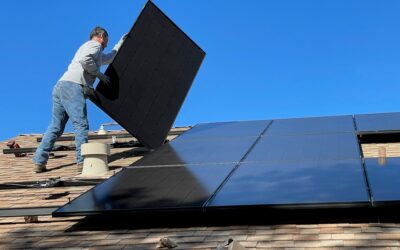
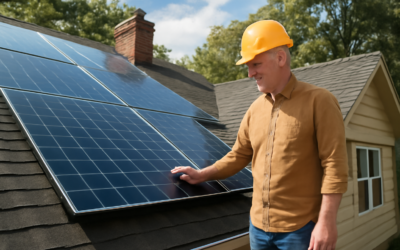
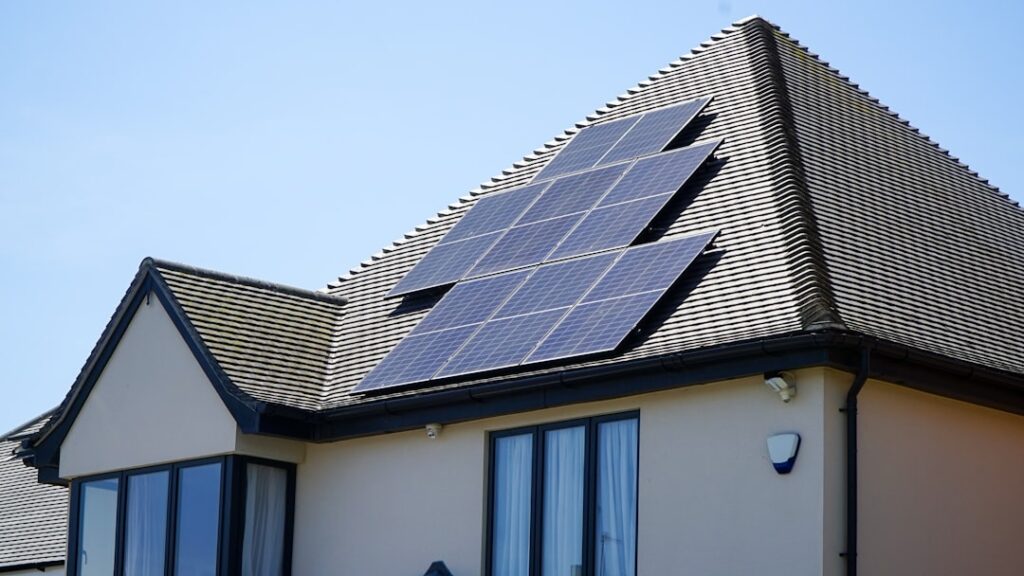
A standard solar panel is a rack-mounted module bolted over your existing roof. A solar tile is the roof — each shingle or tile contains photovoltaic cells and interlocks with its neighbors to shed water like conventional roofing. That integration is the whole appeal: no aluminum racks, no visible frames, and full curb appeal for HOA-sensitive neighborhoods. The trade-offs are equally structural. Solar tiles run 14 to 19 percent efficient versus 21 to 23 percent for premium panels, they lie flat at your roof’s pitch and orientation with no ability to tilt toward the sun, and they run hotter against the deck, which trims output further. Watt for watt, you will always harvest less energy per square foot than a panel system.
The electronics behind the glass are conventional solar equipment: tiles wire into string or micro-inverter architectures, feed a standard inverter, and report through the same monitoring apps panel systems use. That matters for two reasons. Monitoring is how you catch a failed tile or string early — production quietly sagging 8 percent is invisible from the driveway — and inverters, not tiles, are the component most likely to need replacement, typically once in years 12 to 15 at $2,000 to $4,000. Budget for that in any payback model regardless of brand.
Tesla Solar Roof
Tesla’s product replaces the entire roof with tempered-glass tiles — a mix of active photovoltaic tiles and matching inactive ones on shaded or low-value sections. Pricing typically lands between $40,000 and $80,000 for a whole-house installation including tear-off, roughly $15 to $25 per square foot blended, with active capacity priced around $5 to $6.50 per watt before incentives. A Powerwall battery is bundled into most quotes. The tiles carry Class A fire, Class 3 hail, and strong wind ratings, plus a 25-year product and power warranty.
Real-world caveats deserve airtime: Tesla’s install network is thin in many states, quoted timelines slip, and early customers saw significant price revisions after signing. It is the best-looking product in the category — and the one with the most delivery friction. Buy it because you want a striking glass roof and are replacing the roof anyway, not because the spreadsheet demands it.
GAF Timberline Solar
GAF Energy took the opposite approach: a nailable solar shingle that installs with a nail gun by ordinary roofing crews, integrated into a standard Timberline HDZ asphalt roof. Each shingle produces about 45 watts, and only the sun-facing slopes get solar shingles while the rest of the roof is conventional asphalt. Because GAF has the largest roofer network in North America, this is the easiest solar shingle to actually get installed. Costs generally run $4 to $5 per watt for the solar portion plus normal reroofing costs — a typical combined project lands in the $30,000 to $50,000 range before the 30 percent federal credit. If your shingle roof is due for replacement anyway, Timberline Solar has the strongest practical case in the category.
CertainTeed, Luma, and the Rest of the Field
CertainTeed’s Solstice-line solar shingles integrate with its asphalt roofing and are sold through its certified installer base at roughly $4 to $6 per watt. Luma Solar offers a premium interlocking metal-shingle system — notable for being upgradeable as cell technology improves — at $4.50 an up per watt, usually on full-roof projects north of $50,000. SunTegra and a handful of smaller makers serve regional markets. On the tile side specifically, several manufacturers make low-profile modules shaped to nest into concrete S-tile roofs, a popular retrofit in the Southwest where HOAs are strict. Whichever brand you consider, confirm two things: that the installer is certified for both the roofing and the electrical scope, and that the production estimate comes from shade-modeling software, not a salesperson’s rule of thumb.
The Payback Math, Honestly
Run the numbers on a typical 8 kW system for a home paying $200 per month for electricity:
- Conventional panels: ~$3 per watt = $24,000 gross, about $16,800 after the 30 percent federal credit. Payback in 7 – 10 years in most states.
- Solar shingles (GAF/CertainTeed): ~$4.50 per watt plus reroof = $36,000 – $45,000 gross for the solar scope, $25,000 – $32,000 net. Payback 12 – 18 years.
- Tesla Solar Roof: $50,000 – $80,000 all-in; only the solar portion qualifies for the credit. Payback often exceeds 20 years on energy savings alone.
The math only closes the gap when you were paying for a new roof regardless. If your roof has 15 good years left, tearing it off for solar tiles burns money — mount panels instead. If the roof is shot and you value aesthetics, the incremental cost of a solar roof over “new premium roof plus panels” shrinks to a defensible number. That reframing is the single most important sentence in any solar tile decision.
Incentives, Permits, and Grid Rules
The federal residential clean energy credit covers 30 percent of qualified solar costs, but read the fine print for solar roofs: the credit applies to the photovoltaic portion and its installation, not to the plain roofing sections or general tear-off, so a $60,000 Tesla project might yield a $9,000 to $12,000 credit rather than $18,000. Ask every bidder to state, in writing, exactly which line items they believe qualify — aggressive claims are your audit risk, not theirs. State and utility incentives stack on top in many markets, and battery storage qualifies for the federal credit whether installed with the roof or added later.
Net metering policy matters as much as hardware price. States that credit exported power at retail rates shorten payback by years; states that have moved to avoided-cost rates (California’s NEM 3.0 being the famous example) reward pairing the roof with a battery and shifting usage instead. Before signing, get the utility interconnection timeline in the contract too — a finished solar roof waiting six weeks for permission to operate generates nothing. Permitting is standard solar-plus-reroof paperwork: a building permit, an electrical permit, and in HOA neighborhoods an architectural review, which is precisely where integrated tiles sail through while rack-mounted panels get contested.
Durability and Roofing Performance
Modern solar tiles are legitimate roofing: tempered glass surfaces rated Class A for fire, 110 to 130+ mph wind ratings, and hail ratings that meet or beat asphalt. Warranties run 25 years on power output and typically 25 on weatherization. Two practical notes. First, walking a glass-tile roof is a specialist task — factor that into future chimney, satellite, or HVAC work. Second, individual tile replacement is straightforward in theory but depends on the manufacturer still stocking your generation of tile; favor established brands over startups for a component you expect to service in year 18.
Who Should Actually Buy Solar Roof Tiles
Choose solar tiles when three conditions line up: your roof needs replacement now, your HOA or your own taste rules out rack-mounted panels, and you have unshaded south- or west-facing slopes to work with. Choose conventional panels when the roof is healthy or budget payback is the priority. And if you are earlier in the decision — weighing full solar roofs against panels, batteries, and everything in between — our complete solar roof guide walks through the whole landscape before you request a single quote.