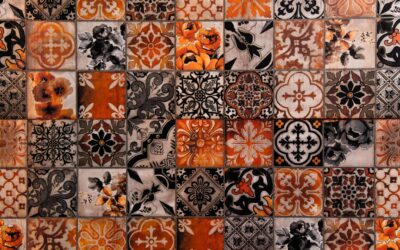
I’ve installed tile in bathrooms for over twenty years, and no style request has grown faster in the last five than the spanish tile bathroom. Homeowners see one photo of a hand-painted vanity wall in Seville or a terracotta floor in a Santa Barbara remodel and they’re sold. The good news is the look is achievable at several price points. The bad news is that most people order the wrong tile for the wrong surface, and Spanish-style tile is one of the least forgiving categories for that mistake. Let me walk you through what actually works.
Part of our Bathroom Remodeling & Flooring guide — explore the full guide →
What Makes a Bathroom “Spanish” in the First Place
Spanish tile design isn’t one thing. It’s a family of Mediterranean traditions that blend Moorish geometry, Andalusian hand-painting, and rustic terracotta. In a bathroom, the look usually comes from combining three elements:
- Decorative patterned tile — hand-painted or screen-printed ceramic in blues, yellows, greens, and whites, often 4×4 or 6×6 inches, used on walls, wainscoting, stair risers of a tub deck, or as a border.
- Terracotta or terracotta-look flooring — warm clay tones in squares, hexagons, or picket shapes.
- Plaster-look or simple field tile — matte white or cream walls that let the decorative tile breathe.
The restraint is the design. Real Spanish bathrooms I’ve studied and replicated almost never tile every surface in pattern. They use pattern as jewelry — a band at chair-rail height, a niche, the face of a curbed shower — against quiet backgrounds.
The Five Tile Types That Build the Look
1. Hand-Painted Ceramic (Azulejo Style)
Authentic hand-painted Spanish tile runs $15 to $40 per square foot, and imported artisan pieces can hit $60. Each tile varies slightly, which is the charm. These are almost always wall-rated only — the glaze is soft and will scratch and wear underfoot. I use them on backsplash walls behind vanities, in shower niches, and as wainscot borders. Never on a floor.
2. Screen-Printed and Inkjet Reproductions
Modern porcelain reproductions of Spanish patterns cost $4 to $9 per square foot and many are floor-rated with proper slip resistance. If your budget is real-world, this is where most of my clients land. Inkjet printing has gotten shockingly good — from standing height you cannot tell a $6 reproduction from a $30 original. Up close you’ll notice repeat patterns, so order from multiple boxes and shuffle during layout.
3. Terracotta
Genuine terracotta (Saltillo from Mexico, or Spanish clay pavers) runs $3 to $8 per square foot for material, but it’s porous and needs sealing before grouting and resealing every 1 to 3 years in a bathroom. In a wet room, I steer clients to terracotta-look porcelain at $4 to $7 per square foot instead — same warmth, zero maintenance anxiety, and far better slip ratings. If you insist on real clay in a bathroom, keep it out of the shower itself.
4. Zellige and Zellige-Look Tile
Zellige is technically Moroccan, not Spanish, but the two traditions share Moorish roots and the glossy, irregular squares pair beautifully with Spanish patterns. A wall of 4×4 emerald or white zellige behind a freestanding tub reads Mediterranean without shouting. Expect $12 to $25 per square foot for the real thing; porcelain look-alikes run $6 to $10.
5. Simple Field Tile
Don’t overlook the quiet partner. A matte white 4×4 ceramic at $2 to $4 per square foot covers the majority of wall area in most Spanish-style bathrooms I build. Slightly irregular “handmade-look” edges sell the effect better than dead-flat modern tile.
Where to Put Pattern (and Where Not To)
This is where DIY designs go sideways. Here’s the placement logic I use on every spanish tile bathroom project:
- Pick one hero surface. Vanity backsplash wall, shower back wall, or the floor. One. If the floor is patterned, the walls stay quiet, and vice versa.
- Use borders to distribute color. A single row of decorative tile at 36 to 42 inches (traditional wainscot height) carries the theme around the room for a fraction of the cost of full-wall pattern.
- Niches are free real estate. A shower niche backed with four to eight hand-painted tiles costs under $200 in material and photographs like a magazine spread.
- Skip pattern on the shower floor. Busy pattern hides soap scum poorly, and decorative glazes rarely carry the slip resistance you need. Use small-format terracotta-look mosaics with tight grout joints instead.
Cost Breakdown for a Real Project
Here’s what a 5×8 hall bathroom (about 40 square feet of floor, 120 square feet of tiled wall) typically runs in my market:
| Approach | Material Cost | Installed Total |
|---|---|---|
| Budget: porcelain reproductions + ceramic field tile | $800–$1,400 | $3,500–$6,000 |
| Mid: floor-rated pattern floor + zellige-look accent | $1,500–$2,800 | $6,000–$10,000 |
| High: hand-painted imports + real terracotta + zellige | $3,500–$7,000 | $12,000–$20,000 |
Labor for patterned and handmade tile runs 20 to 40 percent above standard subway rates because layout, shuffling, and lippage control take real time. Budget $12 to $25 per square foot for installation depending on your region and the tile’s difficulty.
Color Palettes That Actually Work
Spanish tile leans on a handful of proven combinations. Cobalt blue and white is the classic Andalusian pairing and the safest resale choice. Blue, yellow, and white adds the sunny Triana-district feel but commits you harder — that yellow will dictate towels, paint, and hardware forever. Green and cream reads more Californian mission style and pairs well with brass fixtures and wood vanities. Terracotta, cream, and black is the most current look — warm floor, quiet walls, black-framed shower glass and matte black plumbing.
Whatever you choose, pull your grout color from the tile’s background, not its pattern. Bright white grout against cream-background Spanish tile looks like a mistake. I use warm off-whites (something like a bone or almond) on ninety percent of these jobs.
Installation Notes From the Field
- Order 15 percent overage on patterned tile, not the usual 10. Pattern matching eats extra cuts, and dye lots on decorative lines vary more than field tile.
- Dry-lay the entire pattern first. Reproduction patterns often have 4-tile or 16-tile repeats. Lay them out on the floor and photograph the arrangement before a drop of thinset gets mixed.
- Handmade and hand-painted tiles are not flat. Use a 50 percent offset maximum if you’re running any brick pattern, back-butter every tile, and accept that a little lippage is authentic character, not a defect.
- Seal cementitious grout in the shower zone, or spend up on urethane or epoxy grout ($8 to $12 more per bag but nearly stainproof) since decorative tile is miserable to regrout later.
- Waterproof like any other shower. Spanish style changes nothing about the membrane requirements — full liquid or sheet waterproofing on shower walls and floor, sloped pan, flood test before tile.
Common Mistakes I Get Called to Fix
The number one failure: wall-rated hand-painted tile installed on a bathroom floor. Within a year the glaze wears through in the traffic path in front of the vanity, and there is no repair short of demolition. Check the PEI rating — floors need PEI 3 or higher — and the DCOF slip rating, which should be 0.42 or better for any wet-area floor.
Second: pattern overload. Patterned floor, patterned shower wall, and a patterned backsplash in one 40-square-foot room feels like standing inside a kaleidoscope. It also tanks resale, because the next buyer sees demolition costs instead of charm.
Third: cheap unglazed terracotta in a kids’ bathroom with no sealing plan. Six months of toothpaste, urine misses, and hard water and that floor is permanently stained. Real clay demands a maintenance owner. If that’s not you, buy porcelain that fakes it.
My honest verdict after dozens of these projects: a spanish tile bathroom is one of the few trend-adjacent looks that ages gracefully, because it’s built on centuries-old patterns rather than this year’s Pantone pick. Spend your money on one hero surface with the best tile you can afford, keep everything around it calm and handmade-looking, choose floor-rated material anywhere feet land, and pick a grout you can live with for twenty years. Do that, and the room will still make you smile long after the trend cycle has moved on.
Prefer to explore on your own?
See how new flooring looks in your actual room in seconds — free, no signup.
Try the free Floor Studio →