Spanish architecture encompasses centuries of design influence that shaped some of the most recognizable and beloved home styles in America. From the sun-washed stucco walls of Spanish Colonial estates to the ornate details of Churrigueresque facades, these architectural traditions continue to inspire homeowners and builders across the country in 2026. The warmth, texture, and timeless appeal of Spanish design make it one of the most enduring residential styles in history.
This comprehensive guide explores the major Spanish architectural styles, their defining features, and how to choose flooring that honors these beautiful design traditions.
- A Brief History of Spanish Architecture in America
- Major Spanish Architectural Styles
- Key Exterior & Interior Features
- Best Flooring for Spanish-Style Homes
- Color Palettes & Design Elements
- Modern Spanish Architecture in 2026
- Renovation Tips for Spanish Homes
- Building & Renovation Costs
- Frequently Asked Questions
- What is the difference between Spanish Colonial and Mediterranean architecture?
- What flooring is most authentic for a Spanish-style home?
- Are Spanish-style homes energy efficient?
- Can I build a Spanish-style home outside of the Sun Belt?
- How do I maintain a terracotta tile floor in a Spanish home?
- What roof tiles are used on Spanish-style homes?
A Brief History of Spanish Architecture in America
Spanish architectural influence in America dates back to the 16th century, when Spanish missionaries and colonists established settlements across Florida, Texas, California, and the Southwest. The earliest structures were simple adobe missions designed to withstand harsh climates while providing spiritual and community gathering spaces.
The Spanish Colonial Revival movement of the 1920s and 1930s brought renewed interest in these traditions, particularly in California and Florida. Architects like Addison Mizner in Palm Beach and George Washington Smith in Santa Barbara drew inspiration from Spanish, Moorish, and Mediterranean precedents to create a distinctly American interpretation of Spanish design.
Today, Spanish-style homes remain among the most popular residential architectural choices in the Sun Belt states, and their influence extends into modern design with contemporary interpretations that honor traditional elements while embracing 2026 building technologies and sustainability standards.
Major Spanish Architectural Styles
| Style | Period | Key Characteristics | Common Regions |
|---|---|---|---|
| Spanish Colonial | 1600s – 1800s | Thick adobe walls, flat or low-pitched roofs, courtyards | Southwest, California, Florida |
| Spanish Colonial Revival | 1915 – 1940 | Red tile roofs, stucco walls, arched windows | California, Florida, Texas |
| Mission Style | 1890 – 1920 | Curved parapets, bell towers, smooth stucco | California, Southwest |
| Monterey Colonial | 1830s – present | Two-story, second-floor balcony, adobe & wood | California |
| Pueblo Revival | 1900 – present | Flat roofs, rounded edges, earth tones | New Mexico, Arizona |
| Mediterranean Revival | 1920 – 1940 | Blends Spanish, Italian & Moorish elements | Florida, California |
| Spanish Eclectic | 1920 – 1940 | Asymmetric facades, mixed roof heights, towers | Nationwide |
Key Exterior & Interior Features
Exterior features that define Spanish architecture:
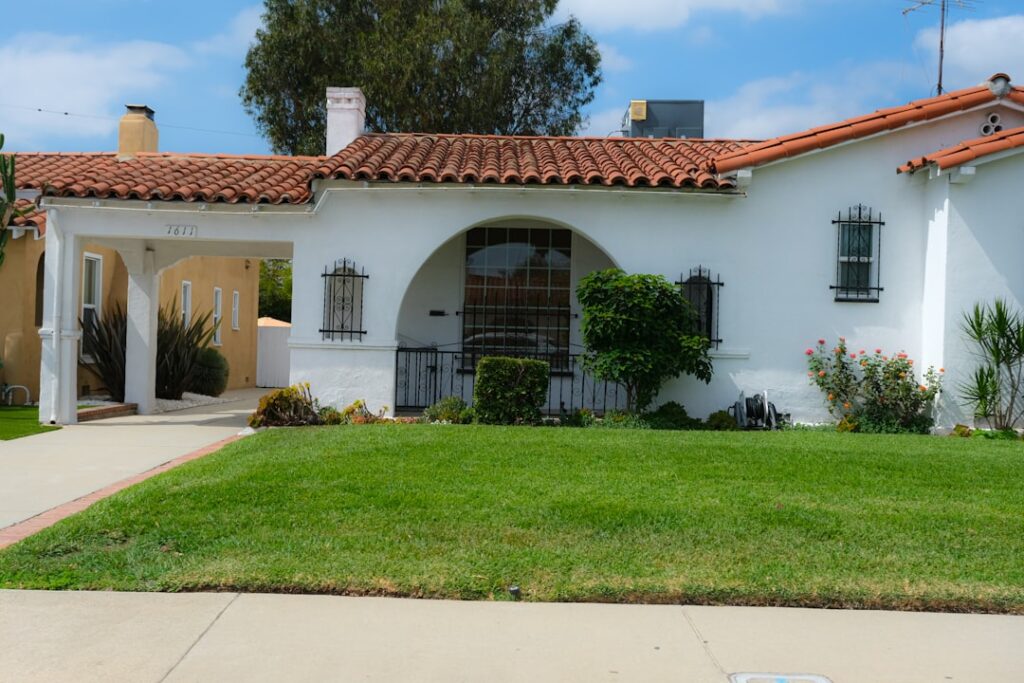
- Stucco walls: Hand-troweled plaster in white, cream, or warm earth tones creates the signature smooth or textured finish.
- Red clay tile roofs: Barrel-shaped terracotta tiles (also called “mission tiles”) are the most recognizable element of Spanish design.
- Arched openings: Rounded arches frame doorways, windows, and covered walkways, adding grace and visual rhythm.
- Iron work: Wrought iron balconies, window grilles, and light fixtures add ornamental contrast against light stucco.
- Courtyards: Central or side courtyards with fountains and lush plantings create private outdoor living spaces.
- Tower elements: Cylindrical or square towers add vertical interest, often housing staircases or small rooms.
Interior features:
- Exposed wood beams: Dark-stained ceiling beams (vigas) provide structural and decorative warmth.
- Decorative tile: Hand-painted Talavera or encaustic tiles accent fireplaces, staircases, risers, and kitchen surfaces.
- Thick interior walls: Deep window seats and arched niches take advantage of substantial wall depth.
- Terra cotta flooring: Traditional clay tile floors in warm, earthy tones anchor the interior palette.
- Dark wood accents: Heavy wooden doors, carved furniture, and hardwood flooring in rich tones complement the light walls.
Best Flooring for Spanish-Style Homes
Flooring is one of the most impactful design decisions in a Spanish-style home. The right floor grounds the entire aesthetic and ties together walls, furnishings, and architectural details.
| Flooring Type | Authenticity | Cost per Sq Ft | Maintenance | Best Rooms |
|---|---|---|---|---|
| Terracotta tile | Highest | $5 – $15 | Medium (seal regularly) | Entryway, kitchen, courtyard |
| Saltillo tile | Very High | $4 – $12 | Medium – High | Living areas, hallways |
| Encaustic cement tile | High | $8 – $20 | Medium | Bathrooms, accent areas |
| Wide-plank hardwood | High | $8 – $18 | Medium | Bedrooms, living room |
| Porcelain (wood or stone look) | Moderate | $4 – $12 | Low | Any room |
| Luxury vinyl plank | Low – Moderate | $3 – $8 | Low | Budget-friendly option |
| Natural stone (travertine) | High | $10 – $25 | Medium – High | Entryway, bathrooms |
For the most authentic look, terracotta or Saltillo tile is unmatched. These handmade clay tiles develop a rich patina over time that adds character and warmth. However, they require periodic sealing to prevent staining and moisture absorption.
For homeowners who want the Spanish look with less maintenance, porcelain tile that mimics terracotta or travertine offers excellent durability and water resistance at a lower lifecycle cost.
Color Palettes & Design Elements
Spanish interior design draws from the natural landscape of the Mediterranean and the American Southwest. The palette is warm, earthy, and grounded, with vibrant accents inspired by hand-painted ceramics and textiles.
Primary wall colors:
- Warm white and cream (the classic stucco backdrop)
- Pale terracotta and sun-bleached clay
- Soft gold and amber
Accent colors:
- Cobalt blue (Talavera tile, decorative plates)
- Deep red and burgundy (textiles, pottery)
- Forest green (iron accents, plantings)
- Turquoise (Southwestern Spanish influences)
For more room-specific color guidance, see our living room color ideas guide, which includes a section on warm, Spanish-inspired palettes.
Modern Spanish Architecture in 2026
Contemporary architects are reinterpreting Spanish design traditions for modern living while respecting the style’s core principles of indoor-outdoor connection, natural materials, and climate responsiveness.
- Clean lines: Modern Spanish homes simplify ornate details while retaining signature elements like stucco walls and clay tile roofs.
- Larger openings: Floor-to-ceiling glass replaces small, deep-set windows to flood interiors with natural light.
- Sustainable materials: Recycled terracotta, reclaimed wood beams, and low-VOC stucco formulations reduce environmental impact.
- Smart home integration: Modern systems are concealed within traditional-looking wall niches and built-in cabinetry to maintain aesthetic authenticity.
- Energy efficiency: The thick walls that define Spanish architecture naturally provide excellent thermal mass, reducing heating and cooling costs. Modern builders enhance this with spray foam insulation and high-performance glazing.
Renovation Tips for Spanish Homes
Renovating a Spanish-style home requires sensitivity to the original design intent. Here are key considerations for preserving character while modernizing functionality.
- Preserve original tile: If your home has original terracotta or Saltillo floors, restoration is almost always preferable to replacement. Professional cleaning and resealing can make decades-old tile look stunning.
- Match stucco textures: When repairing or extending stucco walls, match the original texture and application method. Machine-applied stucco looks noticeably different from hand-troweled finishes.
- Source appropriate hardware: Replace modern hardware with wrought iron or hammered metal pieces that match the home’s era. Specialty suppliers stock reproduction Spanish Colonial hardware.
- Respect the floor plan: Spanish homes are designed around flow between indoor and outdoor spaces. Avoid closing off courtyards or blocking sight lines to exterior areas.
- Update the kitchen thoughtfully: Modern appliances and countertops can coexist with traditional tile backsplashes, wood beam ceilings, and decorative floor tiles.
Building & Renovation Costs
| Project | Average Cost (2026) | Notes |
|---|---|---|
| New Spanish-style home (per sq ft) | $250 – $500 | Varies widely by region & finish level |
| Stucco exterior repair | $8 – $15 per sq ft | Matching texture adds cost |
| Clay tile roof replacement | $15,000 – $45,000 | Depending on roof size |
| Terracotta floor restoration | $3 – $8 per sq ft | Strip, clean, reseal |
| Courtyard addition | $20,000 – $60,000 | Including hardscape & fountain |
| Kitchen renovation | $30,000 – $80,000 | With custom tile & beam work |
| Wrought iron railing installation | $100 – $300 per linear ft | Custom forged is highest |
Frequently Asked Questions
What is the difference between Spanish Colonial and Mediterranean architecture?
Spanish Colonial is a subset of Mediterranean architecture that specifically draws from Spain’s building traditions. Mediterranean architecture is a broader category that also includes Italian, Greek, and French coastal influences. In practice, the terms overlap significantly, especially in American residential design.
What flooring is most authentic for a Spanish-style home?
Handmade terracotta or Saltillo tile is the most authentic flooring choice. These unglazed clay tiles have been used in Spanish architecture for centuries and develop a beautiful patina over time. For bedrooms and upper floors, wide-plank oak or walnut hardwood flooring is traditional.
Are Spanish-style homes energy efficient?
Traditional Spanish design is inherently climate-responsive. Thick walls provide thermal mass, small windows reduce heat gain, and interior courtyards promote natural ventilation. With modern insulation and windows, Spanish-style homes can be very energy efficient, particularly in warm climates.
Can I build a Spanish-style home outside of the Sun Belt?
Yes, but adaptations are necessary. In cold climates, you will need steeper roof pitches for snow shedding, enhanced insulation, and modifications to the flat-roof elements common in traditional Spanish design. The stucco exterior works in all climates with proper flashing and drainage details.
How do I maintain a terracotta tile floor in a Spanish home?
Seal terracotta tiles with a penetrating sealer upon installation and reseal every two to three years. Sweep or vacuum regularly, and mop with a pH-neutral cleaner. Avoid acidic cleaners like vinegar, which can etch the surface. Address spills promptly, as unsealed terracotta is porous and stains easily.
What roof tiles are used on Spanish-style homes?
Barrel (or mission) tiles are the most common, made from terracotta clay fired at high temperatures. They come in one-piece “S” shapes or two-piece pan-and-cover configurations. Concrete roof tiles that mimic the clay tile appearance are a more affordable alternative that lasts 40 to 50 years.
Last updated: March 2026