If your upstairs rooms bake in summer, your energy bills climb every year, and your attic feels like an oven, your roofline insulation may be the culprit. Spray foam roof insulation has become one of the most effective ways to seal and insulate the top of a home, creating an airtight, high-performance barrier that traditional batts simply cannot match. This guide explains how roof spray foam works, the difference between open and closed cell, realistic costs, the genuine benefits, and the drawbacks you should weigh before committing.
Part of our Roofing guide — explore the full guide →
Spray foam is a serious investment, so understanding exactly what it does and where it makes sense will help you decide whether it belongs in your attic.
- How Spray Foam Roof Insulation Works
- Open-Cell vs Closed-Cell Foam
- The Benefits of Roof Spray Foam
- The Drawbacks You Should Know
- What Spray Foam Roof Insulation Costs
- Is It Right for Your Home?
- How Spray Foam Compares to Other Insulation
- Preparing Your Attic and What to Expect During Installation
- The Bottom Line
How Spray Foam Roof Insulation Works
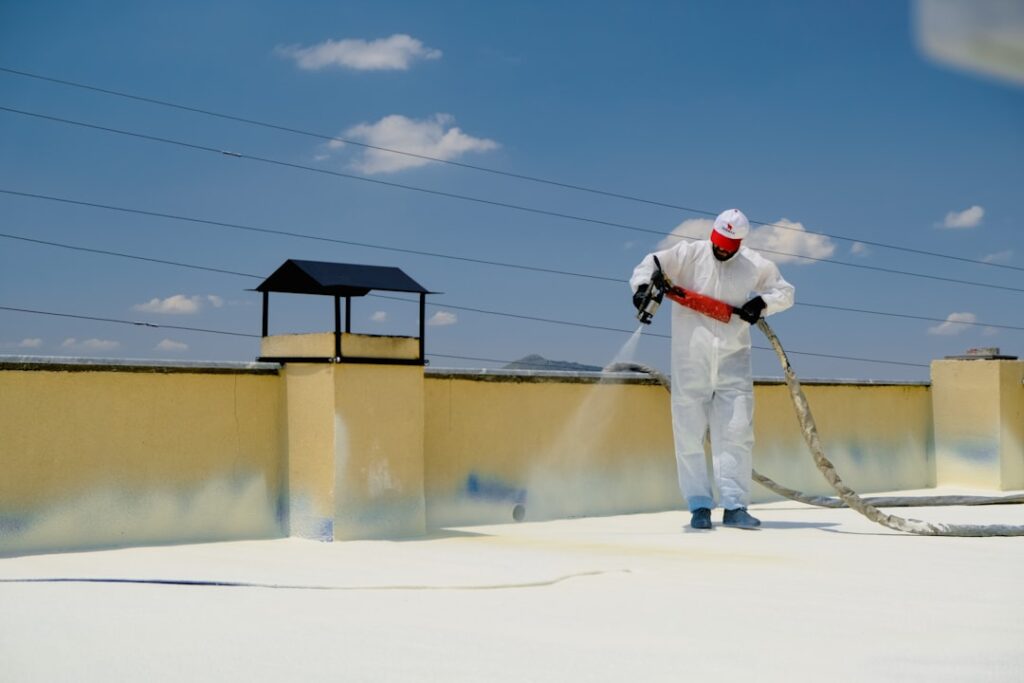
Spray polyurethane foam is applied as a liquid that expands within seconds into a solid layer that both insulates and air-seals. Unlike fiberglass batts, which trap air but do nothing to stop drafts, foam fills every gap, crack, and irregular cavity, then hardens into a continuous barrier. When applied to the underside of the roof deck, it converts a vented attic into an unvented, conditioned space, bringing the attic inside the home’s thermal envelope.
This “hot roof” or conditioned-attic approach keeps ductwork and HVAC equipment in the attic within a temperate zone rather than an extreme one, which can significantly improve efficiency. The foam bonds directly to the rafters and roof sheathing, sealing the entire roofline.
Open-Cell vs Closed-Cell Foam
Choosing between the two foam types is the most important technical decision, and each has distinct strengths:
- Open-cell foam — Lighter and less dense, with an R-value around R-3.5 to R-4 per inch. It expands dramatically to fill cavities, dampens sound well, and costs less. Because it is vapor-permeable, it allows some moisture movement, which can be an advantage in certain climates but a liability in others.
- Closed-cell foam — Dense and rigid, delivering about R-6 to R-7 per inch, roughly the highest R-value per inch available. It adds structural strength to the roof deck, acts as a vapor and moisture barrier, and resists water intrusion. It costs more but does more, making it the premium choice for roof applications, especially in humid or cold climates.
For roof decks, many professionals favor closed-cell foam for its moisture resistance and higher R-value in less thickness, though open-cell is common and cost-effective in the right climate.
The Benefits of Roof Spray Foam
Spray foam earns its cost through several meaningful advantages:
- Superior air sealing — It stops the drafts and air leakage that account for a huge share of energy loss, something batts cannot do.
- High R-value in less space — Closed-cell foam packs strong insulation into a thin layer, useful where space is tight.
- Conditioned attic — Bringing the attic inside the envelope moderates temperatures and protects HVAC equipment and ducts.
- Moisture and mold control — Closed-cell foam blocks moisture that can lead to mold and rot in a vented attic.
- Added structural rigidity — Closed-cell foam stiffens the roof deck and can improve wind resistance.
- Long lifespan — Properly installed foam lasts the life of the home without settling or sagging like some batts.
The Drawbacks You Should Know
Spray foam is powerful, but it is not without downsides that deserve honest consideration:
- High upfront cost — It is significantly more expensive than fiberglass or blown-in cellulose.
- Professional installation required — Roof application demands trained installers with proper equipment and safety gear; it is not a realistic large DIY project.
- Roof leak detection — Because foam adheres to the underside of the deck, a roof leak can be harder to trace and may spread before you notice it.
- Permanence — Foam is very difficult to remove, which complicates future roof deck repairs.
- Off-gassing during install — The chemicals require the home to be vacated during application and for a curing period, typically 24 hours.
- Improper installation risks — Off-ratio or poorly applied foam can smell persistently or fail to cure, so installer quality matters enormously.
What Spray Foam Roof Insulation Costs
Pricing varies by foam type, thickness, and region, but here are realistic figures:
- Open-cell foam — roughly $1 to $1.50 per board foot installed.
- Closed-cell foam — roughly $1.50 to $3 per board foot installed.
- Typical attic roofline project — $4,000 to $12,000 for an average home, depending on size, foam type, and thickness.
A board foot is one square foot at one inch thick, so total cost depends on how many inches you apply to reach your target R-value. Federal energy tax credits and utility rebates can offset part of the expense, so ask your contractor what incentives currently apply.
Is It Right for Your Home?
Spray foam roof insulation makes the most sense when you want to create a conditioned attic, have HVAC equipment or ducts in the attic, live in a climate with heavy air-conditioning or heating loads, or are dealing with a persistently hot upper floor. It is also ideal during a re-roof or new construction when the deck is accessible. If your attic is already well vented, your ducts are elsewhere, and your budget is tight, blown-in cellulose or fiberglass on the attic floor may deliver adequate performance for far less money.
Before committing, have an energy audit or a reputable insulation contractor assess your home. Ask about the foam type they recommend, whether they will address ventilation and moisture properly, and how they handle the transition to a conditioned attic.
How Spray Foam Compares to Other Insulation
To judge whether roof spray foam is right for you, it helps to see how it stacks up against the alternatives. Fiberglass batts are the cheapest option and easy to install, but they do nothing to air-seal and lose effectiveness where they are compressed or gapped. Blown-in cellulose fills irregular spaces better and is made largely from recycled material, but it also does not create an air seal and can settle over time. Rigid foam board offers good R-value and some air sealing but is labor-intensive to fit tightly against a roof deck. Spray foam is the only material that insulates and air-seals in a single continuous application while conforming perfectly to the roof structure. That combination is its defining advantage, and it is why foam commands a premium price. Whether that premium is worth it depends on how much air leakage and moisture control matter for your specific home and climate.
Preparing Your Attic and What to Expect During Installation
If you decide to move forward, knowing what installation involves helps the day go smoothly. The attic must be cleared of stored items and the roof deck inspected for existing leaks, since foam should never be sprayed over active moisture. The crew masks off areas not being sprayed, sets up ventilation, and suits up in full protective gear. Because of off-gassing, the home is vacated during application and for a curing period, commonly 24 hours, before it is safe to reoccupy. Installers apply the foam in controlled passes, or lifts, building up to the target thickness, since applying too much at once can trap heat and cause the foam to cure improperly. A quality contractor will also address the transition to a conditioned attic, sealing gable vents or soffit vents as the design requires and confirming the HVAC system is sized appropriately for the newly enclosed space.
The Bottom Line
For homeowners seeking the highest level of air sealing and insulation at the roofline, spray foam roof insulation is hard to beat. It delivers exceptional energy savings, moisture control, and comfort, particularly with closed-cell foam in demanding climates. The tradeoffs are real: higher cost, professional-only installation, and permanence. Weigh those against the long-term savings and comfort, get quotes from experienced installers, and confirm they will manage moisture and ventilation correctly. Done right, it transforms a hot, leaky attic into an efficient, comfortable extension of your home’s thermal envelope.