If your energy bills keep climbing or certain rooms never feel comfortable, your insulation may be the culprit. So what is foam insulation, and why do so many contractors recommend it? In short, it is a spray-applied or injected polyurethane product that expands to fill cavities, seals air leaks, and delivers a higher R-value per inch than traditional fiberglass or cellulose. That combination of insulating and air-sealing in one step is what sets it apart.
I have specified and installed foam on everything from crawl spaces to vaulted ceilings. This guide explains the two main types, their R-values, real costs, where each one shines, and whether the job is something you should tackle yourself.
How Foam Insulation Works
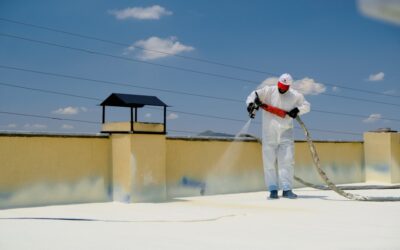
Foam insulation arrives as two liquid components that mix at the spray gun. When they combine, a chemical reaction causes the material to expand rapidly, sometimes to many times its liquid volume, and then cure into a solid. As it expands, it flows into gaps, around wiring, and into irregular cavities that batt insulation can never fully seal.
The result is a continuous layer that blocks both conductive heat loss and air movement. Because air leakage accounts for a large share of energy waste in most homes, that built-in air barrier is often more valuable than the raw R-value alone.
Open-Cell Versus Closed-Cell Spray Foam
The most important decision is which type to use. Open-cell and closed-cell foam look similar going on, but they perform very differently once cured.
Open-Cell Foam
Open-cell foam has a softer, sponge-like structure because its cells are not fully encapsulated. It is lighter, expands more, and costs less. It delivers an R-value of roughly 3.5 to 3.7 per inch. Open-cell is vapor permeable, which can be an advantage in some wall assemblies that need to dry, and its softness makes it a decent sound dampener.
Closed-Cell Foam
Closed-cell foam is dense and rigid because its cells are completely closed and filled with gas. It packs far more insulating value into less space, around R-6 to R-7 per inch, and it acts as a vapor barrier and even adds structural rigidity to walls. It is the go-to choice where moisture, flooding, or space constraints are concerns.
- Open-cell: R-3.5 to R-3.7 per inch, vapor permeable, lower cost, softer
- Closed-cell: R-6 to R-7 per inch, vapor barrier, higher cost, rigid and stronger
What Foam Insulation Costs
Pricing depends on the type, the thickness, and the difficulty of access. As a general guide, expect open-cell foam to run about $0.45 to $0.75 per board foot and closed-cell to run $1 to $1.50 per board foot. A board foot equals one square foot at one inch thick.
For a whole-house perspective, insulating an average home with spray foam typically costs $3,000 to $8,000 or more, while a single application like an attic or crawl space might run $1,500 to $4,000. Foam costs more upfront than fiberglass, but the air-sealing benefit often pays back through lower heating and cooling bills over time.
Where to Use Foam Insulation
Foam earns its premium in the right locations. I most often recommend it for these areas:
- Attics and roof decks: Spraying the underside of the roof creates a conditioned attic and seals tricky angles.
- Rim joists: One of the leakiest spots in any house; closed-cell foam seals and insulates in one pass.
- Crawl spaces and basements: Closed-cell resists moisture and stops ground humidity from entering.
- Cathedral and vaulted ceilings: High R-value in limited depth where batts cannot fit.
- Around penetrations: Plumbing, wiring, and ductwork gaps that other insulation misses.
Pros and Cons
Foam is excellent, but it is not the right answer for every project. Weigh the trade-offs honestly.
Advantages: superior air sealing, high R-value per inch, moisture control with closed-cell, long lifespan, and reduced drafts and energy bills. It also fills irregular spaces that other insulation cannot.
Drawbacks: higher upfront cost, the need for protective gear and ventilation during installation, potential for messy or uneven application if done poorly, and difficulty making changes later since the foam adheres permanently. Improperly mixed foam can also off-gas, so curing time and ventilation matter.
DIY Versus Professional Installation
Small jobs, like sealing gaps around windows, filling a few rim joists, or insulating a small section, can be handled with DIY foam kits available at home centers for $300 to $700. These two-component kits work fine for limited areas if you follow the temperature and mixing instructions exactly and wear proper respiratory protection.
Anything larger, whole attics, full walls, or crawl spaces, belongs to a professional. Pros have the rig to maintain the precise mix ratio and temperature that DIY kits struggle with, and a poor mix can lead to foam that never fully cures, smells, or pulls away from the substrate. Professional crews also carry the safety equipment to handle the fumes generated during application.
How Foam Compares to Other Insulation
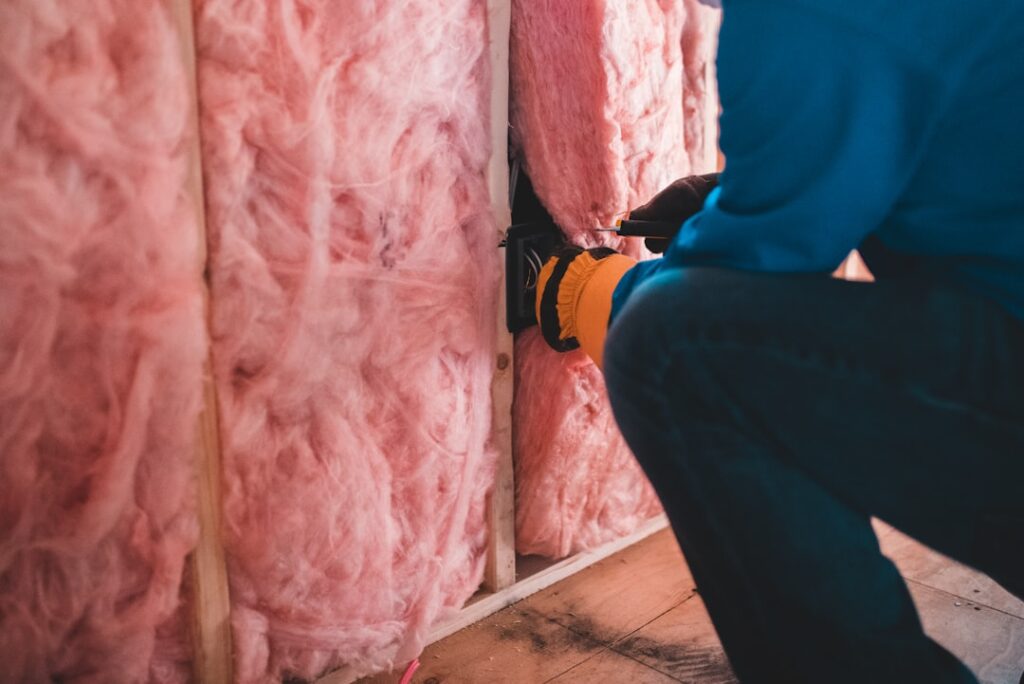
It helps to see where foam sits against the alternatives. Fiberglass batts are the cheapest option, around $0.30 to $1.50 per square foot, but they only slow conductive heat and do nothing to stop air leakage on their own, so gaps and compression cut their real-world performance. Blown-in cellulose fills cavities better than batts and uses recycled material, yet it too lacks a true air seal and can settle over time.
Foam costs more than both, but it bundles insulation and air sealing into one product and holds its R-value without settling. For a homeowner deciding where to spend, the rule of thumb I give is simple: use fiberglass or cellulose in large, easy-to-fill cavities on a tight budget, and reserve foam for the leaky, hard-to-reach, or moisture-prone spots where its air-sealing and high R-value earn their keep.
Signs Your Home Needs Better Insulation
Foam is an investment, so it helps to know when it is justified. Watch for these telltale signs that your current insulation is failing:
- Rooms that are noticeably hotter or colder than the rest of the house
- Drafts near outlets, baseboards, and where the floor meets exterior walls
- High heating and cooling bills relative to comparable homes
- Ice dams forming along the roof edge in winter
- Cold floors above an unconditioned crawl space or garage
If several of these ring true, a blower-door test from an energy auditor can pinpoint exactly where air is leaking and whether foam is the right fix for those locations.
Final Thoughts
So, returning to what is foam insulation: it is a high-performance, spray-applied product that insulates and air-seals in a single step, with open-cell offering economy and closed-cell offering maximum performance and moisture resistance. Choose the type based on the location and your moisture concerns, budget for the higher upfront cost, and leave the big jobs to a qualified installer. Done right, foam insulation is one of the most effective upgrades you can make to your home’s comfort and efficiency.