Most garages are the least efficient room in the house: uninsulated walls, a thin door, and gaps everywhere. That’s fine for parking a car, but it turns miserable the moment you want a workshop, a home gym, or a warmer room above. Garage spray foam insulation seals air leaks and insulates in one step, which is why it’s become a popular upgrade. It is also more expensive than fiberglass, comes with real chemical-safety and fire-code considerations, and isn’t the right answer for every garage.
This guide explains how spray foam performs in walls and garage ceilings, the difference between open- and closed-cell foam, typical costs, the code requirements people often miss, and when the job belongs with a certified installer.
- Is Garage Spray Foam Insulation Worth It?
- Open-Cell vs. Closed-Cell Spray Foam
- Where to Spray Foam in a Garage
- Code Requirements: Thermal Barriers and Fire Separation
- Cost of Garage Spray Foam Insulation
- Safety: Chemicals, Ventilation, and Re-Entry
- Preparing Your Garage for Spray Foam
- Alternatives to Consider
- Frequently Asked Questions
Is Garage Spray Foam Insulation Worth It?
Spray foam makes the most sense in garages you actually use as living or working space. If you heat or cool the garage, run a workshop year round, or have a bedroom or bonus room above it, foam’s air sealing can make a noticeable difference in comfort and energy bills. Air leakage often matters as much as R-value in garages, because the walls usually have gaps around outlets, top plates, and sheathing seams that fiberglass batts simply can’t close.
It’s harder to justify in a detached garage used only for parking and storage. In that case, you’ll pay premium prices to insulate a space you don’t condition, and the large, uninsulated overhead door will still leak heat. A reasonable middle path for many homes is to spray foam only the shared wall and ceiling between an attached garage and the house, then use cheaper insulation elsewhere.
Moisture is another factor. Garages see car exhaust, road salt, and melting snow. Closed-cell foam’s water resistance and vapor-retarding properties help in those conditions, particularly on concrete block walls and in humid climates.
Open-Cell vs. Closed-Cell Spray Foam
The two main types behave very differently, and the choice drives both performance and cost.
Open-Cell Foam
Open-cell foam is soft, spongy, and expands dramatically. It typically delivers about R-3.5 to R-3.8 per inch, so a 2×4 wall cavity filled to 3-1/2 inches reaches roughly R-13. It’s an excellent air barrier and absorbs sound well, which is useful for a workshop or band practice space. However, it’s vapor-permeable and can hold water if it gets wet, so it’s a poor choice anywhere liquid water or high humidity is common.
Closed-Cell Foam
Closed-cell foam is dense and rigid, delivering about R-6 to R-7 per inch. Two inches in a wall cavity can equal or beat a full cavity of fiberglass, and at around 1-1/2 to 2 inches it acts as a vapor retarder. It adds some racking strength to walls and resists water, making it a strong fit for garages in cold or wet climates and on masonry walls. The downside is cost: it’s usually priced higher per board foot, and its blowing agents have historically carried a larger climate footprint, though many newer formulations use lower-impact agents.
| Feature | Open-Cell | Closed-Cell |
|---|---|---|
| R-value per inch | About 3.5-3.8 | About 6-7 |
| Vapor retarder | No | Yes, at ~1.5-2 in |
| Water resistance | Low | High |
| Sound damping | Better | Moderate |
| Relative cost | Lower | Higher |
Where to Spray Foam in a Garage
Exterior walls: The most common target. Foam fills around wiring, boxes, and irregular framing and seals the sill plate and top plate, which are major air-leak points.
Shared wall with the house: In attached garages, this wall separates conditioned space from an unconditioned, fume-prone space. Sealing it helps with both energy loss and keeping exhaust odors out of the house. Just be careful not to compromise the required fire separation assembly.
Ceiling under a bonus room: Rooms above garages are notoriously cold in winter and hot in summer. Foam along the floor framing, especially sealing the rim joist area, can transform comfort upstairs.
Garage door: Spraying foam directly onto a steel overhead door is generally discouraged. It adds weight that can throw off spring balance and void warranties. Rigid foam door kits or an insulated replacement door are better options.
Rim joists and band areas: Small in area but big in leakage. Closed-cell foam here is one of the highest-value applications in any garage.
Code Requirements: Thermal Barriers and Fire Separation
This is the part many DIY videos skip. Spray polyurethane foam is a foam plastic, and residential building codes generally require it to be separated from interior spaces by an approved thermal barrier, most commonly 1/2-inch gypsum drywall. In other words, you usually can’t leave foam exposed on garage walls you use as living or work space. Some specialty coatings are approved as alternatives for specific foams, but only when the product’s evaluation report allows it and the local inspector accepts it.
Attached garages have an additional requirement: the wall and ceiling between the garage and the house must meet fire separation rules, typically including at least 1/2-inch gypsum board on the garage side, and 5/8-inch Type X gypsum on the ceiling if there are habitable rooms above. Foam insulation does not replace these layers. Plan to finish with drywall, tape, and mud, and check with your local building department because requirements vary by jurisdiction and project scope.
Cost of Garage Spray Foam Insulation
Spray foam is priced per board foot, meaning 1 square foot at 1 inch thick. Pricing varies widely by region and job size, but as a planning range:
- Open-cell: often around $0.45 to $1.00 per board foot installed.
- Closed-cell: often around $1.00 to $2.00 per board foot installed.
For a typical two-car garage with roughly 500 to 600 sq ft of exterior wall area, closed-cell foam at 2 inches might cost somewhere in the range of $1,500 to $3,500 for walls alone. Open-cell at full cavity depth can land in a similar range because you’re spraying more inches of cheaper material. Adding the ceiling, rim joists, and drywall raises the total. Many contractors have a minimum job charge, so small garages can cost more per square foot.
DIY spray foam kits exist, usually two-component kits sold by board foot coverage. They can make sense for small areas like rim joists, but whole-garage coverage with kits is often more expensive than hiring a crew, and getting consistent thickness is hard without experience.
Safety: Chemicals, Ventilation, and Re-Entry
Spray foam is made by mixing two liquid components, typically an isocyanate (A-side) and a polyol resin blend (B-side), at the spray gun. During application and curing, the mix can release vapors and aerosols that irritate the eyes, skin, and lungs. Isocyanates are a known sensitizer, which means some people develop asthma-like reactions after exposure, and those reactions can worsen with future exposures.
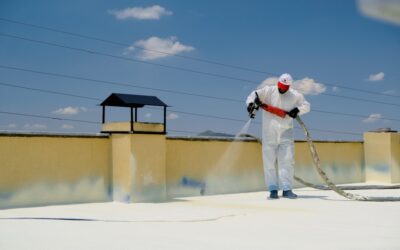
Professional installers wear supplied-air respirators, full-body suits, and gloves, and they ventilate the work area. Homeowners, children, and pets should stay out of the space during application and for the re-occupancy period specified by the manufacturer, commonly around 24 hours but sometimes longer. In an attached garage, keep the door to the house closed and sealed and consider staying elsewhere if the installer recommends it.
Improperly mixed foam, often from off-ratio spraying or wrong temperatures, can cure poorly and cause lingering odors. Ask your contractor about their quality checks and what they’ll do if odors persist.
When to Call a Licensed Professional
For anything beyond small touch-up kits, hire an experienced spray foam contractor, ideally one with manufacturer training or industry certification. Also bring in a licensed electrician before spraying if wiring needs to be added, relocated, or inspected, since foam makes future wiring changes difficult. If your garage has gas appliances such as a water heater or furnace, confirm with a qualified HVAC technician that combustion air and venting remain adequate after sealing, and keep a working carbon monoxide alarm in the adjacent living space.
Preparing Your Garage for Spray Foam
- Clear the space. Move vehicles, tools, and stored items out. Overspray travels farther than you’d expect.
- Finish rough-ins. Add outlets, lighting circuits, and any low-voltage wiring before foam goes in.
- Fix water problems. Repair roof leaks, siding gaps, and grading issues. Foam won’t cure a wet wall.
- Protect surfaces. Installers will mask windows, doors, and floors, but confirm they’re covering the garage door tracks and opener.
- Schedule drywall. Line up the thermal barrier installation so foam isn’t left exposed longer than necessary.
Alternatives to Consider
If spray foam feels like overkill, fiberglass or mineral wool batts combined with careful air sealing using canned foam and caulk can get you much of the benefit at a lower cost. Rigid foam board is another option, particularly on concrete block walls. Some homeowners also use a hybrid approach: an inch or two of closed-cell foam for air sealing and moisture control, topped with batts to fill the cavity. That “flash and batt” method balances performance and cost well in many garages.
Frequently Asked Questions
Is open-cell or closed-cell foam better for a garage?
Closed-cell is usually the better choice for garages because it resists moisture, adds wall rigidity, and offers higher R-value per inch. Open-cell can work in dry climates and interior walls where sound damping matters more.
Do I have to cover spray foam in my garage?
In most cases, yes. Codes typically require a thermal barrier such as 1/2-inch drywall over foam plastic insulation in occupied spaces, and attached garages have added fire separation rules.
How long after spray foam can I use my garage?
Follow the manufacturer and installer guidance, which commonly calls for about 24 hours or more of ventilation before re-entry.
Can I spray foam my garage door?
It’s generally not recommended because added weight can affect spring balance and warranties. Use a garage door insulation kit or an insulated door instead.
Will spray foam make my garage warm in winter?
It greatly reduces heat loss and drafts, but an unheated garage will still get cold. Pair insulation with an insulated door and a safe heat source for real comfort.