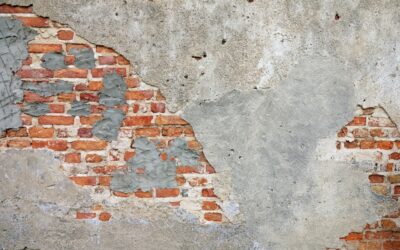
A zigzag crack climbing a brick or block wall looks alarming, and sometimes it should. Stair step cracks follow the mortar joints in a staircase pattern because mortar is the weakest part of a masonry wall, so when the wall moves, the joints give way first. The pattern itself tells you the wall has experienced differential movement, meaning one part moved more than another. Whether that is a minor, long-settled event or an active foundation problem depends on the crack’s width, whether it is growing, and what else is happening in the house.
Part of our Stairs & Stair Flooring guide — explore the full guide →
As a general rule of thumb, hairline stair step cracks that have not changed in years, with bricks still aligned, are often old settlement and can be repointed. Cracks wider than about 1/4 inch, cracks where the bricks or blocks have shifted out of plane, or cracks that widen over a few months call for a structural engineer before any repair. Filling an active crack with mortar only hides the evidence.
This guide explains why the cracks form, how to measure and monitor them like a pro, what repair options exist, and where the line sits between DIY maintenance and engineering.
Why Stair Step Cracks Form in Masonry
Brick and concrete block are strong in compression but weak in tension and bending. When the soil or structure below moves unevenly, the wall tries to bend. Instead of snapping through the units, it cracks along the mortar joints, stepping up one course at a time.
Foundation settlement
The most common cause. Soil beneath one part of a footing compresses or washes away, and that section drops. Poor compaction during construction, leaking gutters that saturate soil near one corner, and plumbing leaks are frequent culprits. Settlement is often most active in the first few years after construction and then slows.
Expansive clay soils
Clay swells when wet and shrinks when dry. In regions with clay soils, a wall can move seasonally, with cracks opening in late summer droughts and closing in wet months. Trees close to the house can intensify drying.
Frost heave
In cold climates, water in soil freezes and expands. Shallow footings, or footings where drainage is poor, can lift in winter and drop in spring. Garage and porch foundations are more vulnerable than the main house.
Lateral soil pressure
For basement and retaining walls, saturated soil pushes inward. Stair step cracks in block foundation walls often combine with a horizontal crack partway up the wall and inward bowing, a more serious pattern.
Thermal and moisture movement
Long runs of brick veneer expand in heat and moisture. Without proper expansion joints, stress builds and cracks form, often near corners, openings, or where veneer meets another material.
Lintel and opening problems
Rusting steel lintels over windows and doors expand and push brick upward, while undersized lintels sag. Both can start stair step brick cracks at the corners of openings.
How Serious Are Stair Step Cracks? Reading the Signs
| What you see | What it may mean | General response |
|---|---|---|
| Hairline, under 1/16 in., unchanged for years | Old settlement or shrinkage | Monitor; repoint if mortar is loose |
| 1/16 to 1/4 in., stable | Moderate past movement | Monitor several months; consider evaluation |
| Over 1/4 in. or growing | Possible active movement | Structural engineer before repair |
| Bricks offset, bulging, or bowing wall | Significant structural stress | Engineer promptly |
| Crack wider at top than bottom | Corner or end of wall dropping | Engineer evaluation |
Look for companion signs inside the house too. Doors and windows that stick or no longer latch, drywall cracks above door frames, gaps between trim and walls, and floors that slope noticeably all suggest the movement is not limited to the masonry.
How to Measure and Monitor a Crack
An engineer will want to know whether the crack is moving. You can gather that data yourself over a few months, and it makes any professional evaluation faster and more useful.
Tools
- Crack width gauge card (a plastic card with printed line widths, inexpensive at hardware stores or online)
- Tape measure and a fine permanent marker
- Smartphone camera and a notebook or spreadsheet
- Optional: a crack monitor, a two-piece plastic gauge with a grid that mounts across the crack
- 4-foot level
Monitoring steps
- Mark the ends. Draw a short pencil or marker line across each end of the crack and write the date. If the crack extends past the mark later, it is growing in length.
- Measure the width. At the widest point, hold the gauge card against the crack and note the matching line. Mark exactly where you measured so you can repeat it.
- Install a crack monitor. For cracks wider than hairline, a tell-tale monitor fixed across the crack records both horizontal and vertical movement to about 1 mm.
- Photograph. Take photos from the same position with a ruler or the gauge in frame.
- Check for plane shifts. Hold a level or straightedge across the crack. If one side sits out from the other, the wall has moved in or out, not just apart.
- Record monthly. Measure at least monthly for three to six months, noting weather. Seasonal opening and closing points toward soil moisture; steady widening points toward active settlement.
Repair Options for Stair Step Brick Cracks
Repair always follows diagnosis. Cosmetic work on a moving wall fails and can mask evidence an engineer needs.
Repointing stable hairline cracks
For stable, narrow cracks, repointing restores the mortar and keeps water out:
- Wear safety glasses, gloves, and a respirator rated for silica dust, since grinding mortar releases crystalline silica.
- Rake out the cracked mortar to a depth of about 1/2 to 3/4 inch with a joint raker or a grinder with a mortar blade, keeping the edges of the brick intact.
- Brush and rinse the joints, then let them dry to damp.
- Mix mortar that matches the original in strength and color. Older homes, especially pre-1930s, often have soft lime mortar, and hard modern mortar can damage soft brick.
- Pack mortar into the joints in layers with a tuckpointing trowel, then tool to match the existing joint profile.
- Mist the work over the next few days so it cures slowly.
Flexible sealants
For cracks that open and close seasonally but show no long-term growth, a masonry-grade polyurethane sealant can flex with movement. It is less attractive than mortar but more durable in that situation.
Helical ties and crack stitching
Masons can cut slots into bed joints across the crack and embed stainless helical bars in grout, stitching the masonry back together. This distributes stress but does not fix the cause.
Foundation repairs
If settlement is active, an engineer may recommend underpinning with helical or push piers, correcting drainage, or, for bowing block walls, wall anchors, steel beams, or carbon-fiber straps. These require design and are not DIY work.
Fix the Water First
Much foundation movement traces back to water. Before or alongside any repair:
- Clean gutters and extend downspouts at least 4 to 6 feet from the foundation.
- Regrade soil to slope away from the house, roughly 6 inches of drop over the first 10 feet where practical.
- Fix leaking hose bibs, irrigation lines, and plumbing.
- Keep large trees and thirsty shrubs a reasonable distance from walls in clay regions.
Typical Costs
Monitoring costs next to nothing. DIY repointing of a short crack typically runs $20 to $60 in mortar and tools, plus a grinder if you do not own one. Professional tuckpointing for a crack section is usually a few hundred dollars. A structural engineer’s inspection and letter often falls in the range of a few hundred dollars to over $1,000 depending on your market and the report detail. Crack stitching, pier underpinning, and wall-bracing systems vary widely, from hundreds of dollars for stitching a single crack to many thousands for piers, so get engineer-specified scopes and multiple bids.
When to Call a Structural Engineer
Bring in a licensed structural engineer, not just a repair salesperson, when you see:
- Cracks wider than about 1/4 inch or cracks that grow during monitoring
- Bricks or blocks displaced out of plane, bulging, or bowing walls
- A horizontal crack in a block foundation wall combined with stair stepping
- Cracks wider at the top than the bottom at a corner
- Sticking doors and windows, sloping floors, or new interior cracks
- Cracks near a lintel with rust staining or sagging brick above an opening
An independent engineer gives you an unbiased diagnosis and a repair specification that contractors can bid on. Foundation work and structural repairs usually require a building permit, so check with your local building department.
Frequently Asked Questions
Are stair step cracks always a foundation problem?
No. Hairline stair step cracks can come from old settlement, mortar shrinkage, or thermal movement. Width, growth over time, and displaced masonry are what separate cosmetic cracks from structural ones.
How wide is too wide for stair step brick cracks?
As a general guideline, cracks wider than about 1/4 inch, or any crack that is growing, should be evaluated by a structural engineer before repair.
Can I fill stair step cracks in block foundation walls myself?
You can repoint stable hairline cracks. If the wall is bowing, has a horizontal crack, or the crack is growing, do not patch it; have an engineer evaluate the wall first.
How long should I monitor a crack?
Measure monthly for at least three to six months, ideally across seasons, so you can tell seasonal movement from steady widening.
Does homeowners insurance cover stair step cracks?
Many policies exclude settlement and earth movement, though sudden events like a burst pipe may be treated differently. Review your policy and ask your insurer before starting repairs.