Board and batten has been dressing American barns and farmhouses for over a century, but the newest version swaps the traditional cedar for something that never rots, never needs repainting, and shrugs off hail and fire. Steel board and batten siding takes the beloved vertical-plank-and-narrow-strip look and renders it in coated steel, giving modern farmhouses and mountain homes that crisp, tall aesthetic with the lifespan of premium metal roofing. It costs more than vinyl or wood, but the maintenance-free decades and the clean architectural lines have made it one of the hottest cladding trends. Here’s the full rundown on profiles, cost, and what installation involves.
- What Board and Batten Is — and How Steel Changes It
- Why Choose Steel Over Wood or Vinyl
- What It Costs in 2026
- Panel Profiles and Batten Spacing
- Installation Basics
- Durability and Maintenance
- Is It Right for Your Home?
- Steel vs. Aluminum for Board and Batten
- Combining Board and Batten With Other Siding
- Frequently Asked Questions
What Board and Batten Is — and How Steel Changes It
Traditional board and batten alternates wide vertical boards with narrow strips (battens) that cover the seams between them, creating a distinctive rhythm of broad planks and raised lines. It’s inherently vertical, which makes walls read taller and gives a home a clean, deliberate, slightly rustic character.
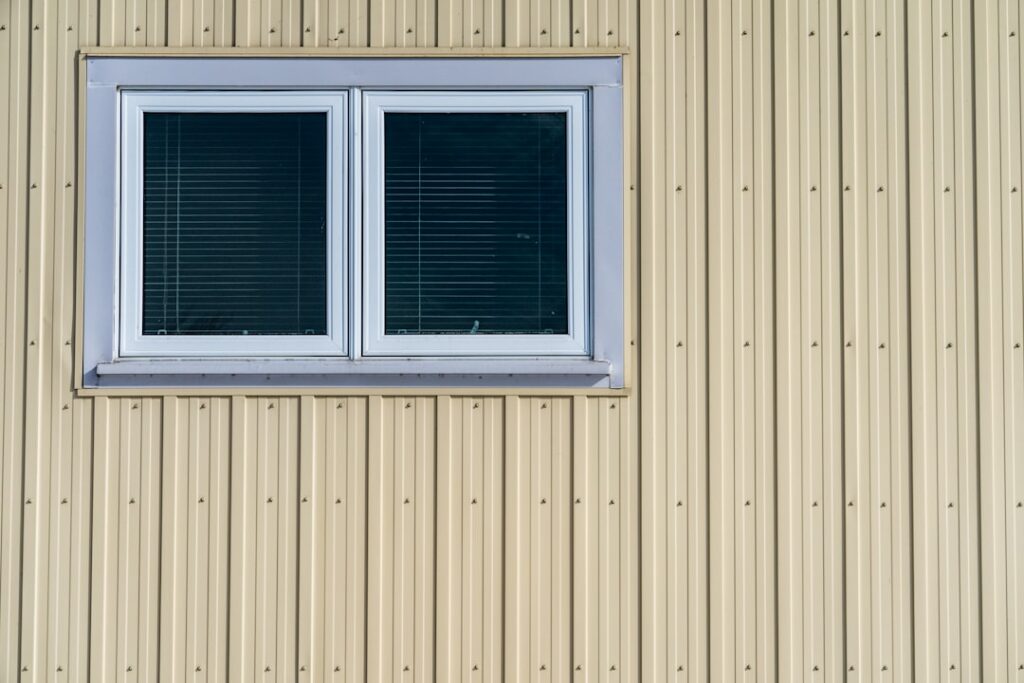
Steel board and batten reproduces that look with roll-formed steel panels. Rather than individual boards and battens, most steel systems are single panels stamped or formed with the board-and-batten profile built in — a wide flat “board” field with a raised “batten” rib at intervals. Some premium systems use true separate battens for authenticity. Either way, you get the visual of wood board and batten with the performance of steel: no rot, no insects, no repainting, and a 40-plus year service life.
Why Choose Steel Over Wood or Vinyl
The appeal comes down to durability and looks combined. Compared to real cedar board and batten, steel eliminates the endless maintenance — no scraping, no repainting every few years, no rot at the base where wood wicks water, no carpenter ants or woodpeckers. Compared to vinyl board and batten, steel is far more rigid and impact-resistant, holds crisper lines, resists the fading and brittleness vinyl develops, and won’t warp in heat.
Steel is also non-combustible, a meaningful advantage in wildfire-prone regions, and it stands up to hail and high winds better than most alternatives. The factory PVDF (Kynar) finishes resist fading and chalking for decades and come in the deep matte blacks, warm whites, and weathered grays that define the modern-farmhouse palette. For homeowners who want that vertical board-and-batten statement without the upkeep, steel is the long-game choice.
What It Costs in 2026
Steel board and batten is a premium product. Installed, it typically runs $9 to $16 per square foot, putting a full house in roughly the $17,000 to $38,000 range depending on size, panel gauge, finish, and trim complexity. That’s more than fiber cement ($6 to $12 installed) and well above vinyl ($4 to $9), but comparable to or slightly below other standing-seam-style architectural metals.
Several factors move the price. Heavier gauges (24 or 26 gauge) cost more than thinner ones but dent less. Premium PVDF finishes cost more than basic coatings but last longer. And installation labor is significant because quality metal work demands skilled crews who understand flashing and thermal movement. Used as an accent — on gables, entries, or a single feature wall — steel board and batten can deliver the look at a fraction of a full-house cost.
Panel Profiles and Batten Spacing
The character of a steel board and batten wall depends heavily on the batten spacing — how far apart the raised ribs fall. Wider spacing (say, 12 inches or more between battens) reads calmer, more contemporary, and more minimal. Narrower spacing creates more vertical lines and a busier, more traditional rhythm. Most systems offer a few standard spacings, so you can dial in the look.
Panel width and the batten profile itself also vary. Some panels have a subtle, low-profile batten; others have a bold, deep rib that throws strong shadow lines. Look at samples on a wall, at a distance, and in different light before choosing — the difference between a 3/4-inch and a 1-1/2-inch batten rib changes the whole facade’s feel.
Installation Basics
Like other architectural metal, steel board and batten is a system installed over a properly prepared wall. The sequence generally runs:
- Water-resistive barrier: House wrap over the sheathing, with flashing at all openings, is the actual moisture defense.
- Rainscreen (recommended): Furring strips or a drainage mat create a ventilated air gap behind the panels to drain moisture and reduce heat transfer.
- Trim and starter: Base trim, corner trim, and window/door flashing are set to receive the panels.
- Panel installation: Vertical panels are fastened with concealed clips or through the nailing flange, allowing for thermal expansion, and lock to the adjacent panel at the batten seam.
- Finish trim: Corners, eaves, and openings are capped with matching trim that completes the weather seal.
Because metal expands and contracts with temperature and the flashing details are exacting, this is generally not a DIY job. Experienced metal siding installers deliver the crisp lines and leak-free results the material is capable of; inexperienced work shows up as oil-canning (visible waviness) and leaks at the trim.
Durability and Maintenance
The maintenance story is the selling point. A quality PVDF-finished steel wall asks for almost nothing: rinse it with a hose once or twice a year to clear dirt and pollen, inspect the trim and flashing after major storms, and touch up any deep scratches that expose bare steel with a manufacturer-matched paint to prevent rust. There’s no repainting cycle, no caulk lines to chase, no rot to inspect. In coastal, salt-air environments, confirm the coating and any exposed fasteners are rated for corrosion resistance, or consider aluminum, since salt is harder on steel. Away from the coast, steel board and batten routinely delivers 40 to 60 years of service with this minimal care.
Is It Right for Your Home?
Steel board and batten suits homeowners who want the modern-farmhouse or contemporary vertical look and are willing to pay a premium upfront to eliminate maintenance for decades. It’s ideal in fire-prone and high-wind regions where non-combustible, impact-resistant cladding earns its cost. It shines on new builds and major renovations where the crisp lines complement the architecture, and it works beautifully as an accent to break up horizontal lap siding. If your budget is tight or the home’s style is strictly traditional, vinyl or fiber cement board and batten deliver a similar look for less, with the tradeoff of more maintenance or shorter life.
Steel vs. Aluminum for Board and Batten
Within metal board and batten, the choice between steel and aluminum comes down to your environment. Steel is stronger and more rigid, holds crisper lines, resists denting better in a given gauge, and costs less — it’s the default for most inland homes. Its one weakness is corrosion: if the coating is breached and the panel is near saltwater, steel can rust over time.
Aluminum flips those tradeoffs. It’s naturally corrosion-resistant, which makes it the smart pick for coastal and salt-air locations where steel struggles, and it’s lighter to handle. The downsides are a higher price and a greater tendency to dent, since aluminum is softer. If you live within a few miles of the ocean, lean aluminum; almost everywhere else, steel gives you more strength and value for the money.
Combining Board and Batten With Other Siding
You don’t have to clad the whole house in steel board and batten to get the look. One of the most popular and budget-friendly approaches is using it as an accent — on gable ends, dormers, entry walls, or the second story — paired with horizontal lap siding or a masonry base below. The vertical board and batten draws the eye up and creates the modern-farmhouse contrast that defines the style, while covering less total area keeps the premium metal cost in check.
When mixing materials, plan the transition line and flashing carefully so water sheds correctly from the upper cladding onto the lower, and coordinate colors and trim so the two materials read as one deliberate design rather than an afterthought. A well-placed accent wall of steel board and batten can transform a facade for a fraction of a full-house install.
Frequently Asked Questions
How much does steel board and batten siding cost? Installed, it typically runs $9 to $16 per square foot, or roughly $17,000 to $38,000 for an average home. Gauge, finish quality, and trim complexity drive the price, and using it as an accent wall costs far less.
How long does steel board and batten siding last? With a quality PVDF finish and proper installation, expect 40 to 60 years with minimal maintenance. There’s no repainting cycle, and the finish resists fading and chalking for decades.
Does steel board and batten siding dent? Thinner gauges can dent from hail or hard impacts, so choosing a heavier 24 or 26 gauge reduces the risk. Dents are usually cosmetic since panels stay weather-tight, though a badly dented panel is best replaced.
Can you install steel board and batten siding yourself? It’s generally not recommended. Precise flashing, allowance for thermal movement, and concealed-clip fastening require experience, and mistakes show as waviness or leaks. Experienced metal installers produce far more reliable, crisp results.