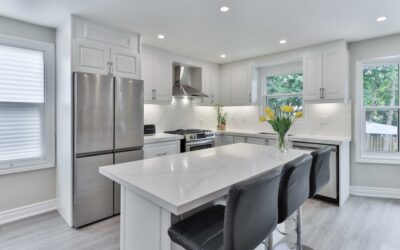
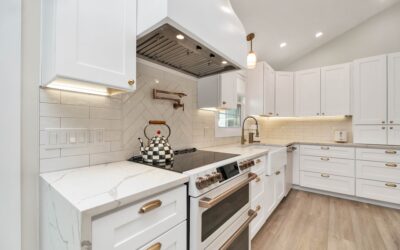
Stark white kitchens that dominated the 2015 to 2022 design cycle are aging fast, and the next move is not back to gray or forward to bold color. It is into the warm, grounded neutrals that designers have been quietly specifying since 2024. Tan cabinets read more sophisticated than beige, warmer than gray, and play with both modern and traditional architecture in ways true white cannot. They also forgive crumbs, fingerprints, and the inevitable wear that a working kitchen sees every day.
Part of our Kitchen Remodeling guide — explore the full guide →
What Counts as Tan in Cabinet Design
Tan covers a wider range than most people assume — anywhere from a pale putty close to greige to a deep camel approaching caramel. Designers generally split the category into three subgroups: soft tan (LRV 55 to 65), mid tan (LRV 35 to 50), and deep tan (LRV 20 to 32). Light Reflectance Value matters more than the color name because it predicts how the cabinets will read in your specific kitchen lighting.
If your kitchen has north-facing windows or limited natural light, stay in the soft to mid tan range or the space will feel cave-like. South or west-facing kitchens can carry deeper tans without losing brightness.
Paint Colors That Actually Work
After three years of color trend reporting from Benjamin Moore, Sherwin-Williams, and Farrow and Ball, a handful of tans have proven themselves across hundreds of remodels:
- Sherwin-Williams Accessible Beige (SW 7036): soft, warm, the safest bet
- Sherwin-Williams Latte (SW 6108): mid-tan with subtle pink undertone
- Benjamin Moore Manchester Tan (HC-81): classic and slightly green-gray
- Benjamin Moore Lenox Tan (HC-44): warmer, almost camel
- Farrow and Ball Joa’s White (No. 226): deep cream-tan with depth
- Behr Pale Honey (S290-3): budget-friendly, available at Home Depot
Test boards are non-negotiable. Buy sample pots (about $7 each), paint two coats on a 12 by 16 inch poster board, and tape it to the cabinet face for three days. Look at it in morning light, noon light, evening light, and at night with the kitchen lights on. Tans shift dramatically across lighting conditions.
Wood Species That Read Tan Naturally
Painted finishes are not the only path. Several wood species deliver a warm tan tone without paint:
- Quarter-sawn white oak with a clear sealer: $185 to $260 per cabinet
- Rift-cut white oak with a natural matte finish: similar pricing, cleaner grain
- Hickory with a clear coat: dramatic, varied tan-to-cream pattern
- Knotty alder with a natural stain: rustic, mid-range pricing
- Cerused or limed oak: contemporary, premium pricing
White oak in a natural finish is the dominant choice in 2026 design publications. Brands like Bertch, Wood-Mode, and the high-end IKEA Bodbyn alternatives from Semihandmade all offer white oak fronts with the modern matte finish that defines the look.
Pairing With Countertops
The countertop choice can make or break a tan cabinet kitchen. Avoid stark white quartz, which fights the warmth instead of complementing it. Better matches:
- Cambria Brittanicca Warm: cream base with soft veining, $85 per sq ft installed
- Silestone Eternal Calacatta Gold: warm white with brown veining
- Caesarstone Statuario Maximus: cream-white with golden tone veining
- Honed soapstone: black-gray with subtle warmth that grounds tan
- Solid walnut butcher block: $55 to $85 per linear foot from Home Depot
For budget builds, Formica 180fx in Calacatta Marble pattern delivers a credible warm-white look at $7 per square foot, holding up surprisingly well for under-$1,500 kitchen refreshes.
Hardware Choices That Sell the Look
Cabinet hardware on tan cabinets should add contrast without competing. Unlacquered brass, oil-rubbed bronze, and matte black all work. Polished chrome and brushed nickel tend to look dated against warm tans. Standout brands include Rejuvenation, Schoolhouse, and Top Knobs for solid-brass pulls at $14 to $35 each. Amerock and Liberty (sold at Home Depot and Lowe’s) cover the $4 to $12 range with respectable quality.
For pull length, use 4-inch on small drawers, 6-inch on standard drawers, and 8 to 12 inch on appliance pulls. Center the pulls 2-1/2 inches from the top edge on drawers and 2 inches from the top corner on doors.
Backsplash and Floor Coordination
Tan cabinets pair beautifully with handmade-look ceramic subway tile in soft white or warm gray. Cle Tile, Fireclay Tile, and Bedrosians all offer authentic zellige and handmade tile at $14 to $32 per square foot. For more budget-friendly options, Daltile Restore in matte white runs about $5 per square foot at Home Depot.
On the floor, wide-plank white oak hardwood or LVP from COREtec Pro Plus in a similar oak visual creates a continuous warm palette. Avoid red-toned cherry or maple flooring — the competing warm tones create visual chaos.
Costs and Refinishing Math
New custom tan cabinets run $24,000 to $52,000 for an average 10 by 12 foot kitchen. Semi-custom from Kraftmaid or Diamond drops to $14,000 to $26,000. Stock cabinets from IKEA Sektion with Semihandmade fronts can hit the look for $8,500 to $14,000. The lowest-cost path is repainting existing cabinets — $1,800 to $3,500 by a professional refinisher using a sprayed catalyzed conversion varnish, or $250 to $400 in materials for DIY with a brush and a foam roller.
Lighting That Brings the Color to Life
Tan cabinets read very differently under warm incandescent versus cool LED. For the best result, install under-cabinet LED strip lighting at 2700K to 3000K color temperature with a CRI of 90 or higher. Brands like WAC Lighting, Diode LED, and Inspired LED deliver hardware that lasts 15-plus years and shows the wood grain or paint pigment as the designer intended. Cheap 4000K LEDs cast a blue light that strips the warmth right out of any tan finish and makes the kitchen feel sterile.
Tan cabinets sit at a design sweet spot that should age gracefully through the next decade. Quality construction, warm metals, and stone countertops with subtle veining make for a kitchen that feels considered rather than trendy, and that distinction is what separates a five-year remodel from a fifteen-year one.