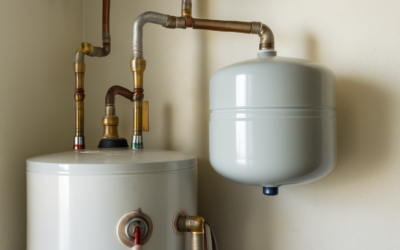
Here is a fact that surprises many homeowners who switch to on-demand hot water: even a tankless system can need thermal expansion protection. A tankless water heater expansion tank guards your plumbing against the pressure spikes that occur when water heats and expands inside a closed system — the same phenomenon that stresses fittings, trips pressure-relief valves, and shortens the life of your fixtures. This guide explains when you actually need one, how to size and set it correctly, and how to install it so your tankless system runs safely for the long haul.
- What Thermal Expansion Actually Is
- Do Tankless Systems Really Need One?
- Warning Signs You Need Expansion Protection
- Sizing the Expansion Tank Correctly
- Setting the Air Pre-Charge Pressure
- Where to Install the Expansion Tank
- Step-by-Step Installation Overview
- Maintenance and Lifespan
- Cost of an Expansion Tank
- How to Tell If Your Home Is a Closed System
- Expansion Tank vs Other Pressure Solutions
- The Bottom Line
What Thermal Expansion Actually Is
Water expands as it heats. In an open plumbing system, that extra volume simply pushes back into the municipal main. But most modern homes have a “closed” system — created by a backflow preventer, a pressure-reducing valve (PRV), or a check valve on the incoming supply. In a closed system, the expanding water has nowhere to go, so pressure climbs sharply every time the heater fires. An expansion tank gives that water a cushion to expand into, absorbing the spike with a pressurized air bladder.
Do Tankless Systems Really Need One?
This is the most debated question, and the honest answer is: it depends on your setup, not just the fact that it is tankless. A pure tankless heater holds very little water and does not maintain a hot reservoir, so the expansion it creates on its own is small. However, two situations change that:
- You have a recirculation system or a buffer/storage tank paired with the tankless unit, which holds heated water and expands more significantly.
- Your home is a closed system with a PRV or check valve, and local code requires expansion protection on any water-heating appliance.
Many plumbing codes and manufacturers require or strongly recommend an expansion tank whenever a closed system exists, tankless or not. Always check your local code and your unit’s installation manual — some warranties hinge on it.
Warning Signs You Need Expansion Protection
Your plumbing will often tell you when pressure has nowhere to go. Watch for these clues:
- The temperature-and-pressure (T&P) relief valve on a connected storage tank drips or discharges periodically.
- Banging or knocking pipes when the heater cycles.
- A pressure gauge on a hose bib reading well above 80 psi shortly after hot water use.
- Premature failure of faucet cartridges, fill valves, or the water heater itself.
If your static pressure is fine but spikes hard after heating, thermal expansion is the culprit.
Sizing the Expansion Tank Correctly
An undersized tank cannot absorb the expansion; an oversized one wastes money and space. Sizing depends on the volume of heated water in the system and your incoming water pressure. For a typical tankless setup with a modest buffer tank or recirculation loop, a small 2-gallon expansion tank is often sufficient, whereas a large storage-assisted system may need a 4.5-gallon or larger unit. When paired with a big storage tank, size it as you would for a conventional tank heater. A licensed plumber can calculate the exact volume, but the key takeaway is that tankless systems generally need smaller tanks than 40- or 50-gallon conventional heaters.
Setting the Air Pre-Charge Pressure
This is the step most DIYers get wrong, and it is critical. An expansion tank has an air bladder pre-charged with pressure, and that pre-charge must match your home’s incoming water pressure — typically somewhere between 40 and 80 psi. Here is the process:
- Measure your home’s water pressure with a gauge on a hose bib. Say it reads 60 psi.
- With the tank empty of water (before install, or with the system depressurized), check the air pressure at the tank’s Schrader valve using a tire gauge.
- Add or release air with a bicycle pump until the tank’s pre-charge matches your measured water pressure — 60 psi in this example.
If the pre-charge is too low, the tank fills with water and cannot absorb expansion; too high, and it never engages. Matching it to line pressure is what makes the tank actually work.
Where to Install the Expansion Tank
Placement is flexible but follows a few best practices. The tank is installed on the cold water supply line, ideally between the water heater and the shutoff or PRV, so it protects the heated side of the system. Most tanks can mount vertically or horizontally, though vertical with the connection on top is preferred to keep the bladder from collecting sediment. Support the tank’s weight with a bracket or strap rather than letting it hang on the pipe alone, especially once it fills with water and gets heavy.
Step-by-Step Installation Overview
For a homeowner comfortable with basic plumbing, the install is straightforward:
- Shut off the water supply and drain down the line by opening a low faucet.
- Set the tank’s pre-charge to match your water pressure while the system is depressurized.
- Install a tee fitting on the cold supply line near the heater.
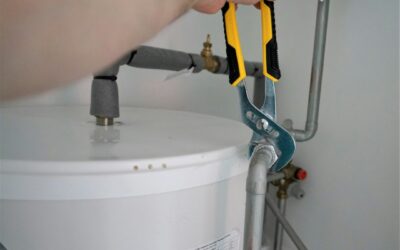
- Thread the expansion tank onto the tee, using thread sealant or PTFE tape on the connection.
- Support the tank with a strap or bracket.
- Restore water, check for leaks, and confirm the T&P valve on any storage tank stops discharging.
If you are uncomfortable with soldering or working near the gas connections of the heater, this is a modest job for a plumber, usually $150 to $350 installed including the tank.
Maintenance and Lifespan
Expansion tanks are low-maintenance but not maintenance-free. The air bladder can lose pressure or fail over time, typically lasting 5 to 10 years. Once a year, tap the tank: the top should sound hollow (air) and the bottom solid (water). If the whole tank sounds waterlogged or the Schrader valve weeps water when pressed, the bladder has ruptured and the tank needs replacing. Re-checking the pre-charge annually, with the system depressurized, keeps it doing its job.
Cost of an Expansion Tank
The tanks themselves are inexpensive — a quality 2-gallon unit runs about $40 to $70, and larger tanks $70 to $130. That modest cost buys real protection for far more expensive components: your faucets, the heater, and the plumbing joints throughout the house. Against the price of a burst fitting or a prematurely failed heater, an expansion tank is one of the cheapest insurance policies in your mechanical room.
How to Tell If Your Home Is a Closed System
Since the need for an expansion tank hinges almost entirely on whether your plumbing is a closed system, it pays to confirm which you have. Look at the water main where it enters the house. If you see a pressure-reducing valve — a bell-shaped brass fitting with an adjustment screw — or a backflow preventer, or a check valve at the meter, your system is closed and expanding water cannot escape back to the street. Many municipalities have installed check valves at the meter in recent years without homeowners realizing it, quietly converting open systems to closed ones. A simple test is to install a pressure gauge on a hose bib and watch it after the water heater runs: if the reading climbs well past your static pressure and stays elevated, you have a closed system with thermal expansion that needs somewhere to go.
Expansion Tank vs Other Pressure Solutions
An expansion tank is the standard and most reliable fix, but it is worth knowing the alternatives so you understand why the tank is usually preferred. A thermal expansion relief valve can bleed off excess pressure, but it wastes water and can drip continuously, creating its own nuisance. A pressure-reducing valve manages incoming street pressure but does nothing about the expansion generated inside the house by heating. Some homeowners try to leave a faucet cracked or rely on the T&P valve as a safety, but the T&P valve is a last-resort safety device, not a daily pressure regulator, and repeated discharge shortens its life and can lead to failure. The expansion tank remains the clean, code-recognized solution because it absorbs the pressure silently, wastes nothing, and requires only occasional checking.
The Bottom Line
A tankless water heater expansion tank is not always mandatory, but in a closed plumbing system — especially one with recirculation or a buffer tank — it protects your entire home from damaging pressure spikes and often satisfies code. Confirm whether your system is closed, size the tank to the heated volume, and above all set the air pre-charge to match your water pressure. Install it on the cold supply with proper support, check it yearly, and this small, affordable device will quietly extend the life of everything downstream of your heater.