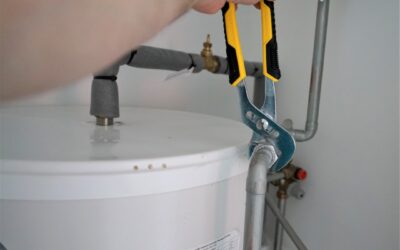
Ask a plumbing counter clerk what size expansion tank do I need and the reflex answer is usually “the 2-gallon one.” That works for a lot of homes, but not all of them. The correct size depends on two numbers you can find in a few minutes: the capacity of your water heater in gallons and the static water pressure coming into the house. For a typical 40- or 50-gallon heater on 40 to 60 psi supply pressure, a 2-gallon thermal expansion tank is usually right. Bigger heaters, higher pressure or both push you to the 4.5-gallon size or larger.
Getting the size right matters because an undersized tank fills up during every heating cycle and stops protecting your plumbing. The temperature and pressure relief valve then starts weeping, faucets and fill valves take a beating, and the water heater tank itself flexes more than it should. An oversized tank costs a little more but does no harm. When in doubt, size up one step.
- What Size Expansion Tank Do I Need for My Water Heater?
- Why Water Heaters Need an Expansion Tank
- The Sizing Method in Plain English
- Setting the Pre-Charge Correctly
- Mounting and Placement Tips
- Troubleshooting Expansion Tank Problems
- Tankless Heaters, Boilers and Other Special Cases
- General Cost Ranges
- Safety and When to Call a Licensed Professional
- Frequently Asked Questions
What Size Expansion Tank Do I Need for My Water Heater?
A quick chart covers most homes. These figures assume a residential thermal expansion tank with a 40 psi factory pre-charge that you adjust to match your house pressure, and a water heater set around 120 to 140°F.
| Water heater size | Supply pressure 40 to 60 psi | Supply pressure 60 to 80 psi |
|---|---|---|
| 30 to 40 gallons | 2 gallon | 2 gallon |
| 50 gallons | 2 gallon | 4.5 gallon |
| 60 to 80 gallons | 4.5 gallon | 4.5 gallon |
| 100 to 120 gallons | 4.5 gallon | Larger tank (about 8 gallons or more) |
Two quick notes on labels. Tank “sizes” on the box often refer to total tank volume, and the amount of water the tank can actually accept is smaller, because part of the volume is the air cushion. Manufacturers publish their own sizing charts on the packaging, and those always take priority over a general table. If your supply pressure is above 80 psi, the answer is not a bigger expansion tank: it is a pressure reducing valve (PRV), which most plumbing codes require at that level anyway.
Why Water Heaters Need an Expansion Tank
Water expands when it is heated. Heating a tank of incoming water from around 50°F to 120°F grows its volume by roughly 1 to 2 percent. On a 50-gallon heater, that is somewhere around half a gallon to a gallon of extra water each heating cycle. In an “open” plumbing system, that extra volume simply pushes back into the city main. Once a check valve, backflow preventer or PRV is installed on the service line, the system becomes “closed,” and the extra water has nowhere to go. Pressure spikes instead, sometimes to 120 psi or more.
A thermal expansion tank gives that water a place to go. Inside the steel shell, a rubber diaphragm or bladder separates the water side from a pressurized air chamber. As the heater warms up, water pushes into the tank and compresses the air. When someone opens a tap, the air pushes the water back out. Pressure stays in a safe band, and the relief valve stays dry.
The Sizing Method in Plain English
Professionals size these tanks with a short calculation, and you can follow the logic even if you just use a chart. Here is the reasoning behind the numbers:
- Find the water heater capacity. Check the rating label on the side of the tank for the gallon figure. If you have two heaters or a large storage tank, add their volumes.
- Measure static supply pressure. Thread an inexpensive water pressure gauge onto an outdoor hose bib or the water heater drain valve, with no water running anywhere in the house. Note the reading. Check it again at night, when municipal pressure is often highest.
- Estimate the expansion volume. Multiply the heater gallons by the expansion factor for your temperature rise. A rule of thumb is about 1.5 to 2 percent for typical household settings, more if the heater runs hotter or the incoming water is very cold.
- Set the maximum allowed pressure. Plumbers commonly design for the system to stay at or below about 80 psi, well under the relief valve’s 150 psi setting.
- Find the acceptance capacity. The higher your starting pressure, the less room the air cushion has before it reaches the maximum. That is why the same 50-gallon heater can get by with a 2-gallon tank at 50 psi but needs the 4.5-gallon tank at 75 psi.
- Pick the tank. Choose a model whose rated acceptance volume at your pressure covers the expansion volume, with some margin.
Most manufacturer charts already bake steps 3 through 5 into a simple grid of heater size against supply pressure, which is why a homeowner can usually skip the math and still get an accurate answer.
Setting the Pre-Charge Correctly
Size is only half of the job. A correctly sized tank with the wrong air pre-charge performs like an undersized one. Most residential tanks ship at 40 psi. If your house pressure is 60 psi, that tank is already partly full of water before the heater even fires, and its usable capacity shrinks.
- Measure the house static pressure first, as described in the sizing steps.
- Check the tank’s pre-charge with a standard tire gauge on the air valve at the top or bottom, before the tank is connected to water, or with the tank isolated and drained of water.
- Use a bicycle pump or small compressor to raise the pre-charge to match the house pressure. Let air out to lower it.
- Recheck once a year. If water comes out of the air valve, the diaphragm has failed and the tank needs replacing.
Matching the pre-charge to supply pressure (not exceeding it) is the single adjustment that most often gets skipped during DIY installs.
Mounting and Placement Tips
A filled 4.5-gallon expansion tank weighs around 40 pounds, and a 2-gallon tank around 20 pounds. Neither should hang unsupported from a thin copper line for years. Install the tank on the cold water supply line near the water heater, ideally with a strap or bracket anchored to a wall stud or framing. Many installers prefer mounting the tank with the connection pointing up or with a support underneath, because vibration and weight can fatigue the fitting. Use fittings and thread sealant rated for potable water.
Placement on the cold side matters because cooler water is easier on the diaphragm. The tank should sit between the water heater and any check valve or PRV, so it can absorb the expansion that would otherwise be trapped.
Troubleshooting Expansion Tank Problems
- Relief valve still drips: The tank may be undersized, the pre-charge may be low, or the diaphragm may have failed. Check the pre-charge and supply pressure first.
- Tank sounds solid when tapped: A healthy tank sounds hollow at the top (air side). A tank that sounds full all over has likely lost its air charge or ruptured its bladder.
- Water from the air valve: The diaphragm is broken. Replace the tank.
- Pressure gauge jumps above 80 psi when the heater runs: The tank is too small for the system, or the PRV is creeping. Have the PRV checked.
- Rust at the fitting or seams: Plan on replacement soon. Most tanks last 5 to 10 years.
Tankless Heaters, Boilers and Other Special Cases
Tankless water heaters store very little water, so thermal expansion is far smaller than with a storage tank. Many homes with a tankless unit do not need an expansion tank, but local code and the service line setup can still require one, especially with a PRV or backflow device. Hydronic heating boilers use a different type of expansion tank sized for the heating loop, which is not interchangeable with a potable water thermal expansion tank. Indirect water heaters and homes with large storage tanks or multiple heaters should be sized by the installer using the manufacturer’s chart.
General Cost Ranges
A 2-gallon thermal expansion tank typically costs about $40 to $80, and a 4.5-gallon tank around $60 to $130. Larger tanks for big storage systems run higher. Mounting straps, fittings and a pressure gauge add $20 to $50. Professional installation generally falls between $150 and $400, depending on access and whether a PRV or new shutoff valve is also needed. A PRV replacement or addition can add a few hundred dollars more.
Safety and When to Call a Licensed Professional
Before cutting into the cold line, shut off the main water supply and the cold valve at the heater, then open a faucet to relieve pressure. For an electric heater, turn off the breaker and confirm power is off with a non-contact voltage tester; for a gas heater, set the control to pilot or vacation and never touch the gas line. Let hot water cool first, since tank water at 120 to 140°F can scald. Keeping the heater thermostat around 120°F is a sensible anti-scald setting.
Many jurisdictions require a permit for water heater work and a licensed plumber for changes to the supply line, and some inspectors check for an expansion tank whenever a heater is replaced. Call a licensed plumber if your supply pressure is above 80 psi, if you need a PRV, if the job involves soldering in tight spaces, or if the relief valve keeps discharging after the tank is installed. A plumber can also confirm whether your system is actually closed and whether local code requires a specific tank size.
Frequently Asked Questions
Is a 2-gallon expansion tank enough for a 50-gallon water heater?
Usually yes, when supply pressure is between about 40 and 60 psi. Above roughly 60 psi, most charts move a 50-gallon heater up to the 4.5-gallon size.
Can an expansion tank be too big?
No. An oversized tank simply has spare capacity. It costs a bit more and takes more space, but it does not harm the system.
What should the expansion tank pre-charge be?
Set the air pre-charge to match your home’s static water pressure. If the house reads 55 psi, adjust the tank to about 55 psi before connecting it.
Do I need an expansion tank if I do not have a check valve?
If your system is genuinely open, expansion can push back into the main. Many homes have a check valve, PRV or backflow device in the meter or service line, however, and local code may require a tank regardless.
How long does a thermal expansion tank last?
Most last about 5 to 10 years. Check the pre-charge annually and replace the tank if water comes out of the air valve.
Where should the expansion tank be installed?
On the cold water supply line near the water heater, between the heater and any check valve or PRV, supported by a strap or bracket anchored to framing.