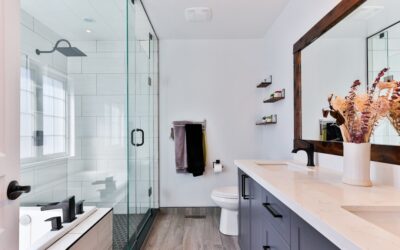
A bathroom is the most-used and most-demanding room in the house, battling moisture, heavy traffic, and constant wear all at once. Designing the perfect bathroom means balancing beauty with function so the space looks great on day one and still performs flawlessly a decade later. The difference between a bathroom you love and one you constantly fight comes down to thoughtful planning around layout, materials, ventilation, and storage, long before the first tile goes down.
Part of our Bathroom Remodeling & Flooring guide — explore the full guide →
Start With the Layout
Everything begins with how the space flows. A well-planned bathroom keeps the toilet, sink, and shower or tub positioned so you can move comfortably without bumping into fixtures. Building codes require minimum clearances, typically 15 inches from the center of a toilet to any side wall and 21 inches of clear space in front of fixtures.
Keep plumbing fixtures grouped on a common wall where possible to control costs, since moving water lines is one of the most expensive parts of any remodel. If you’re working with a small footprint, a corner shower or a wall-hung vanity can free up valuable floor space and make the room feel larger.
Choosing Moisture-Proof Materials
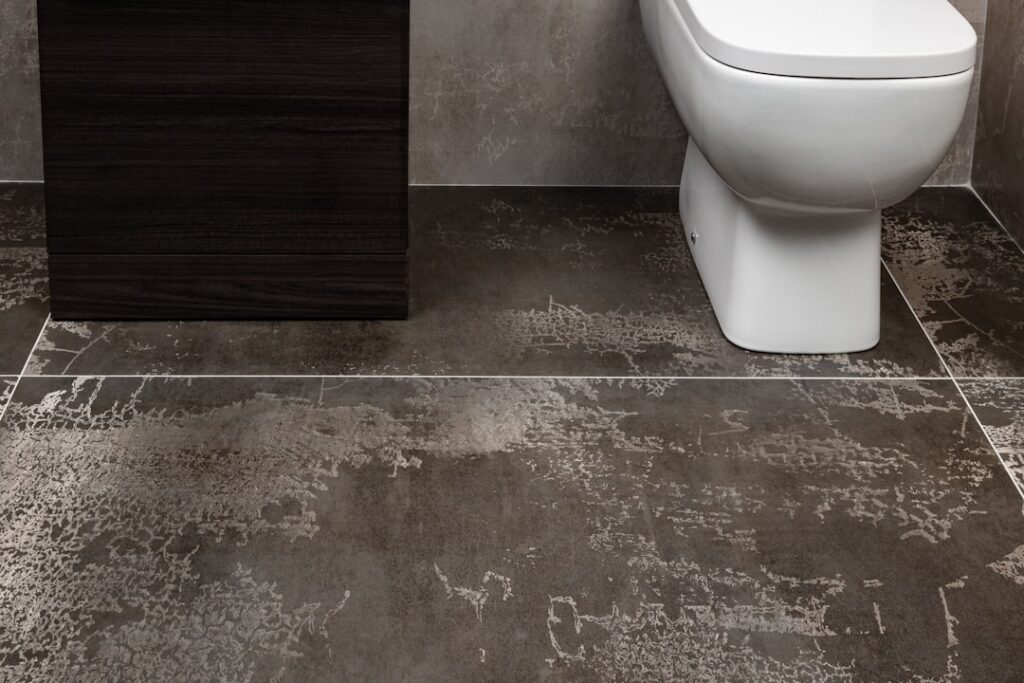
Water is the enemy in any bathroom, so every material must stand up to constant humidity. Porcelain and ceramic tile are the gold standard for floors and shower walls because they’re waterproof, durable, and available in styles that mimic wood or stone.
- Flooring: Porcelain tile, luxury vinyl plank, or natural stone, all moisture-resistant and slip-rated.
- Shower walls: Porcelain tile over a proper waterproof membrane like Schluter Kerdi.
- Countertops: Quartz resists water and stains better than porous marble.
- Vanity: Plywood or solid-wood construction holds up better than particleboard in humidity.
Ventilation Is Non-Negotiable
The most overlooked element in bathroom design is also one of the most important. Without proper ventilation, moisture lingers and breeds mold, peels paint, and rots wood trim. A quality exhaust fan is essential, not optional.
Size the fan to the room: a general rule is one CFM of airflow per square foot of floor area, so a 60-square-foot bathroom needs at least a 60 CFM fan, though 80 to 110 CFM is better. Vent it directly outside, never into the attic, and put it on a timer or humidity-sensing switch so it runs 20 to 30 minutes after every shower. This single $50 to $150 upgrade prevents thousands in moisture damage.
Lighting That Works
Good bathroom lighting layers multiple sources rather than relying on a single overhead fixture. Start with ambient ceiling light for general illumination, then add task lighting at the vanity where you actually need it.
For the vanity, sconces mounted on either side of the mirror at about 66 inches high light your face evenly and eliminate the harsh shadows a single overhead fixture casts. Choose LED bulbs in the 2700K to 3000K range for a warm, flattering tone, and add a dimmer so you can soften the light for a relaxing soak. Don’t forget a moisture-rated recessed fixture inside the shower.
Smart Storage Solutions
Clutter ruins even a beautifully finished bathroom, so storage deserves real attention. A vanity with deep drawers stores far more usefully than one with a single cabinet door, and drawer organizers keep small items from disappearing.
Recessed medicine cabinets, niches built into shower walls, and a tall linen cabinet or open shelving all add capacity without crowding the floor. In tight spaces, look up: a cabinet or shelf above the toilet uses otherwise wasted vertical space. Plan storage around what you actually keep in the bathroom so everything has a home.
Choosing Fixtures That Last
Fixtures take daily abuse, so quality here pays off over years of use. The toilet, faucets, and showerhead all come in a wide range of prices, and the cheapest options often disappoint with weak flushes, drips, and finishes that wear off.
For toilets, a dual-flush or efficient model uses 1.28 gallons per flush and saves water without sacrificing performance. Choose faucets and shower valves from reputable brands with solid brass bodies and ceramic-disc cartridges, which resist drips far longer than plastic internals. A quality faucet runs $150 to $400 but lasts decades, while a $40 bargain often needs replacing within a few years. Match the finish, brushed nickel and matte black being current favorites, across all fixtures for a cohesive look.
Accessibility and Future-Proofing
Smart bathroom design looks ahead, whether for aging in place or simple convenience. Building in accessibility features now is far cheaper than retrofitting later, and many of them read as modern rather than institutional.
- Curbless shower: A zero-threshold entry that looks sleek and accommodates any mobility level.
- Blocking in walls: Add plywood backing behind tile now so grab bars can be installed anytime.
- Comfort-height toilet: A taller bowl that’s easier on the knees.
- Lever handles: Easier to operate than knobs for everyone.
- Slip-resistant flooring: Textured tile or vinyl rated for wet areas.
Budgeting Your Remodel
Setting realistic expectations keeps the project on track. A modest bathroom refresh runs $5,000 to $12,000, a mid-range remodel lands around $15,000 to $30,000, and a high-end primary bath can exceed $40,000. Labor typically accounts for 40% to 60% of the total.
Spend where it counts on waterproofing, ventilation, and quality fixtures that endure daily use, and save on cosmetic finishes you can update later. Plan for a 15% to 20% contingency, since old bathrooms often hide surprises behind the walls. With careful planning around the essentials, the perfect bathroom is well within reach, delivering a space that’s as durable and functional as it is beautiful.
Avoiding the Most Common Bathroom Mistakes
Even well-funded remodels go wrong when homeowners overlook a few critical details. Learning from the mistakes that plague bathroom projects saves money, frustration, and callbacks down the line.
- Skimping on waterproofing: Tiling over green board instead of a proper membrane leads to leaks and rot inside the walls.
- Undersized or vented-wrong exhaust fans: The leading cause of mold and peeling paint.
- Poor lighting placement: A single overhead fixture casts unflattering shadows at the mirror.
- Wrong floor tile: Glossy, low-grip tile becomes dangerously slick when wet.
- Forgetting storage: A beautiful bathroom with nowhere to put things feels cluttered fast.
Address these upfront and you sidestep the issues that turn a dream remodel into an expensive redo. The bathrooms that age best are the ones built right behind the walls, not just styled beautifully on the surface.