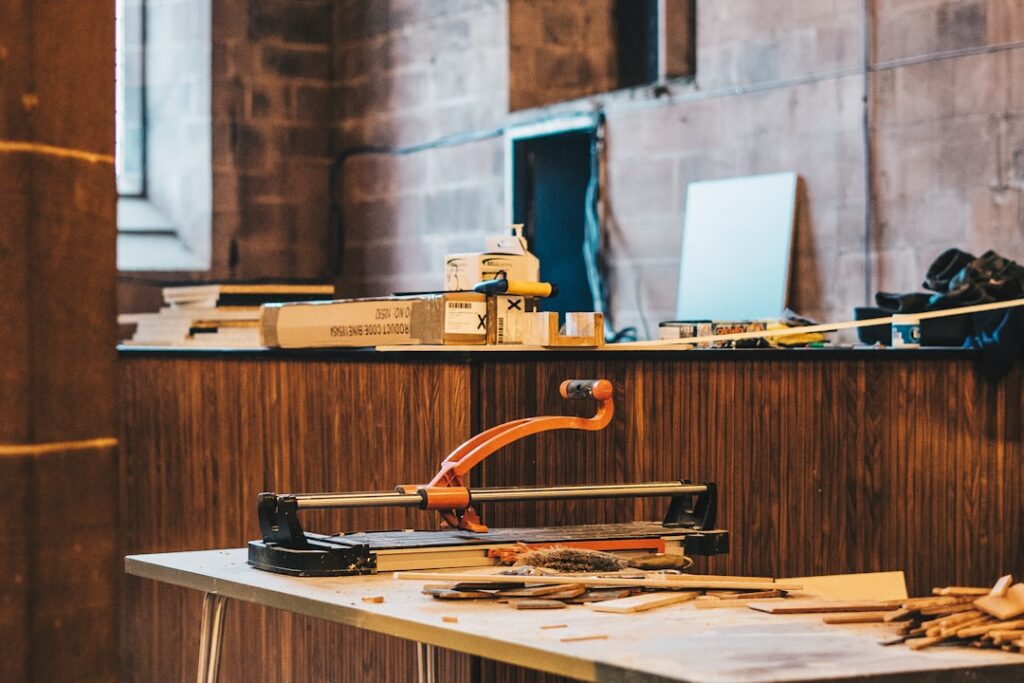
Buying a quality wet saw for a single bathroom floor rarely makes financial sense, which is exactly why a tile cutter rental is one of the smartest moves a DIY tiler can make. Renting puts professional-grade cutting tools in your hands for a day or weekend at a fraction of the purchase price, and you avoid storing a bulky machine you may never use again. The key is knowing which type of cutter your project needs, what it costs to rent, and how to use it safely. This guide walks through all three.
Part of our Tile & Grout guide — explore the full guide →
- When Renting Beats Buying
- Types of Tile Cutters You Can Rent
- What a Tile Cutter Rental Costs
- Choosing the Right Rental for Your Tile
- Safety First With Wet Saws and Blades
- Getting Clean, Accurate Cuts
- Before You Return the Tool
- How Much Tile Can You Cut in a Day
- What to Bring and Check at the Shop
- The Bottom Line
When Renting Beats Buying
If you are tiling a single room, an accent wall, or a backsplash, renting almost always wins on cost. A pro-grade wet saw can cost several hundred dollars to buy, while a one-day rental runs a small fraction of that. Renting also gives you access to a more powerful, accurate machine than the budget models many homeowners would otherwise purchase. Buying makes sense only if you tile regularly or have multiple large projects lined up.
Renting also sidesteps maintenance and storage. The rental shop sharpens or replaces blades and handles upkeep, so you simply return the tool when the job is done.
Types of Tile Cutters You Can Rent
Two main categories cover most home projects, and the right pick depends on your tile material and the cuts you need.
- Manual snap cutter: Scores the glaze with a carbide wheel, then snaps the tile along the line. Fast, quiet, dust-free, and great for straight cuts in ceramic and softer porcelain.
- Wet saw: A water-cooled diamond blade cuts through dense porcelain, natural stone, and thick tile. Handles curves, notches, and miters that a snap cutter cannot.
- Angle grinder with a diamond blade: Useful for L-cuts and holes around outlets, sometimes rented or owned alongside the main cutter.
For standard ceramic floor and wall tile, a manual cutter often suffices. For porcelain, stone, or any project with many specialty cuts, a wet saw is worth the rental.
What a Tile Cutter Rental Costs
Rental rates vary by region and tool quality, but the following USD ranges are typical. Manual snap cutters rent for roughly $15 to $30 per day. Standard wet saws run about $40 to $70 per day, with larger or higher-end models reaching $70 to $100. Weekend and weekly rates offer discounts, often around two to four times the daily rate for a full week. Many shops also require a deposit, which is refunded when you return the tool clean and undamaged.
Factor in the cost of replacement blades if yours wears out, plus any cleaning fee for returning a dirty wet saw. Returning the machine rinsed and free of slurry keeps your deposit intact.
Choosing the Right Rental for Your Tile
Match the tool to the hardest tile you will cut. Porcelain and natural stone are dense and abrasive, so they demand a wet saw with a sharp diamond blade. Glazed ceramic up to about a quarter inch thick scores and snaps cleanly with a manual cutter. If your project mixes materials or includes intricate cuts around plumbing and outlets, rent the wet saw to cover every situation.
Tell the rental shop your tile type, thickness, and the size of the largest tile. They can confirm the saw’s cutting capacity and recommend the correct blade so you do not chip expensive tile on the first cut.
Safety First With Wet Saws and Blades
Power cutting tools deserve respect. Always read the operating instructions the rental shop provides and follow them exactly. Wet saws combine water and electricity, so plug into a GFCI-protected outlet and keep cords out of the cutting path.
- Wear safety glasses to guard against flying chips and a dust mask if any dry cutting occurs.
- Use hearing protection, since saws and grinders are loud.
- Keep fingers well clear of the blade and use a push stick or the saw’s guide for small pieces.
- Ensure the water reservoir is filled so the diamond blade stays cool and dust stays down.
- Never bypass blade guards, and let the blade reach full speed before feeding tile.
- Unplug the tool before changing a blade or clearing a jam.
Getting Clean, Accurate Cuts
Measure twice and mark your cut line clearly with a pencil or marker. Feed the tile slowly and steadily into a wet saw, letting the blade do the work rather than forcing it, which prevents chipping. For manual cutters, score in one firm, continuous pass before snapping. Practice on a spare tile first to dial in your technique and confirm the blade is cutting cleanly.
Before You Return the Tool
Rinse the wet saw, drain and wipe the water tray, and remove slurry buildup. Coil cords neatly and pack any included accessories. Inspect the blade and note its condition so there are no surprises at checkout. Returning the tool clean and on time protects your deposit and keeps you in good standing for future rentals.
How Much Tile Can You Cut in a Day
Most homeowners overestimate how long cutting takes and underestimate prep. A single-day rental is usually plenty for a bathroom floor, a backsplash, or a small mudroom, provided you have your tile laid out and your cuts marked before you start. Larger projects like a full kitchen floor or a tiled shower may warrant a weekend rate so you are not racing the clock. Lay out your full design dry first, mark every cut, and batch your cutting so you make the most of the machine while you have it.
If your project spans several days of installation, you may only need the cutter for one concentrated cutting session rather than the entire job, since you can pre-cut most pieces and set them in place afterward. Ask the shop about partial-day or pickup-and-return timing to minimize the rental window.
What to Bring and Check at the Shop
A smooth rental starts with a little preparation. Bring a valid ID and a payment method for the deposit, and confirm the shop’s return window and hours so you do not incur a late fee. Inspect the machine before leaving, noting the blade condition, that the water pump works on a wet saw, and that the fence and guides move freely.
- Ask whether cleaning solution, blades, or accessories are included or extra.
- Confirm the saw’s maximum cut length and depth match your tile size.
- Request a quick demo if you have never used the machine before.
- Check the deposit amount and what condition the tool must be returned in.
The Bottom Line
A tile cutter rental is the practical choice for most one-time tiling projects, giving you professional cutting power without the cost or clutter of ownership. Match the tool to your tile, budget for the daily rate plus deposit, and treat the machine with respect by following all safety instructions. Plan your cuts, work carefully, and you will finish with crisp tile edges and money left in your pocket.
Prefer to explore on your own?
See how new flooring looks in your actual room in seconds — free, no signup.
Try the free Floor Studio →