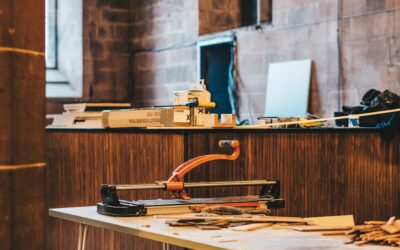
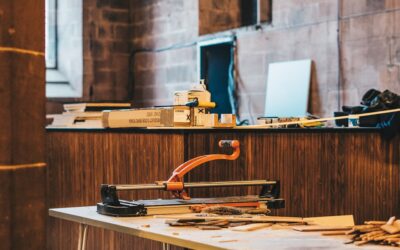
If you are installing laminate, luxury vinyl plank, or engineered flooring yourself, you will need a fast, clean way to cut planks to length, and a dusty miter saw is not always it. A flooring cutter rental gives you access to a guillotine-style plank cutter for a weekend project without paying full price for a tool you may never use again. These shear cutters slice through plank flooring with a single lever pull, no power, no dust, and no noise. This guide explains what a flooring cutter does, where to rent one, what it costs, and how to decide whether renting, buying, or skipping it altogether is the right call.
What a Flooring Cutter Does
A flooring cutter, sometimes called a vinyl plank cutter or laminate shear, works like a heavy-duty paper cutter sized for flooring. You lay a plank on the bed, line up your mark against the guide, and pull the lever down. A sharp blade shears straight through the plank in one stroke. There is no sawdust, no loud motor, and no scattered chips, which makes it ideal for indoor work and apartments where noise and mess are problems.
These tools handle crosscuts on laminate, LVP, and engineered planks beautifully. They are less suited to long rip cuts down the length of a board, intricate notches, or very thick solid hardwood, which still call for a saw or a jigsaw.


Where to Rent One
Several sources rent flooring cutters, and availability varies by location, so call ahead to confirm the specific tool is in stock.
- Big-box home centers: Major hardware retailers with tool rental counters often stock plank and laminate cutters.
- Local tool rental shops: Independent equipment-rental businesses frequently carry them and may offer better daily rates.
- Flooring suppliers: Some flooring dealers loan or rent cutters to customers buying material from them.
When you reserve one, confirm the maximum cutting width, the blade condition, and whether the rental period is measured in 4-hour, daily, or weekly blocks.
Rental Cost Expectations
Rental pricing depends on the retailer, your region, and the rental period, so treat these as ballpark figures and confirm locally. As a general reference, expect roughly $15 to $40 for a 4-hour or daily rental of a basic plank cutter, with weekly rates often in the $50 to $100 range. Some stores require a deposit or hold on a card. For a single room you can knock out in a day, the daily rate is usually the most economical choice.
Pros of Renting
Renting makes a lot of sense for one-off projects and homeowners who do not install flooring regularly.
- Low cost for one project: A daily rental is far cheaper than buying a quality cutter you will use once.
- No storage burden: You return the tool and reclaim your garage space.
- Access to better tools: Rental cutters are often sturdier commercial models than budget purchase options.
- Try before you buy: Renting lets you decide whether the tool suits your work before investing.
Cons of Renting
Renting is not always the smart move, especially if your timeline is uncertain.
- Time pressure: A daily rental clock pushes you to rush, and overruns add fees.
- Availability: Popular tools may be out when you need them, stalling your project.
- Pickup and return trips: Two trips to the rental counter eat into a tight weekend.
- Recurring cost: If you do multiple flooring projects, repeated rentals quickly exceed the purchase price.
Rent vs. Buy vs. Skip
Three paths make sense depending on your situation. Renting fits the homeowner doing a single room over a weekend who wants a clean, fast cut without owning the tool. Buying makes sense if you have several rooms to do, plan future projects, or want to work on your own schedule; a decent manual plank cutter often costs in the same range as a few rentals. Skipping the cutter entirely is reasonable for small jobs, since a sharp utility knife scores and snaps most LVP, and a miter saw or jigsaw handles laminate and engineered planks if you do not mind the dust.
When a Utility Knife Is Enough
For thinner flexible LVP, you can score the surface with a sharp utility knife and snap the plank along the line. This works well for straight crosscuts on small jobs and costs almost nothing. For rigid SPC cores and laminate, however, a cutter or saw gives a far cleaner result.
Tips for a Smooth Rental Experience
- Reserve the tool a few days ahead, especially before weekends when demand spikes.
- Confirm the cutter’s maximum width fits your plank size before you leave the store.
- Inspect the blade and mechanism at pickup and note any existing damage.
- Schedule the rental to start when your subfloor is prepped and material is acclimated, so you use the full window.
- Keep a sharp utility knife and a jigsaw on hand for the cuts a shear cannot make.
Other Tools You Will Need
A flooring cutter handles only straight crosscuts, so plan to have a few other tools on hand for a complete install. The cutter speeds up the bulk of your cuts, but the details still require the right gear.
- Tapping block and pull bar: For snugging click-lock planks together without damaging the edges.
- Spacers: To maintain the expansion gap around the room’s perimeter.
- Jigsaw or oscillating tool: For curved cuts around door casings, pipes, and odd corners.
- Utility knife: For scoring thin flexible vinyl and trimming underlayment.
- Tape measure and speed square: For accurate marking before every cut.
Getting Clean Cuts Every Time
A few habits make the difference between a tight, professional-looking floor and one with visible gaps. Always measure twice and mark clearly before each cut, accounting for the expansion gap at the walls. Feed the plank squarely against the cutter’s guide so the blade shears straight rather than at an angle. For laminate, cut with the decorative face up to minimize chipping on the visible surface; some installers test a scrap first to confirm. Keep the blade clean and sharp, and if a rented cutter feels dull, ask the rental counter to swap it before you start your project rather than fighting ragged edges all weekend.
The Bottom Line
A flooring cutter rental is a smart, low-cost way to get clean, dust-free plank cuts for a single weekend project, with daily rates from home centers and rental shops typically running $15 to $40. Rent if you have one room to do, buy if you have several or expect future projects, and consider a utility knife or saw for small or odd cuts. Confirm pricing, availability, and cutting width with your local source before you commit. Match the tool to the size of the job and the install will go faster, cleaner, and with far less mess.
Prefer to explore on your own?
See how new flooring looks in your actual room in seconds — free, no signup.
Try the free Floor Studio →