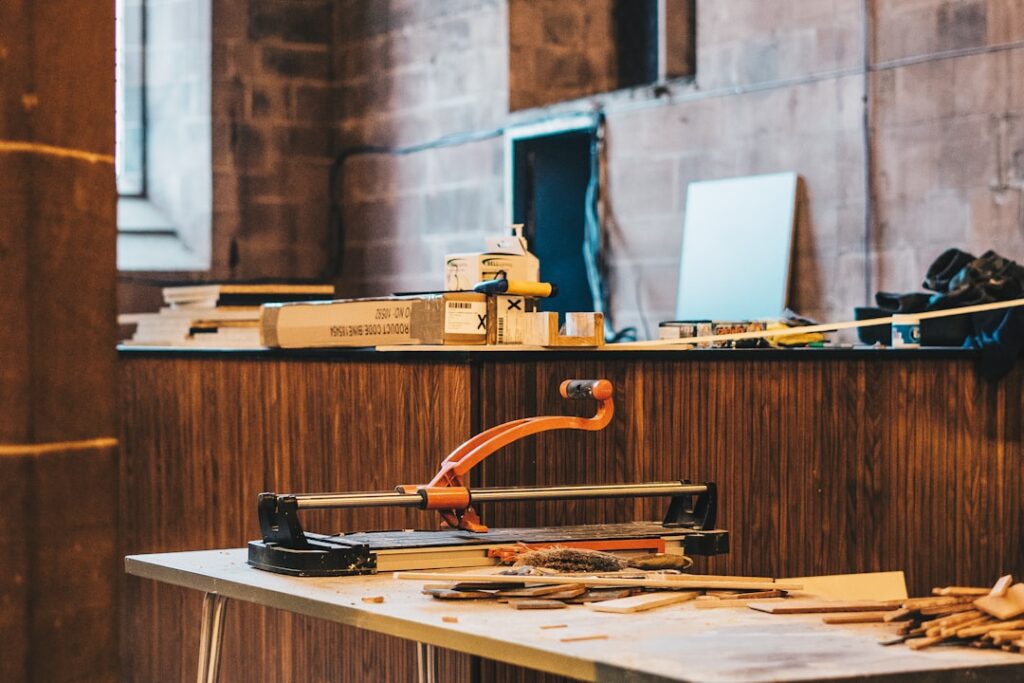
A laminate floor cutter rental can be the difference between a clean, quiet weekend install and a driveway coated in sawdust from a screaming miter saw. A laminate cutter, sometimes called a guillotine or shear cutter, slices planks with a single lever pull, producing no dust, no noise, and no cord, which makes it ideal for cutting indoors right where you are working. For a one-time flooring project, renting one instead of buying often makes the most financial sense. This guide covers what these cutters do, what a rental costs, where to find one, the cuts they handle well versus the ones they do not, and how to decide between renting and buying for your specific job.
What a Laminate Cutter Does
A laminate floor cutter works like a heavy-duty paper cutter or guillotine. You slide a plank onto the base, line up your mark against the blade, and pull the long handle down to shear straight through the board in one motion. Because it cuts by pressure rather than by a spinning blade, there is zero dust and almost no noise, so you can keep the cutter in the room you are flooring and make cuts as you go rather than running outside for every plank.
That workflow is a genuine time-saver. Instead of measuring, walking to a saw, cutting, and walking back, you cut steps from where you kneel. For a full room of laminate or luxury vinyl plank, that convenience adds up to hours saved and a far cleaner house. The cutters handle the crosscuts, cutting planks to length, that make up the majority of an installation.
What a Rental Costs
Renting is affordable, which is exactly why it is popular for one-off jobs. Pricing varies by region and provider, but these are realistic working ranges.
- Daily rental: roughly $20 to $40 per day at home improvement and tool rental centers.
- Weekend or multi-day: often a modest bump over the daily rate, sometimes charging for two days over a full weekend.
- Weekly rental: roughly $80 to $150, worthwhile for a larger multi-room project.
Most rentals also require a refundable deposit or a card hold. Since a single room of laminate is often installed in a day or two, a daily or weekend laminate floor cutter rental usually costs less than a fraction of buying a decent cutter outright, making it the smart choice for a one-time install.
Where to Rent One
Several sources stock laminate cutters, and it pays to call ahead to confirm availability and the maximum plank width the tool handles. Large home improvement chains with tool rental departments are the most common option and often carry name-brand cutters. Independent tool rental yards and equipment rental companies are another reliable source and sometimes offer better rates or larger-capacity cutters.
When you reserve, ask two questions: what is the maximum cutting width, since wide planks need a bigger cutter, and does the tool handle the thickness of your specific flooring. Bring a sample plank if you can, so the staff can confirm the cutter is sized for your product. Reserving in advance matters on weekends, when DIYers snap these up fast.
What These Cutters Handle Well
Guillotine cutters excel at clean, straight crosscuts across the width of a plank, which is the bulk of the work in most installations. They cut standard laminate and many luxury vinyl and engineered planks cleanly, leaving a smooth edge that tucks neatly against a wall under the baseboard. Because they are dust-free, they are perfect for occupied homes where sawdust would be a nightmare.
What they do not do is rip cuts, meaning long cuts down the length of a plank, or notches and curved cuts around door casings, pipes, and corners. For those, you still need a jigsaw or a fine-tooth handsaw. Very thick or dense planks can also be tough for a shear cutter, and some products cut more cleanly with a saw. So plan on the cutter handling the many straight end cuts and keeping a jigsaw on hand for the handful of specialty cuts every room requires.
Renting Versus Buying
The decision comes down to how much flooring you plan to install, now and later. Renting wins for a one-time, single-room or single-project job. You get a quality tool for a day or two at low cost, with nothing to store afterward, which suits the homeowner tackling a bedroom or basement once.
Buying starts to make sense if you are flooring your whole house over several weekends, if you plan multiple projects over the coming years, or if you are a rental-property owner or hobbyist who redoes floors regularly. Entry-level laminate cutters are reasonably priced, and a mid-range one pays for itself over a few big jobs versus repeated rentals. If you will use it once, rent; if you will reach for it again and again, buying and storing your own tool is the better value.
Tips for a Smooth Rental Experience
A little preparation makes the rental go smoothly. Measure your job first so you know whether a single day is enough or you should book the weekend, and factor in that first-time installers work slower than they expect. Inspect the cutter when you pick it up, checking that the blade is sharp and the handle operates smoothly, and note any existing damage so the deposit is not held against you.
Have your jigsaw, tape measure, spacers, and a pull bar ready before the rental clock starts, so you make the most of every hour you are paying for. Cut a test plank first to dial in your marking and alignment, and always mark the finished-face side clearly so cuts land where you intend. Handled this way, a laminate floor cutter rental gives you professional-quality straight cuts, a dust-free workspace, and a finished floor at a fraction of the cost of hiring out the job.
Cutter Versus Saw for the Whole Job
It helps to think of the laminate cutter and a saw as partners rather than competitors, because a real installation uses both. The shear cutter handles the high-volume, repetitive crosscuts, the end cuts on the last plank of every row, which is where its speed and dust-free operation pay off most. A circular saw or miter saw can do the same cuts but showers the area in fine laminate dust and makes noise that rules out working indoors, which is exactly the mess the rental cutter is designed to eliminate.
The saw, meanwhile, earns its keep on the cuts the guillotine cannot make. A jigsaw is the tool for notching around door jambs, cutting curves for toilet flanges and heat registers, and making the occasional lengthwise rip when a plank must be narrowed for the final row against a wall. A pull saw or an oscillating multi-tool also helps undercut door casings so planks slide neatly beneath them. By renting the laminate cutter for the bulk straight cuts and keeping a jigsaw on hand for the specialty work, a DIYer gets the cleanest, fastest workflow at the lowest cost, which is why so many first-time installers choose to rent rather than buy.
Prefer to explore on your own?
See how new flooring looks in your actual room in seconds — free, no signup.
Try the free Floor Studio →