If you own an angle grinder, you already own most of a tile-cutting system. The missing piece is the right disc, and choosing a good tile cutting blade for grinder work is what separates clean, professional-looking cuts from chipped edges and cracked tile. I have cut everything from cheap ceramic wall tile to dense Italian porcelain with a $60 grinder, and the blade mattered far more than the machine. This guide walks you through blade types, sizes, wet versus dry cutting, and the technique that keeps your tiles intact.
Part of our Tile & Grout guide — explore the full guide →
Why a Grinder Instead of a Wet Saw
A wet tile saw makes straight rip cuts beautifully, but it is bulky, needs water and power at the work site, and cannot follow a curve. An angle grinder is the tool you reach for when you need an L-shaped notch around a toilet flange, a curved cut around a pipe, or a plunge cut in the middle of an already-installed tile. It is also the cheaper entry point. A basic 4.5-inch grinder runs $40 to $70, while a decent wet saw starts around $120 and climbs past $500.
The trade-off is dust and control. A grinder spins fast and throws debris, so it demands the right blade and a steady hand. Get those two things right and the grinder becomes the most versatile tile tool in your kit. Most homeowners end up using both: the wet saw for bulk straight cuts and the grinder for the fiddly ones.
Diamond Blades: The Only Real Choice
Do not try to cut tile with an abrasive masonry wheel. It will work for about thirty seconds, wear down to a nub, overheat the tile, and leave a ragged burned edge. For tile you want a diamond blade, which is a steel disc with industrial diamond grit bonded to the cutting edge. The diamonds grind through the tile rather than chopping it, which is exactly what brittle ceramic and porcelain need.
Diamond blades for grinders come in three main rim styles, and picking the correct one is the single most important decision you will make. Each style trades cutting speed against edge quality, so match the blade to the material and to how visible the cut will be in the finished job.
Continuous Rim, Turbo, and Segmented
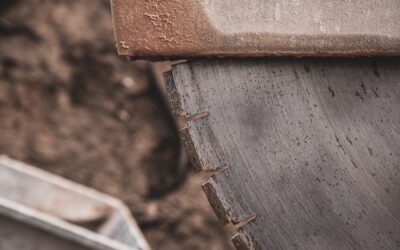
A continuous rim blade has a smooth, unbroken diamond edge with no gaps. It cuts the slowest but produces the cleanest, most chip-free edge, which makes it my go-to for glazed ceramic, glass tile, and any porcelain cut that will show. Because there are no gaps to shed heat, continuous rim blades run best with water. Expect to pay $12 to $30.
A turbo rim blade has a continuous edge with serrations or waves pressed into it. Those serrations clear dust and heat while still leaving a fairly clean cut. Turbo blades are the best all-around compromise for dry cutting, balancing speed and finish. They handle porcelain, ceramic, and stone, and typically cost $15 to $40. If you buy only one blade, buy a good turbo.
A segmented blade has visible gaps cut into the rim, dividing the edge into teeth. Those gaps cool the blade aggressively and cut fast, but they chip the edge more, so save segmented blades for rough cuts, thick natural stone, or paver work where the edge gets hidden by grout or trim. Segmented blades run $8 to $25.
Getting the Size Right
The most common homeowner grinder is the 4.5-inch model, and it takes a 4-inch or 4.5-inch blade. A 4.5-inch blade gives you a maximum cutting depth of roughly 1 to 1.25 inches, which is plenty for standard tile that runs 1/4 to 3/8 inch thick. A 4-inch blade fits the same grinder and costs a little less but cuts marginally shallower.
Larger 5-inch grinders accept 5-inch blades and reach a bit deeper, useful for thick stone or stacked cuts. Whatever you buy, confirm the arbor hole matches your grinder spindle, almost always 7/8 inch, and never mount a blade rated for a lower RPM than your grinder produces. A typical 4.5-inch grinder spins around 11,000 RPM, so your blade must be rated for at least that.
Wet Cutting Versus Dry Cutting
Wet cutting cools the blade, kills dust, and gives the cleanest edge, but a standard angle grinder is not designed to have water near its electrical guts, so you must use a GFCI outlet and keep water off the motor. Many homeowners dry cut for convenience and accept the dust. If you dry cut, do it outdoors or with serious dust control, and wear a proper respirator because tile dust contains silica.
A practical middle path is to dry cut with a turbo blade in short passes, pausing every few seconds to let the blade cool. Overheating shows up as a bluish tint on the steel and dulls the diamonds fast. Some homeowners keep a spray bottle handy and mist the cut line, which reduces dust and heat without soaking the tool.
Cutting Porcelain, Ceramic, and Stone
Porcelain is the hardest common tile and the most likely to chip, so use a continuous rim or fine turbo blade and cut slowly. Ceramic is softer and more forgiving; almost any diamond blade handles it. Natural stone like marble, travertine, and granite varies in hardness, but a turbo or dedicated stone blade works well, and wet cutting really pays off on stone to prevent scorching.
Whatever the material, always cut from the finished face and score before you commit. Let the blade reach full speed before it touches the tile, and let the diamonds do the work rather than forcing the tool. Pushing hard is the number one cause of cracked tile and chewed-up edges.
Avoiding Chips and Cracks
Chipping comes from three things: the wrong blade, too much speed of movement, and cutting from the wrong side. Mark your cut line on the glazed face with a pencil, then run a shallow scoring pass first, maybe 1/16 inch deep, before going through in a second or third pass. Multiple light passes chip far less than one aggressive plunge.
Support the tile fully so it cannot flex, because a tile that bends will snap. For the cleanest possible edge on a visible cut, run painter’s tape along the line and cut through the tape; it holds the glaze together at the moment the blade exits. Save your worn blades for rough work and keep a sharp one for finish cuts.
Safety and Final Thoughts
An angle grinder deserves respect. Wear safety glasses and a face shield, hearing protection, and a respirator rated for silica dust. Keep the blade guard installed, hold the tool with both hands, and stand so a kickback throws the tool away from your body, not into it. Never remove the guard to reach a tight spot; reposition the tile instead.
For most homeowners, a single quality turbo blade in the $20 to $30 range will handle 90 percent of tile projects, with a continuous rim blade added for visible porcelain cuts. Choosing the right tile cutting blade for grinder work, matching it to your material, and taking light, patient passes will give you clean edges that look like a pro did the job. Buy good, cut slow, and let the diamonds do what they were made to do.
Prefer to explore on your own?
See how new flooring looks in your actual room in seconds — free, no signup.
Try the free Floor Studio →