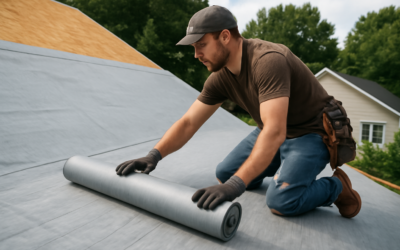
Ask a room full of roofers to name a synthetic underlayment and half of them will say “Titanium” before they name a second brand. Titanium underlayment is Owens Corning’s synthetic roofing underlayment family — originally developed by InterWrap, acquired by Owens Corning in 2016 —. Short version up front: it’s a genuinely excellent product family with one standout feature (the surface grip), honest pricing at the premium end, and a couple of quirks worth knowing before you commit a roof to it.
The Lineup: What Each Product Is For
Titanium isn’t one product; it’s a tiered family, and picking the right tier is most of the decision.
| Product | Type | Exposure Rating | Approx. Cost/Sq Ft | Use Case |
|---|---|---|---|---|
| UDL25 | Mechanically fastened synthetic | 60 days | $0.09–$0.14 | Budget jobs, standard shingle roofs |
| UDL30 | Mechanically fastened synthetic | 6 months | $0.13–$0.20 | The workhorse — most residential re-roofs |
| UDL50 | Heavier synthetic, high-temp | 6 months | $0.20–$0.30 | Steep-slope, tile, metal, premium jobs |
| PSU30 | Peel-and-stick, high-temp | 6 months | $0.55–$0.85 | Ice-dam zones, valleys, low slope, under metal |
All the UDL products are coated woven polypropylene. A roll of UDL30 covers 10 squares (1,000 square feet), weighs about 25 pounds, and replaces roughly five rolls of 30-pound felt at a fifth of the weight — one trip up the ladder instead of five, which your knees will register as the first review point in its favor.
What Titanium Gets Right
The Grip Is the Reason People Stay Loyal
Titanium’s signature is its patterned, slip-resistant nodular surface, marketed as “Sure-Foot” technology. On a 8:12 or 10:12 pitch in morning dew, UDL30 and UDL50 offer noticeably better boot traction than the glossy face of several cheaper synthetics, and dramatically better than wet felt, which is a skating rink. Grip is a safety feature you use every minute you’re on the deck, and it’s the number-one reason to choose this brand for steep work. UDL50 adds a thicker, cushioned walking feel that crews genuinely like on long tear-off days.
It Lies Flat and Stays Flat
Felt wrinkles overnight with humidity and telegraphs lines through shingles; Titanium goes down flat and stays dimensionally stable through the exposure window. The 6-month exposure rating on UDL30/50 is not something to test to the limit, but the margin it gives a stalled project is real.
Tear Strength Around Fasteners
The woven substrate resists pull-through and won’t tear away from cap nails in wind the way saturated felt does. Re-roofs in wind country used to mean re-papering sections after every gusty night; synthetics broadly fixed that, and Titanium is among the better performers at staying put.
The High-Temp Peel-and-Stick Is Legitimately Good
PSU30 is rated to 260°F, has a split release film that makes solo positioning on a slope far less of a wrestling match, and a granular top surface you can walk without skiing. Under metal roofs and in valleys it’s a common spec. It seals around nails properly and bonds aggressively once rolled — plan your placement, because repositioning is a one-way argument.
The Drawbacks
An honest review needs the other column.
- Price versus commodity synthetics. UDL30 costs meaningfully more than builder-grade synthetics that also technically meet code. On a 30-square roof the delta might be $100 to $200 ; the grip and stability are usually worth it, but a tight bid can’t always carry the premium.
- UDL25 exists mostly to hit a price point. It’s thinner, the exposure window drops to 60 days, and it doesn’t feel like the same product underfoot. If the budget forces UDL25 versus a heavier competitor at the same money, comparison-shop rather than defaulting to the brand.
- Vapor-closed like all synthetics. Titanium is effectively a vapor barrier. Over a properly vented attic that’s irrelevant; over an unvented assembly with a moisture problem, it will hide condensation issues rather than cause—or fix—them. That’s a design consideration, not a defect, but the brand’s marketing won’t raise it for you.
- Slippery when frosty. The grip surface is excellent wet, but frost is frost. Early-winter mornings still demand caution; no synthetic gets a pass there.
- Cap fasteners required for exposure. To get the rated exposure and wind performance you need capped nails or cap staples, not smooth roofing nails. That’s standard practice, but DIYers hand-nailing bare nails through it forfeit the warranty and some wind resistance.
Titanium vs. the Competition
The synthetic market is crowded — GAF FeltBuster and Tiger Paw, CertainTeed DiamondDeck, Grace Tri-Flex, and a shelf of import commodity rolls. Against that field, here is how it stacks up: FeltBuster undercuts UDL25 on price for comparable duty; Tiger Paw and DiamondDeck compete head-to-head with UDL30 and it comes down to supplier pricing and crew preference; nothing in the commodity tier matches UDL50’s underfoot feel on steep pitches. Where brand genuinely matters is warranty pairing — if the roof is getting Owens Corning shingles, keeping the underlayment in-family supports the total-system warranty, and that alone often decides it. GAF roofs get GAF paper for the same reason. Component quality being roughly comparable at the premium tier, system warranties are the tiebreaker more often than any spec line.
Against old-school felt, there’s no contest left worth writing about: synthetics are lighter, stronger, flatter, safer to walk, and no longer meaningfully more expensive. Felt survives on low bids and habit.
Installation Notes That Affect the Review
The site covers underlayment installation in a dedicated guide, but a few Titanium-specific behaviors belong in a review because they change how the product performs relative to competitors. The printed lap lines and fastener-pattern grid on the face are genuinely useful and accurately spaced, which speeds layout on big decks; not every brand’s printing is trustworthy, and crews notice. The material cuts cleanly with a hook blade without the stringy fraying some woven synthetics produce at cut edges. Cold-weather handling is good — rolls stay flexible and lie down flat in temperatures where felt cracks and some budget synthetics stay stubbornly curled from the roll. And UDL products hold chalk lines well, a small thing that matters when you’re striping a 40-square roof for shingle courses. On the PSU30, one behavioral note: in hot direct sun the exposed butyl at laps gets aggressive fast, so experienced crews stage their pulls early in the day. None of this changes the verdict, but it’s the texture of why crews that switch to the brand tend to stay switched.
Who Should Buy Which
- Standard asphalt re-roof, vented attic, moderate pitch: UDL30. This is the 80-percent answer and the best value in the line.
- Steep pitch (8:12+), tile, or slate-look products: UDL50 for the footing and the heavier substrate under hard roofing.
- Metal roof: UDL50 (high-temp rated) on the field, PSU30 at eaves and valleys — standard-temp membranes don’t belong under hot panels.
- Ice-dam country (roughly anywhere with real winter): PSU30 from the eave to at least 2 feet inside the warm wall line, code minimum, then UDL above.
- Budget rental re-roof getting basic 3-tabs: honestly, a cheaper code-compliant synthetic is defensible. Titanium’s advantages accrue to steep, premium, and delayed jobs most.
Verdict
Titanium is a strong steep-slope choice. Walkability is the best reason to buy it, durability and exposure tolerance are strong, value is best at the UDL30/50 tier and weaker for UDL25, and the PSU30 peel-and-stick holds up well against its own competitive set. The premium over commodity synthetic is one crew-hour of money on a typical roof, and it buys grip a crew feels all day.