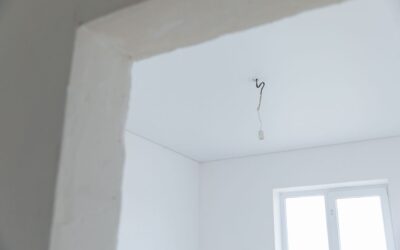
The fixture is rarely the expensive part of a track lighting project; the wiring behind the ceiling is. Most homeowners can expect a total track lighting installation cost somewhere between a couple hundred dollars and a little over a thousand, and where you land depends mostly on one question: is there already a ceiling box with a working switch where the track will go? If there is, a simple kit swap is often a two-hour electrician visit. If there is not, you are paying for a new circuit path, a new switch, and drywall repair.
As a rough guide, a basic straight-track kit replacing an existing ceiling fixture usually falls in the low hundreds installed. A flexible monorail system with designer heads, or any install that needs a new switch run through finished walls, can push the job toward or past a thousand dollars. This guide breaks down the fixture options, labor scenarios, and the wiring extras that move the price.
What Drives Track Lighting Installation Cost
Four variables account for nearly all of the difference between a cheap install and an expensive one:
- Fixture type: standard H, J, or L track kits versus monorail or cable systems
- Existing electrical: whether a ceiling junction box and wall switch already serve the location
- Access: attic above, finished floor above, ceiling height, and whether joists run the direction you need
- Controls: a simple toggle, a dimmer compatible with LED heads, or a smart switch
Track length and head count matter less than people expect. Adding four more feet of track or two extra heads raises the materials bill, but labor time barely moves once the power feed is in place.
Fixture Costs: Track Kits vs Monorail
Standard Track Kits
A track lighting kit is the budget route. These kits typically include a 4 to 8 foot straight track section, a live-end connector or floating canopy, and three to six adjustable heads. Entry-level kits generally cost well under two hundred dollars, and mid-range LED kits with better color rendering and adjustable beam angles run somewhat higher. Most are line-voltage systems, meaning they run on standard 120-volt household current with no transformer.
Before buying extra heads, confirm the track type. The three common standards, often labeled H, J, and L, are not interchangeable, and mixing them is a frequent source of return trips to the store.
Monorail and Cable Systems
Monorail systems use a single rail that can be hand-bent into curves and waves, suspended from standoffs. Cable systems stretch two parallel wires across a room. Both usually run on low voltage, 12 or 24 volts, supplied by a transformer or driver that converts household current. Expect fixture packages to cost several hundred dollars to well over a thousand for larger, custom-bent layouts with premium heads.
Low-voltage systems add their own requirements. The transformer must be UL-listed and sized to the total wattage of all heads with headroom to spare, and it needs to stay accessible for service. Installation takes longer because standoffs are placed along the path and the rail has to be shaped on site, so labor typically runs higher than for a straight track.
Electrician Labor: Three Common Scenarios
Electricians generally bill hourly with a minimum service charge, or quote a flat price per fixture. Labor rates vary widely by region, so compare at least three quotes.
Scenario 1: Replacing an Existing Fixture
This is the least expensive job. The electrician turns off the breaker, confirms power is off with a non-contact voltage tester, removes the old fixture, mounts the track’s canopy to the existing box, and attaches the track to the ceiling at intervals, anchoring into joists or using rated toggle anchors. Expect one to two hours of labor, which often lands in the low hundreds including the minimum trip charge.
Scenario 2: New Box, Existing Switch Nearby
If the track needs to sit a few feet from the old fixture location, the electrician may extend the circuit from the existing box to a new one. With attic access above, this is straightforward. Without it, expect small access holes in the ceiling. Labor usually runs two to four hours, and drywall patching and paint touch-up add to the total unless you do them yourself.
Scenario 3: No Box, New Switch Run
This is where costs climb. The electrician must find a power source, often an existing outlet or junction on a circuit with spare capacity, then fish new cable up the wall to a new switch box and across the ceiling to the fixture location. In a single-story home with attic access, it may take half a day. In a finished ceiling with a room above, fishing wire across joists can mean multiple holes and a full day of labor. A permit is often required for new wiring, and fees vary by jurisdiction. When a circuit has no spare capacity, a new circuit from the panel adds further cost.
Wiring Extras That Add to the Bill
- Dimmer switches: An LED-compatible dimmer costs more than a basic toggle. Confirm the heads and dimmer are rated to work together, or you may get flicker and buzzing.
- Smart switches: Many require a neutral wire in the switch box. Older homes sometimes lack one, which means extra labor.
- Three-way switching: Controlling the track from two locations requires additional cable and labor.
- High or vaulted ceilings: Anything above about 10 feet may require a taller ladder or scaffolding and a second worker, raising labor time.
- Drywall and paint: Electricians typically cut and leave access holes; patching is often a separate trade or line item.
- Old wiring: Discovering cloth-insulated cable or an ungrounded box can turn a quick swap into a small repair job.
DIY vs Hiring an Electrician
Swapping an existing ceiling fixture for a line-voltage track kit is within reach for experienced DIYers where local rules allow homeowner electrical work. The savings equal the electrician’s labor, typically a couple hundred dollars. The steps are simple on paper: turn off the breaker, confirm power is off with a non-contact voltage tester at the box, connect matching conductors and the ground, mount the canopy, secure the track, and click in the heads.
Anything beyond that swap is a different job. Running a new switch leg, adding a box, tapping into a circuit, or installing a transformer for a low-voltage system should be handled by a licensed electrician. Mistakes in those areas can create fire hazards that stay hidden inside walls for years, and unpermitted work can complicate insurance claims and home sales.
Ladder work deserves respect even on a simple swap. Use a stepladder tall enough that you never stand on the top two steps, set it on firm, level flooring with the spreaders locked, and keep three points of contact while reaching overhead. Having a helper hold the track section while you drive fasteners is safer than balancing a long rail one-handed. For ceilings in a two-story foyer, stairwell, or anything you would need scaffolding to reach, hire the job out.
Sample Cost Scenarios
| Project | Typical Installed Range |
|---|---|
| Basic kit replacing existing fixture | Low hundreds |
| Mid-range LED kit with dimmer, existing box | Mid hundreds |
| Kit with new box and short circuit extension | Mid to upper hundreds |
| Monorail system with new switch run | Near or above one thousand |
These are general ranges only. Regional labor rates, permit fees, and the condition of your existing wiring can shift any project up or down, so treat them as a starting point for comparing quotes.
Ways to Keep Costs Down
- Place the track where an existing ceiling box already sits, and use the track’s length and adjustable heads to aim light where you need it.
- Choose a floating canopy that lets the track mount off-center from the box, avoiding a new box altogether.
- Bundle the track install with other electrical tasks, such as adding an outlet or replacing switches, to spread the service minimum.
- Buy the fixtures yourself, but check with the electrician first; some will not warranty customer-supplied parts.
- Handle drywall patching and painting yourself after the electrician finishes.
When to Call a Licensed Professional
Hire a licensed electrician for any new wiring, new switch, new junction box, three-way control, low-voltage transformer, or connection to a circuit whose capacity you cannot confirm. Ask whether the work needs a permit in your area; reputable electricians pull permits as a matter of course, and inspection protects you if something is ever questioned. Call a pro right away if you find scorched wires, aluminum branch wiring, a box with no ground, or a breaker that trips when the lights come on. Paying a professional for the wiring portion keeps your track lighting installation cost predictable and your ceiling safe.
Frequently Asked Questions
How much does an electrician charge to install track lighting?
Labor for replacing an existing fixture is often one to two hours, landing in the low hundreds after the service minimum. Jobs that need a new box or new switch run can take half a day to a full day and cost considerably more.
Is monorail lighting more expensive than track lighting?
Usually, yes. Monorail fixtures cost more, most run on low voltage and need a properly sized transformer, and bending and suspending the rail takes extra labor time.
Can track lighting be installed without an existing ceiling box?
Yes, but it requires running new cable from a power source and usually a new switch, which should be done by a licensed electrician. Some plug-in track kits exist, but they leave a visible cord running to an outlet.
Do I need a permit to install track lighting?
A straight fixture swap often does not need one, but new circuits, boxes, and switch runs commonly do. Requirements vary by city and county, so check with your local building department or ask your electrician.
Does track length affect installation cost much?
Not much. Longer track and more heads raise material costs, but most of the labor goes into making the electrical connection and securing the track, which takes about the same time regardless of length.