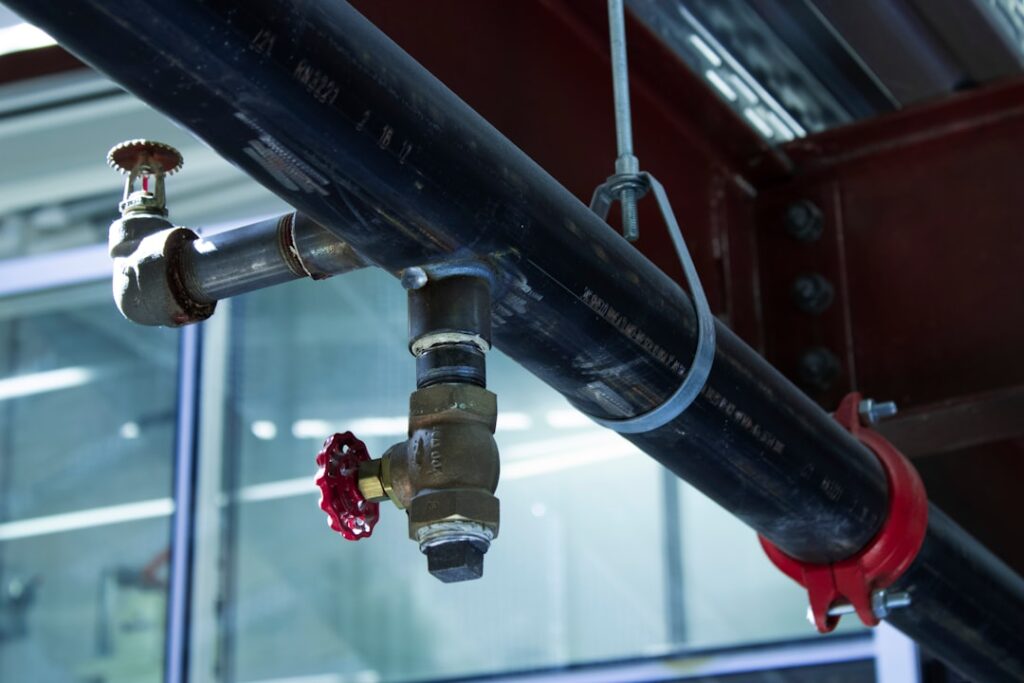
That sewer smell in the basement every time you come home from vacation has a two-dollar explanation: the water in your floor drain’s trap evaporated, opening a direct air path to the sewer. A trap primer valve is the small plumbing device built to prevent exactly that — it automatically drips fresh water into rarely used drain traps so the water seal never dries out and sewer gas never gets in. Commercial buildings have required them for decades, and any home with a basement floor drain benefits from the same idea. Here’s how these valves work, the main types, what installation costs, and the cheaper alternatives when a full primer is overkill.
The Problem: Evaporating Trap Seals
Every drain in your house — sink, shower, floor drain — passes through a P-trap or bell trap holding a few inches of standing water. That water plug, typically a 2 to 4-inch-deep seal, is the only thing separating your living space from the sewer or septic system’s atmosphere: hydrogen sulfide (the rotten-egg smell), methane, ammonia, and airborne bacteria. Code treats the trap seal as a critical safety component for good reason — sewer gas is unpleasant at low levels and genuinely hazardous in concentration.
Traps under fixtures you use daily refill themselves constantly. The trouble is the drains you don’t use: basement and garage floor drains, laundry-area drains, drains under commercial-style HVAC setups, and fixtures in guest bathrooms or vacation homes. Standing trap water evaporates at roughly an inch per week in dry conditions — faster near a furnace or water heater, faster still in winter when indoor humidity drops. A floor drain trap can dry completely in two to four weeks of neglect, and the first symptom is that distinctive smell, often blamed on everything except its real cause.
How a Trap Primer Valve Works
A trap primer connects a potable water line to the dry-prone trap through a small tube, releasing a metered dribble of water on a trigger. The classic pressure-drop primer — the brass valve you’ll see tapped into a cold-water line in a mechanical room — senses the momentary pressure fluctuation whenever a nearby fixture runs (a toilet flush, a faucet opening) and responds by releasing an ounce or so of water down a 1/2-inch tube to the trap. Use the building’s water normally and the trap gets topped up automatically, a few ounces at a time, forever.
The valve installs in the cold water line, typically at least 12 inches above the trap it serves, with the feed tube running to a connection on the trap body or, for retrofits, simply discharging above the drain grate through an air gap fitting. Distribution units let one primer serve up to four traps in commercial work. Two code details matter: primers must protect the potable supply against back-siphonage (quality valves have integral vacuum-breaker/backflow protection and ASSE 1018 certification), and they must remain accessible — never bury one in a closed wall without an access panel, because they do eventually need service.
Types of Trap Primers
Four common approaches, from simplest to most sophisticated:
- Pressure-drop valves (ASSE 1018): the standard. Precision Plumbing Products (PPP) Prime-Rite and Oatey units run $40-$120 and need no electricity. Their weakness: very stable water pressure with little fixture use means few activations
- Fixture-supplied primers: a fitting on a lavatory’s tailpiece or a dedicated tapping off a frequently used fixture diverts a trickle of each use to the trap (ASSE 1044 covers devices using fixture wastewater where allowed). Cheap and reliable where layout cooperates
- Electronic primers: a solenoid on a timer (PPP Mini-Prime class, $150-$350) injects water on a schedule — every 24 hours, say — regardless of building activity. The right answer for buildings that sit unused, which is exactly when pressure-drop primers fail to fire
- Flush-valve primers: commercial tappings off flushometer valves that redirect a portion of each flush; ubiquitous in public restrooms
For a typical house with one problem floor drain near the laundry, a pressure-drop valve tee’d into the washer’s cold supply is the textbook install — every laundry day primes the trap without anyone thinking about it.
Code Requirements and When You Actually Need One
Model plumbing codes (UPC and IPC) require emergency floor drains and infrequently used traps to maintain their seals, and they name the acceptable methods: an approved trap primer, or — the important alternative written into modern code — a deep-seal trap or a barrier-type (waterless) trap seal protection device. Commercial mechanical rooms, restrooms, and food-service floor drains get primers as a matter of routine; inspectors look for them on new work.
Residentially, the calculus is practical rather than mandatory in most existing homes. You need seal protection if you have: a basement or garage floor drain that ever smells, a floor drain serving as emergency overflow for a water heater or washer, drains in a vacation home or rental that sits empty for weeks, or a basement bathroom used a few times a year. New construction in many jurisdictions requires primers (or approved equivalents) on floor drains — if you’re building or finishing a basement, settle this at rough-in, when adding a primer costs $75 instead of $500.
Installation, Costs, and Maintenance
Retrofit cost depends almost entirely on access. With an exposed cold line near the trap, a plumber installs a pressure-drop primer in one to two hours: $150 to $400 all-in including the $40-$120 valve. Runs through finished walls or ceilings, or a primer connection requiring excavation to reach a buried trap body, push the job to $500-$900 — which is the point where the alternatives below deserve a look. Handy DIYers with a shutoff, a tee, and either sweat or push-fit skills can manage the basic install; keep the required air gap or use a certified valve with integral backflow protection, and check local rules — some jurisdictions restrict DIY work on potable connections.
Maintenance is light but real. Mineral scale eventually clogs the metering orifice — symptoms are a dry trap returning despite the primer, or conversely a valve that drips constantly (wasting water and, at a few ounces per activation gone wrong, showing up on bills). Test annually: run the trigger fixture, then listen or check the drain tube for the momentary trickle. Most valves offer rebuildable cartridges for $15-$30; hard-water homes should expect a rebuild every 5 to 10 years.
Cheaper Alternatives That Solve the Same Problem
Not every dry trap justifies a plumbing project. Three legitimate substitutes: First, the bucket method — pour a quart of water into rarely used drains monthly; add a tablespoon of mineral oil on top and evaporation slows to months, since oil floats and seals the surface (skip oil where the drain may actually be used for drainage). Second, trap seal primer fluid ($10-$15 a bottle) — a propylene glycol product for the same job that also resists freezing in garage and cabin drains. Third, and most interesting, barrier-type trap seal devices like the SureSeal or Green Drain inline check valves ($15-$40): a rubber-flapper insert that drops into the floor drain body and mechanically blocks gas while still allowing downward drainage, code-recognized (ASSE 1072) as trap seal protection. For a smelly basement floor drain in an existing home, a $25 barrier insert installed in five minutes is very often the right answer — no pipes opened, no water wasted.
The Bottom Line
A trap primer valve does one small job perfectly: it keeps water in the traps you forget about, which keeps sewer gas out of rooms you live in. Spec them into any new construction or remodel with floor drains — it’s a $75 decision at rough-in. In existing homes, match the fix to the situation: a pressure-drop primer off a laundry line for a chronically dry drain in an active house, an electronic primer for buildings that sit empty, and a barrier-type insert or a monthly quart of water for everything milder. Whatever route you choose, don’t live with the smell — it’s not just unpleasant, it’s your plumbing telling you a safety seal has failed.
Frequently Asked Questions
What is the difference between a trap primer and a trap seal?
The trap seal is the standing water inside the trap that blocks sewer gas; the trap primer is the device that keeps refilling that water so it never evaporates. A barrier-type trap seal device is a third option: a mechanical insert with a flapper or membrane that blocks gas even when the water is low. Codes accept a primer, a deep-seal trap, or an approved barrier device as protection.
How do you winterize a trap primer in an unheated building?
Shut off the cold water supply feeding the primer, open the line’s drain point to empty the valve and tubing, and blow out remaining water if the system allows it. Then protect each trap with a non-toxic propylene glycol trap seal fluid instead of plain water, since the primer will not refill it. A licensed plumber should handle building-wide winterization, because missed low spots can freeze and split.