Every time you turn a single-lever faucet to “just right,” a small component is doing precise work behind the wall to blend scalding hot and cold water into a comfortable stream, and to keep it steady when someone flushes a toilet down the hall. A faucet mixing valve is the part responsible for combining hot and cold supply into one controlled output, and depending on the type, protecting you from sudden temperature swings that can burn. When it wears out you get erratic temperatures, weak flow, or water that’s stuck too hot or too cold. Understanding how it works tells you whether you can adjust it, rebuild it, or need to replace it entirely.
- What a Mixing Valve Does
- The Main Types You’ll Encounter
- Signs Your Mixing Valve Is Failing
- Adjusting Before You Replace
- Replacing a Faucet Mixing Valve
- When to Call a Professional
- Pressure-Balancing vs. Thermostatic: Which You Need
- Water Heater Temperature and Mixing Valves
- Keeping Your Valve Healthy
What a Mixing Valve Does
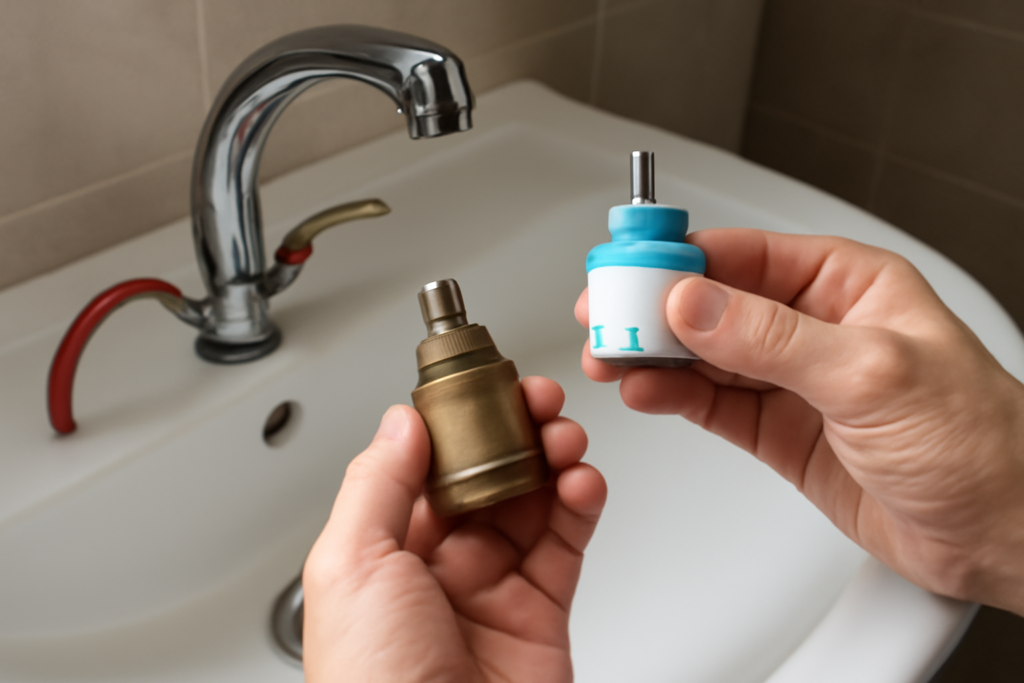
A mixing valve takes two inputs, hot water (often 120°F to 140°F straight from the heater) and cold water, and combines them into a single tempered output. In a basic single-handle faucet, the cartridge is the mixing valve: moving the lever left and right changes the ratio of hot to cold, and moving it up and down changes volume. In more advanced setups, the mixing function is a dedicated device with a temperature-sensing element that actively holds your set temperature even when supply pressure or temperature fluctuates. That’s the difference between a stream that stays at 102°F and one that spikes when the washing machine kicks on.
The safety angle matters. Water above 120°F can cause a serious burn in seconds, and children and older adults are especially vulnerable. Mixing valves are a first line of defense against that.
The Main Types You’ll Encounter
Not all mixing valves are the same, and the term covers a few distinct devices:
- Pressure-balancing valve: the most common in showers. It keeps the hot-to-cold ratio constant by reacting to pressure changes, so a toilet flush won’t scald you. It protects the ratio, not an exact temperature.
- Thermostatic mixing valve (TMV): uses a wax or bimetal element that senses outlet temperature and adjusts the blend to hold a precise setpoint regardless of supply swings.
- Faucet cartridge (manual mix): in a standard single-handle sink or tub faucet, the cartridge blends hot and cold in whatever ratio you set, with no automatic compensation.
- Point-of-use tempering valve: installed at the water heater to cap the temperature of hot water leaving the tank.
Signs Your Mixing Valve Is Failing
A worn or clogged mixing valve announces itself in a few unmistakable ways. Watch for these symptoms:
- Temperature won’t reach hot or cold: the water stays lukewarm no matter how far you turn the handle, a classic sign the valve’s element or seals have failed.
- Sudden hot or cold surprises: temperature swings when other fixtures run, pointing to a failed pressure-balancing spool.
- Reduced flow on one side: mineral scale clogging the valve’s ports, common in hard-water areas.
- Handle feels gritty or stuck: internal wear or scale binding the moving parts.
- Crossover, hot water backing into the cold line or vice versa, felt as warm water from the cold tap.
Hard water is the most common cause of premature failure. Scale builds inside the valve, blocking ports and jamming the temperature element.
Adjusting Before You Replace
Before you tear anything out, check whether a simple adjustment fixes it. Pressure-balancing and thermostatic shower valves have a rotational limit stop, a plastic ring behind the handle, that caps how hot the water can get. If your shower suddenly can’t get warm enough, the limit stop may just need to be rotated toward the hot side; if it’s scalding, rotate it toward cold. Remove the handle, note the current position, and move the stop one or two notches at a time, testing between adjustments. This five-minute fix solves a surprising number of “bad valve” complaints, no plumbing required.
Likewise, a thermostatic mixing valve usually has a setpoint dial you can turn to fine-tune the maximum temperature, often factory-set around 104°F to 120°F.
Replacing a Faucet Mixing Valve
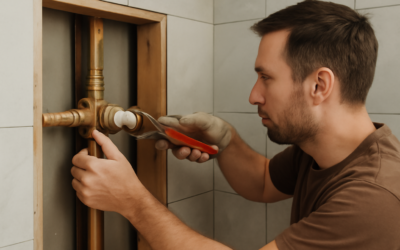
When adjustment doesn’t cut it, replacement is the answer. For a single-handle faucet, that often means swapping the cartridge, a straightforward 30-to-60-minute job. For a dedicated pressure-balancing or thermostatic valve, the process is more involved:
- Shut off the water at the fixture stops or the main, and open the faucet to relieve pressure.
- Remove the handle, escutcheon, and any bonnet nut or retaining clip.
- Extract the cartridge or valve element; use the brand’s puller if it’s scale-locked.
- Clean the valve body of scale and debris with a soft brush and vinegar.
- Grease the new cartridge or element with silicone and seat it in the correct orientation, hot and cold sides matter.
- Reassemble, restore water slowly, and test both temperature range and stability.
A replacement cartridge runs $15 to $50; a full thermostatic valve body is $100 to $300 plus labor if it requires opening a wall.
When to Call a Professional
Cartridge swaps and limit-stop adjustments are solid DIY territory. Bring in a plumber when the valve body itself needs replacing behind a tiled wall, when you have soldered copper connections and no shut-offs, or when crossover persists after a new cartridge, which can indicate a failed valve body or a bad check valve elsewhere in the system. Installing a code-required thermostatic or tempering valve at the water heater is also worth professional handling to get the safety setpoint right.
Pressure-Balancing vs. Thermostatic: Which You Need
When you’re choosing or upgrading a shower valve, the decision usually comes down to these two, and they serve different purposes. A pressure-balancing valve is the code-minimum anti-scald device in most residential showers, and it’s the more affordable choice, a valve body runs $40 to $100. It reacts to pressure changes to hold the hot-cold ratio steady, so a flushing toilet won’t scald you. What it does not do is hold an exact temperature; if your water heater output drifts, the shower temperature drifts with it.
A thermostatic valve is the premium option, $150 to $300 or more, and it actively holds a precise temperature you dial in, compensating for both pressure and supply-temperature changes. It also lets you set temperature and volume independently. For a standard family bathroom, a pressure-balancing valve is entirely adequate and meets code. For a spa-like master shower with multiple heads and body sprays, a thermostatic valve is worth the upgrade because it delivers consistent comfort across all those outlets at once.
Water Heater Temperature and Mixing Valves
Your mixing valve doesn’t work in isolation, it depends on what your water heater delivers. Many plumbers set water heaters to 140°F to kill Legionella bacteria in the tank, but 140°F water can scald in as little as five seconds. The solution is a tempering (mixing) valve installed right at the heater’s outlet, which blends the tank’s hot water down to a safe delivery temperature, commonly 120°F, before it ever reaches your fixtures. This gives you the safety of a hot tank plus the safety of moderate tap temperatures, and it also effectively increases usable hot-water capacity, since the tempering valve stretches the hot supply by mixing in cold. If your home has aggressive scald protection needs, pairing a point-of-use tempering valve at the heater with pressure-balancing or thermostatic valves at each fixture is the belt-and-suspenders approach professionals recommend.
Keeping Your Valve Healthy
Hard water is the enemy of any faucet mixing valve, so if you’re on well water or a hard municipal supply, a water softener extends valve life dramatically. Exercise seldom-used valves occasionally to keep parts from seizing, and if your water heater runs above 120°F for legionella control, pair it with a mixing valve at the outlet so you get safe delivery temperatures without sacrificing storage safety. Understand how yours works, and you can adjust, clean, or replace it long before a lukewarm shower or a scalding surprise forces the issue.