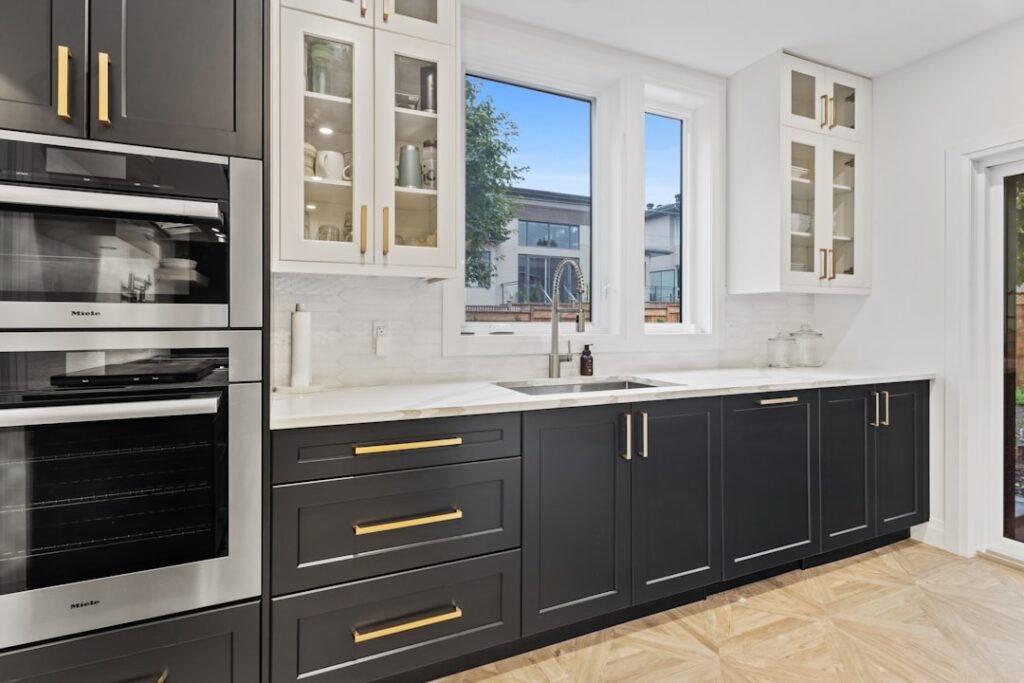
The all-white kitchen is finally sharing the spotlight, and the look taking its place is warmer and far more striking. Two tone black and wood kitchen cabinets pair the drama of matte black with the warmth of natural wood grain, creating a modern, high-contrast kitchen that feels both bold and inviting. Designers reach for two tone black and wood kitchen cabinets because the combination hides the coldness of an all-black kitchen while grounding the trendiness with timeless natural material.
Part of our Kitchen Remodeling guide — explore the full guide →
This guide covers how to lay out the two tones, which wood species and black finishes work best, and how to tie the look together with countertops, hardware, and backsplash so the result looks designed rather than accidental.
- Why the Black and Wood Combination Works
- How to Split the Two Tones
- Choosing the Right Wood Tone
- Selecting the Black Finish
- Countertops and Backsplash Pairings
- Hardware and Finishing Touches
- Balancing the Look So It Feels Intentional
- Flooring Choices That Complement the Look
- Lighting the Two-Tone Kitchen
- Keeping the Look Timeless
- The Bottom Line
Why the Black and Wood Combination Works
Black and wood is a study in contrast and balance. Black brings depth, sophistication, and a grounding anchor, while wood adds warmth, texture, and organic softness. Together they avoid the extremes: an all-black kitchen can feel cold and cave-like, and an all-wood kitchen can feel dated or heavy. The pairing borrows the best of both.
The look reads as modern but not sterile, and it flatters a range of styles from Scandinavian and Japandi to modern farmhouse and industrial. That versatility is why the combination has stayed popular rather than fading as a passing fad.
How to Split the Two Tones
Where you place each color changes the entire feel of the kitchen. Popular layouts include:
- Black uppers, wood lowers: grounds the room with warmth at the base and adds airy contrast above. A safe, balanced choice.
- Wood uppers, black lowers: the reverse, which anchors the room with dark base cabinets and keeps eye-level cabinetry warm and light.
- Black perimeter, wood island: makes the island a warm focal point against dark perimeter cabinetry.
- Wood perimeter, black island: the island becomes a bold anchor in an otherwise warm room.
- Split by zone: black around the range and hood, wood on a pantry wall or coffee station.
A reliable design rule is the 70-30 or 60-40 split, letting one tone dominate while the other accents. An even 50-50 split can feel busy unless carefully balanced with neutral counters and walls.
Choosing the Right Wood Tone
The wood you pick sets the mood. Consider these options against black:
- White oak: the current favorite, with subtle grain and a light-to-medium tone that keeps the look airy and contemporary.
- Walnut: rich, dark, and luxurious, pairing with black for a moody, high-end feel.
- Hickory or rustic oak: pronounced grain and character for farmhouse and rustic kitchens.
- Maple or birch: smooth, light, and budget-friendly, though less dramatic in grain.
- Natural cherry: warm reddish tones that add richness against matte black.
For a modern, on-trend result, white oak with a natural or light stain is hard to beat. For a dramatic, upscale kitchen, walnut against black is stunning. Match the wood undertone to your flooring and overall palette to keep things cohesive.
Selecting the Black Finish
Not all blacks are equal. The finish dramatically affects the look and the upkeep:
- Matte black: the most popular, modern and non-reflective, but shows fingerprints and dust more readily.
- Satin or eggshell black: a slight sheen that hides smudges better while staying understated.
- Soft black or charcoal: a near-black with warmth that reads less stark than true black.
- Black-stained wood: keeps the grain visible under a dark tint for a textured, organic black.
Matte black looks incredible but demands more wiping, especially in a busy family kitchen. If low maintenance matters, a satin finish or a slightly softened charcoal is more forgiving while keeping the dramatic effect.
Countertops and Backsplash Pairings
The counters and backsplash either unify the two tones or fight them. Winning combinations include:
- White or light quartz counters: brighten the space and provide a clean break between black and wood.
- Waterfall quartz on the island: a modern statement that works beautifully with either tone.
- Marble or marble-look quartz: adds elegant veining that softens the contrast.
- Concrete or soapstone: leans industrial and complements matte black.
- Simple white or zellige tile backsplash: keeps the walls neutral so the cabinets stay the star.
A light countertop is the safest choice because it prevents the room from going too dark and provides visual relief between the two cabinet tones.
Hardware and Finishing Touches
Hardware is the jewelry that ties the palette together. Effective metals with black and wood include:
- Brushed brass or gold: a warm, luxurious contrast that pops against black and complements wood.
- Matte black hardware on wood cabinets: echoes the black cabinetry for cohesion.
- Brushed nickel or stainless: a neutral, versatile choice that reads modern.
- Bronze or aged metals: for a rustic or industrial lean.
Brass is the standout pairing, adding warmth and a designed, upscale feel. Carry the same metal through your faucet, lighting, and pulls so the finishes feel intentional rather than mismatched.
Balancing the Look So It Feels Intentional
The difference between a striking two-tone kitchen and a chaotic one is balance. Keep these principles in mind:
- Let one tone dominate rather than splitting exactly evenly.
- Repeat each color at least twice, so black appears in both cabinets and hardware, and wood shows in cabinets and maybe open shelving or flooring.
- Use lighting to prevent dark cabinetry from making the room feel closed in; add under-cabinet LEDs.
- Keep walls, counters, and backsplash relatively neutral so the cabinets carry the drama.
Flooring Choices That Complement the Look
The floor grounds the whole design, and getting it right keeps the two-tone cabinets from clashing. Because the cabinetry already combines a dark tone and a wood tone, the flooring should support rather than compete with them. The goal is to echo one element or provide a clean neutral base.
Flooring options that work well include:
- Light to medium wood or wood-look LVP: ties into the wood cabinets while keeping the room bright; choose an undertone that harmonizes with the cabinet wood.
- Large-format light tile or porcelain: a neutral canvas that lets the cabinets stay the focal point.
- Warm gray or greige tones: bridge the black and wood without pulling too dark.
- Contrasting dark floors: possible but risky, since too much dark can close in the room; balance with light counters and walls.
Avoid matching the floor wood exactly to the cabinet wood, which can look flat. A slight difference in tone or a contrasting neutral reads as intentional and layered.
Lighting the Two-Tone Kitchen
Dark cabinetry absorbs light, so lighting is critical to keeping a black and wood kitchen from feeling dim or heavy. Layer multiple light sources rather than relying on a single overhead fixture. Good lighting also makes the wood grain and matte black finishes look their best.
Build your lighting in layers:
- Under-cabinet LEDs: illuminate work surfaces and prevent shadows cast by dark uppers.
- Recessed ceiling lights: provide even general illumination throughout the space.
- Statement pendants over the island: add style and focused task light, often in brass to tie in the hardware.
- Interior cabinet lighting: highlights glass-front cabinets and open shelving.
Warm-white bulbs around 2,700K to 3,000K flatter wood tones and keep the room inviting, while cooler light can make black cabinets feel stark. Dimmers let you shift the mood from bright task work to relaxed evening ambiance.
Keeping the Look Timeless
Trends come and go, so a few choices help a two-tone kitchen age gracefully. Natural wood and matte black are both classic materials rather than fleeting fads, which gives this combination staying power. To keep it feeling current for years:
- Choose simple, clean door styles like flat-panel or shaker that transcend trends.
- Keep permanent, expensive elements such as counters and flooring neutral, and express trends through easily changed items like hardware and decor.
- Favor quality wood species with genuine grain over printed laminates that date quickly.
- Select a black finish you can live with long term, since repainting cabinets is a significant job.
By anchoring the design in timeless materials and clean lines, you get a kitchen that feels fresh now and still looks intentional a decade from now.
The Bottom Line
Two tone black and wood kitchen cabinets deliver a modern, high-contrast look that balances the drama of black with the warmth of natural wood. Split the tones with a 60-40 or 70-30 ratio, choose white oak or walnut for the wood and a matte or satin black to match your tolerance for upkeep, and ground the palette with light countertops and warm brass hardware. Pay attention to lighting and balance so the result looks curated, and you will have a kitchen that feels both timeless and thoroughly contemporary for years to come.