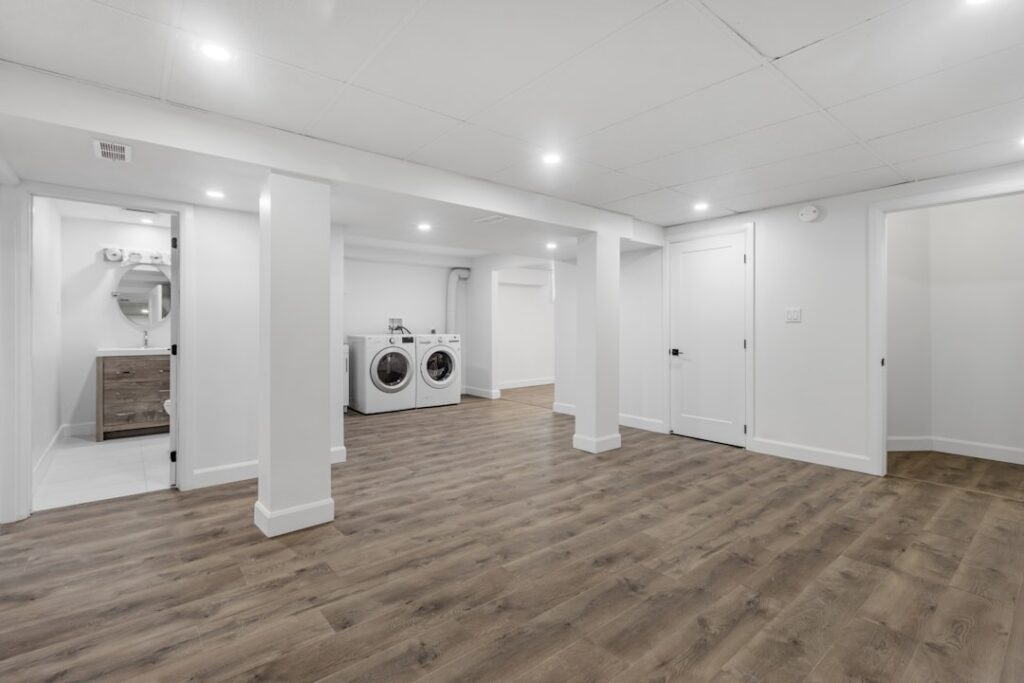
A bare concrete slab does not have to stay cold, gray, and uninviting, and the best unfinished basement floor ideas prove you can transform the space without a full remodel. Whether you want a workout zone, a playroom, or just a cleaner storage area, the right unfinished basement floor ideas balance moisture resistance, budget, and how the room will actually be used. The trick is respecting the unique demands of below-grade concrete while still landing a look you enjoy walking on.
Part of our Epoxy, Concrete & Garage Floors guide — explore the full guide →
Here are practical, moisture-smart directions ranging from nearly free weekend projects to durable finishes that rival a finished floor, plus the reasoning behind each so you can match one to your slab.
- Start by Understanding Your Slab
- Epoxy and Concrete Coatings
- Stained or Polished Concrete
- Peel-and-Stick and Floating Floors
- Subfloor Systems for Warmth
- Rugs, Mats, and Zero-Commitment Fixes
- Managing Moisture and Preventing Mold
- DIY vs. Hiring a Pro
- Choosing the Right Idea for Your Budget
- Frequently Asked Questions
Start by Understanding Your Slab
Basement floors sit against damp soil, so moisture is the number-one factor driving every decision. Before choosing anything, tape a 24-inch square of plastic sheeting to the concrete for 24 to 48 hours. Condensation or a darkened slab underneath signals moisture that will wreck glued or organic flooring.
Also check for cracks, pitting, and how level the surface is. Minor imperfections are easy to patch, but a slab that heaves or floods needs those problems solved before any finish goes down. Knowing your moisture reality up front keeps you from installing something that buckles a year later.
Epoxy and Concrete Coatings
A two-part epoxy or polyaspartic coating is one of the most durable ways to upgrade a bare slab. It seals out dust, resists spills, and comes in solid colors or decorative flake blends that hide dirt beautifully. Expect roughly $2 to $5 per square foot for a DIY epoxy kit and more for a professional polyaspartic system.
Coatings shine in workshops, gyms, and garages-turned-flex-space because they wipe clean and shrug off dropped tools. The catch is prep: the concrete must be etched or ground and completely dry, or the coating peels. Done right, a coated basement floor can last 10 to 20 years.
Stained or Polished Concrete
Sometimes the best flooring is the slab itself, dressed up. Acid stains react with the concrete to create mottled, marbled earth tones, while water-based dyes offer bolder, more predictable colors. A concrete grinder and progressive polishing pads can produce a low-sheen or glossy surface that looks surprisingly upscale.
This approach costs little in materials if you already own or rent the tools, and it leaves you with a seamless, moisture-tolerant floor with nothing to trap mildew. Seal it afterward to lock in color and ease cleaning. For a modern, industrial vibe, it is tough to beat.
Peel-and-Stick and Floating Floors
When you want warmth and comfort underfoot without a big commitment, click-together or peel-and-stick options deliver.
- Luxury vinyl plank (LVP): Waterproof, floats over minor imperfections, and mimics wood or stone convincingly. Budget $2 to $5 per square foot.
- Peel-and-stick vinyl tile: The cheapest quick makeover at under $1 to $2 per square foot; best over dry, smooth slabs.
- Interlocking foam or rubber tiles: Ideal for gyms and playrooms, cushioned and forgiving, and they lift out if the floor gets wet.
- Carpet tiles: Warm and quiet; swap out a single stained tile instead of replacing a whole room.
Floating floors are renter- and DIY-friendly because they require no glue-down and can be pulled up if moisture appears.
Subfloor Systems for Warmth
If you plan to spend real time down there, a raised subfloor changes the whole feel. Interlocking subfloor panels with a dimpled plastic or foam underside create an air gap that blocks cold and moisture transfer, then accept LVP, laminate, or carpet on top.
This adds cost, often $2 to $4 per square foot for the panels alone, and raises the floor height by roughly three-quarters of an inch, so mind your ceiling and stair clearances. In exchange you get a noticeably warmer, quieter floor that feels like a proper room rather than a cellar.
Rugs, Mats, and Zero-Commitment Fixes
Not every basement needs a permanent solution. Large indoor-outdoor area rugs instantly define a seating or play zone, add color, and can be hosed off or tossed if they get damp. Rubber stall mats, the kind sold for barns, make a rugged and inexpensive gym floor at a few dollars per square foot.
Anti-fatigue mats near a workbench or laundry area cushion your feet where you stand most. These options cost little, require zero installation, and let you test how you use the space before investing in something fixed. For many homeowners, a smart rug layout is all a low-traffic basement really needs.
Managing Moisture and Preventing Mold
No basement floor idea survives a wet slab, so tackle the water first. Grade the soil outside to slope away from the foundation, keep gutters clear, and extend downspouts at least 4 to 6 feet from the wall. Inside, a dehumidifier that holds relative humidity around 50 percent starves mold of the conditions it needs to grow.
For finished floors, always lay a 6-mil polyethylene vapor barrier or choose a system with a built-in moisture break. If your slab ever floods, favor inorganic, liftable materials like rubber mats, LVP, or sealed concrete over anything paper-backed or organic. Mold needs moisture plus an organic food source, so removing either one keeps the space healthy.
DIY vs. Hiring a Pro
Many basement floor projects are genuinely weekend-friendly. Peel-and-stick tile, floating LVP, interlocking foam, rugs, and stall mats all go down with basic hand tools and no special skill. Concrete sealer rolls on like paint. These are the projects where doing it yourself saves the most money for the least risk.
Lean toward a professional when the job involves grinding and polishing concrete, moisture-mitigation coatings, or a large subfloor system that must be dead level. Pros bring the machines and the experience to get a lasting bond, and their prep is usually what makes the difference between a floor that holds up and one that peels. Weigh the tool rental cost against a quote before deciding.
Choosing the Right Idea for Your Budget
Line up your options against three questions: how wet is the slab, how the room will be used, and how much you want to spend. A damp, utility-focused basement is happiest with sealed or stained concrete and rubber mats. A dry slab destined for a family room justifies a subfloor with LVP on top.
- Under $1 per sq ft: Concrete sealer, rugs, stall mats, peel-and-stick tile.
- $2 to $5 per sq ft: Epoxy coating, stained concrete, luxury vinyl plank.
- $5 and up per sq ft: Subfloor systems, polyaspartic coatings, professional installs.
Match the investment to how long you plan to stay and how much comfort you want, and almost any bare basement can become a space you are glad to use.
Frequently Asked Questions
What is the cheapest basement floor upgrade?
A gallon of concrete sealer plus a few area rugs transforms the look and feel for well under $100 in most small basements.
Can I put laminate directly on a concrete basement floor?
Only over a vapor barrier and ideally a subfloor. Laminate swells with moisture, so it is riskier below grade than waterproof LVP.
How do I keep a basement floor from feeling cold?
A dimpled subfloor panel system or carpet tiles over an underlayment breaks the direct contact with cold concrete and makes the biggest difference.
Do I need to level the slab before installing flooring?
Minor dips under a quarter inch are usually fine for floating floors, but larger low spots should be filled with self-leveling compound so tiles and planks do not flex, crack, or unlock over time.
Prefer to explore on your own?
See how new flooring looks in your actual room in seconds — free, no signup.
Try the free Floor Studio →