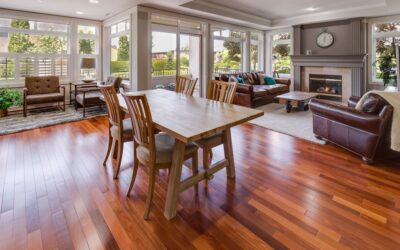
Unfinished oak flooring gives you something that no prefinished product can: complete control over the final look of your hardwood floors. You choose the stain color, the sheen level, and the finish type. The result is a seamless floor with no micro-beveled edges between planks and a custom appearance that matches your exact vision.
This approach does require more time, more skill, and more planning than installing prefinished boards. But for homeowners who want the most beautiful hardwood floors possible, unfinished oak remains the gold standard. Here is everything you need to know before committing to this route.
- Why Choose Unfinished Oak Over Prefinished
- Red Oak vs. White Oak: Which Unfinished Species to Choose
- Understanding Unfinished Oak Grades
- The Site-Finishing Process
- Finish Options for Unfinished Oak
- Plank Sizes and Layout Patterns
- Pricing for Unfinished Oak Flooring
- Maintenance and Long-Term Care
- Is Unfinished Oak Flooring Right for You?
Why Choose Unfinished Oak Over Prefinished
The debate between unfinished and prefinished hardwood comes down to priorities. Prefinished oak arrives ready to walk on immediately after installation. Unfinished oak requires sanding, staining, and finishing on site, adding days to the project timeline. So why would anyone choose the harder path?
Seamless Appearance
Prefinished boards have micro-beveled edges that create visible V-grooves between every plank. These grooves collect dirt over time and break up the visual flow of the floor. Unfinished oak is sanded flat after installation, creating a perfectly smooth surface where one plank flows into the next without visible joints. The finish coats seal across the seams, producing a monolithic look that prefinished flooring simply cannot replicate.
Unlimited Color Options
Prefinished flooring limits you to the manufacturer’s color palette. With unfinished oak, you can use any stain from any manufacturer, mix custom colors, or apply reactive stains like fumed ammonia treatments that create unique chemical reactions with the wood’s tannins. You can test samples directly on your actual planks to see exactly how the final floor will look.
Matching Existing Floors
If you are adding hardwood flooring to connect with existing rooms, unfinished oak can be stained to match your current floors perfectly. This is nearly impossible with prefinished products, where batch-to-batch color variation is common and matching an older floor is a matter of luck.
Superior Finish Durability
Site-applied finishes cure as a continuous film across the entire floor surface. Factory finishes only coat individual boards. This means site-finished floors have better moisture protection at the seams and a more uniform wear pattern over time.
Red Oak vs. White Oak: Which Unfinished Species to Choose
Oak is the most popular hardwood flooring species in North America, and both red oak and white oak are available in unfinished form. The differences between them affect appearance, performance, and staining behavior.
Red Oak
Red oak has a Janka hardness rating of 1,290, making it adequately durable for residential use. Its grain pattern is prominent with large, open pores and a warm pinkish-brown base color. Red oak accepts stain well but tends to show a reddish undertone even under darker stains. It is the more affordable of the two species and remains the most commonly installed hardwood in American homes.
White Oak
White oak scores 1,360 on the Janka scale, making it slightly harder than red oak. Its grain is tighter and more uniform, with a golden-brown base color and less prominent pore structure. White oak takes stain more evenly than red oak and does not exhibit the pinkish undertone. It is also naturally more water-resistant due to tyloses that block the wood’s pores, making it suitable for kitchens and bathrooms when properly finished.
The Modern Preference
White oak has dominated the hardwood market since the mid-2010s, driven by the popularity of European-inspired interiors and gray-toned stains. Gray and cool-toned stains look cleaner on white oak because the warm red undertones of red oak fight against cool colors. If you want a trendy gray, weathered, or fumed look, white oak is the better canvas.
Understanding Unfinished Oak Grades
Unfinished oak is sold in grades that describe the visual character of the wood. Higher grades have more uniform appearance, while lower grades show more natural variation. No grade is structurally better than another; the differences are purely aesthetic.
Select and Better (First Grade)
This is the highest grade available. Boards are relatively uniform in color with minimal knots, mineral streaks, and sapwood. The grain pattern is consistent and clean. Select grade costs the most and is preferred for formal spaces where a refined look is desired.
Number 1 Common (Standard Grade)
Number 1 Common includes moderate color variation, small knots, and some mineral streaking. It offers a natural, lived-in character while still maintaining a clean overall appearance. This is the most popular grade for residential installations because it balances character with affordability.
Number 2 Common (Rustic Grade)
Number 2 Common features significant color variation, larger knots, worm holes, and more pronounced mineral streaks. It creates a rustic, farmhouse-style look that has become increasingly popular. This grade is the most affordable and offers the most visual interest.
Character or Cabin Grade
Some suppliers offer character or cabin grade, which includes boards that fall below Number 2 Common standards. These boards may have large knots, cracks, and significant defects that need to be filled during finishing. The result is a highly textured, reclaimed-wood appearance at the lowest price point.
The Site-Finishing Process
Site-finishing unfinished oak is a multi-step process that typically takes 3 to 5 days after installation, depending on the number of finish coats and drying conditions. Understanding each step helps you set realistic expectations for timeline and disruption.
Step 1: Installation
Unfinished oak is nailed or stapled to a plywood or solid wood subfloor using a pneumatic flooring nailer. Boards must acclimate to the room’s temperature and humidity for at least 3 to 5 days before installation. The installer leaves a small expansion gap around the perimeter, which will be covered by baseboards.
Step 2: Sanding
After installation, the floor is sanded in three passes using progressively finer grits. The first pass with 36 or 40-grit paper removes major imperfections and levels the floor. The second pass with 60 or 80-grit smooths the surface. The final pass with 100 or 120-grit creates the smooth foundation for staining. A professional sander also edges the perimeter where the drum sander cannot reach.
Step 3: Staining (Optional)
If you want a natural look, you can skip staining and go directly to finish coats. For colored floors, stain is applied by hand with a brush, roller, or T-bar applicator. The stain is allowed to penetrate for a specified time, then excess is wiped away. Multiple stain coats can deepen the color, and techniques like water-popping (wetting the wood before staining) help achieve more even absorption.
Step 4: Finish Coats
Most floors receive 3 coats of polyurethane. Water-based polyurethane dries clear and does not yellow over time, while oil-based polyurethane adds a warm amber tone that deepens with age. Between coats, the floor is lightly abraded with a buffer to promote adhesion. Each coat needs 2 to 4 hours to dry before the next coat, and the floor should not receive heavy traffic for at least 48 to 72 hours after the final coat.
Finish Options for Unfinished Oak
Water-Based Polyurethane
Water-based poly is the most popular choice in 2026. It dries quickly, has low odor, and maintains the wood’s natural color without yellowing. Premium water-based finishes like Bona Traffic HD and Loba Supra offer commercial-grade durability with a crystal-clear appearance. Available in matte, satin, semi-gloss, and gloss sheens.
Oil-Based Polyurethane
Oil-based poly adds warmth and depth to oak’s natural grain. It takes longer to dry (8 to 12 hours between coats) and has stronger fumes during application, but many homeowners prefer the richer, more traditional look it produces. Oil-based finishes tend to be slightly more durable than water-based options in terms of scratch resistance.
Hardwax Oil
Hardwax oils like Rubio Monocoat and Osmo Polyx penetrate the wood rather than forming a film on top. They produce a natural, matte appearance with a soft, tactile feel. Maintenance is easier because scratches and wear can be spot-repaired without refinishing the entire floor. However, hardwax oil finishes are less resistant to water and require more frequent maintenance than polyurethane.
Conversion Varnish (Swedish Finish)
Conversion varnish is the most durable option, forming an extremely hard film that resists scratches, chemicals, and wear. It is primarily used in commercial applications and high-traffic residential areas. The application requires professional equipment and proper ventilation due to strong chemical fumes.
Plank Sizes and Layout Patterns
Unfinished oak is available in a variety of widths and lengths. Standard strip flooring comes in 2.25-inch widths, which creates a traditional look. Plank widths of 3.25, 4, and 5 inches are common for a more modern appearance. Wide planks of 6 inches and above are available but typically cost more and may require engineered wood construction for stability.
Random-length bundles are standard, with boards ranging from 1 to 8 feet long. Longer average lengths create a more premium appearance with fewer end joints. Some suppliers offer specific length assortments for buyers who want to control the layout pattern.
Pricing for Unfinished Oak Flooring
Material costs for unfinished oak depend on species, grade, and plank dimensions. Red oak runs $3.00 to $6.00 per square foot for the material alone. White oak costs $4.00 to $8.00 per square foot. Select grade adds a 30 to 50 percent premium over Number 1 Common, while Number 2 Common runs 10 to 20 percent less.
Installation and finishing add significant labor costs. Professional installation runs $3.00 to $5.00 per square foot. Sanding and finishing adds another $3.00 to $5.00 per square foot. Including materials, installation, and finishing, expect to pay $9.00 to $18.00 per square foot for a complete unfinished oak floor project.
Maintenance and Long-Term Care
Once finished, unfinished oak floors are maintained the same way as any hardwood floor. Regular sweeping or vacuuming prevents grit from scratching the finish. Damp mopping with a hardwood-specific cleaner keeps the surface clean without damaging the finish.
The major advantage of site-finished oak is refinishing potential. Solid 3/4-inch unfinished oak can be sanded and refinished 5 to 7 times over its lifetime, which translates to 50 to 100 years of service with proper care. Each refinishing allows you to change the stain color and update the floor’s appearance completely.
Is Unfinished Oak Flooring Right for You?
Unfinished oak flooring is the best choice if you want a seamless appearance, custom color matching, or plan to connect new floors with existing hardwood. It is also ideal for anyone who values the ability to change their floor’s appearance through future refinishing.
The tradeoffs are real, though. You will live with dust, fumes, and an unusable room for several days during the finishing process. The total cost is higher than prefinished alternatives. And the quality of the final product depends heavily on the skill of your finishing contractor.
If those tradeoffs are acceptable, unfinished oak delivers the most beautiful, most customizable, and longest-lasting hardwood floor available. It is the choice of professional designers and discerning homeowners for good reason.
Prefer to explore on your own?
See how new flooring looks in your actual room in seconds — free, no signup.
Try the free Floor Studio →