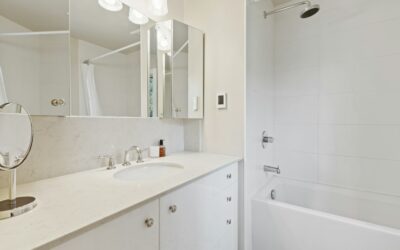
The height of your bathroom vanity affects your back, your kids, and your daily comfort far more than most people realize until they live with the wrong one. Choosing the right vanity counter height comes down to a clear decision between two main standards: the traditional 32-inch height and the taller comfort height around 36 inches. Neither is universally better; the right choice depends on who uses the bathroom and how. Get it right and the vanity feels effortless every morning. Get it wrong and you spend years either stooping over a low counter or lifting small children to reach a tall one.
Part of our Bathroom Remodeling & Flooring guide — explore the full guide →
The Two Standard Vanity Heights
Bathroom vanities generally come in two height categories, and understanding the difference is the foundation of a good choice.
- Standard height: roughly 30 to 32 inches from floor to countertop, the traditional bathroom vanity height for generations
- Comfort height (also called counter height or vanity-plus): around 34 to 36 inches, matching standard kitchen counters
The 36-inch comfort height earned its name because, for most adults, it requires less bending at the sink. It is the same height as a kitchen counter, which already suits the average adult well for tasks done standing.
Why Comfort Height Has Become Popular
Comfort-height vanities at 36 inches have surged in popularity in remodels and new homes, and the reason is ergonomic. The standard 32-inch height dates back to an era of shorter average stature and smaller bathrooms. For a typical adult today, leaning over a 32-inch sink to wash a face or brush teeth means bending the back noticeably. Raising the counter to 36 inches reduces that stoop, which is easier on the back and more comfortable for tall users especially.
Comfort height also tends to read as more current and upscale, partly because it matches the kitchen-counter height people are used to and partly because taller vanities pair well with vessel and undermount sink styles common in modern design.
When Standard Height Still Makes Sense
Despite the trend, the 32-inch standard height remains the better choice in several situations, and it should not be dismissed:
- Children’s bathrooms: a lower counter lets kids reach the sink without a constant step stool
- Shorter household members: a 36-inch counter can feel too high for petite users
- Vessel sinks: because a vessel sink sits on top of the counter, it adds several inches; on a 36-inch base it can become uncomfortably high, so a standard base often works better
- Seated use: a makeup or accessibility seating area at the vanity needs a lower surface for comfortable use while sitting
The vessel sink point trips up a lot of homeowners. Always factor the sink type into the final usable height, not just the cabinet.
Factoring in the Sink Type
The counter height is only part of the equation, because the sink determines the actual height of the basin you use. Three common configurations behave differently:
- Undermount sinks sit below the counter, so the usable height matches the counter height closely
- Drop-in sinks sit roughly flush with the counter, also tracking the counter height
- Vessel sinks sit entirely above the counter, adding 4 to 6 inches to the effective height
If you love the look of a vessel sink, plan on a lower cabinet, often closer to standard height or even a custom lower base, so the basin rim lands at a comfortable level. Pair a tall comfort-height base with a vessel sink and you can end up reaching up to wash your hands.
How to Choose the Right Height for Your Home
The best way to decide is to test it. Measure your kitchen counter, which is typically 36 inches, and notice how it feels when you lean over the sink. If it feels comfortable, comfort height will likely suit your bathroom too. If you find yourself wishing it were lower, lean toward standard height. Consider the primary users: a primary bathroom for tall adults is a strong candidate for 36 inches, while a shared kids’ bath leans toward 32 inches.
A practical compromise in homes with mixed needs is to use comfort height in the primary bathroom and standard height in the children’s or guest bath. There is no rule that every vanity in the house must match.
Accessibility and Aging in Place
Height also intersects with accessibility, and it is worth thinking ahead if you plan to stay in the home long-term. Comfort-height vanities at 36 inches reduce bending, which is easier on the back and knees as people age. For a wheelchair-accessible vanity, the calculation flips entirely: ADA guidelines call for a counter no higher than 34 inches with knee clearance underneath, so a person can roll up and use the sink while seated. If universal design is a goal, plan the height and the open knee space together rather than treating accessibility as an afterthought.
For most homeowners not building to a strict accessibility standard, the takeaway is simply that a slightly taller counter tends to serve a wider range of ages and abilities comfortably, as long as it is not so tall that shorter or seated users struggle.
Coordinating Mirror and Faucet Placement
Counter height affects the elements around it, so plan them together. A taller vanity raises the faucet and the natural mirror position. Center the mirror at a comfortable eye level for the main users, generally with the bottom edge a few inches above the backsplash. Wall sconces flanking the mirror should sit around eye level, roughly 60 to 66 inches from the floor, adjusted slightly for a taller counter. Faucet reach and height should clear the sink comfortably without splashing.
Making the Final Decision
There is no single correct vanity counter height, only the one that fits the people using it. For most adult bathrooms, the 36-inch comfort height delivers a more ergonomic, modern result and is worth choosing when the household is average height or taller. The 32-inch standard remains the smart pick for children’s baths, shorter users, vessel sinks, and any vanity meant for seated use. Test the height against your kitchen counter, account for your sink type, and coordinate the mirror and lighting to match. Choose deliberately and your vanity will feel right every single day, which is exactly what good bathroom design should do.