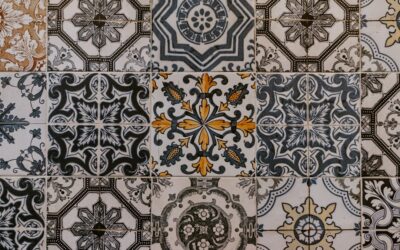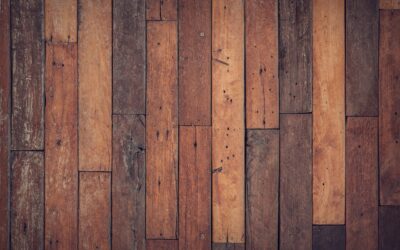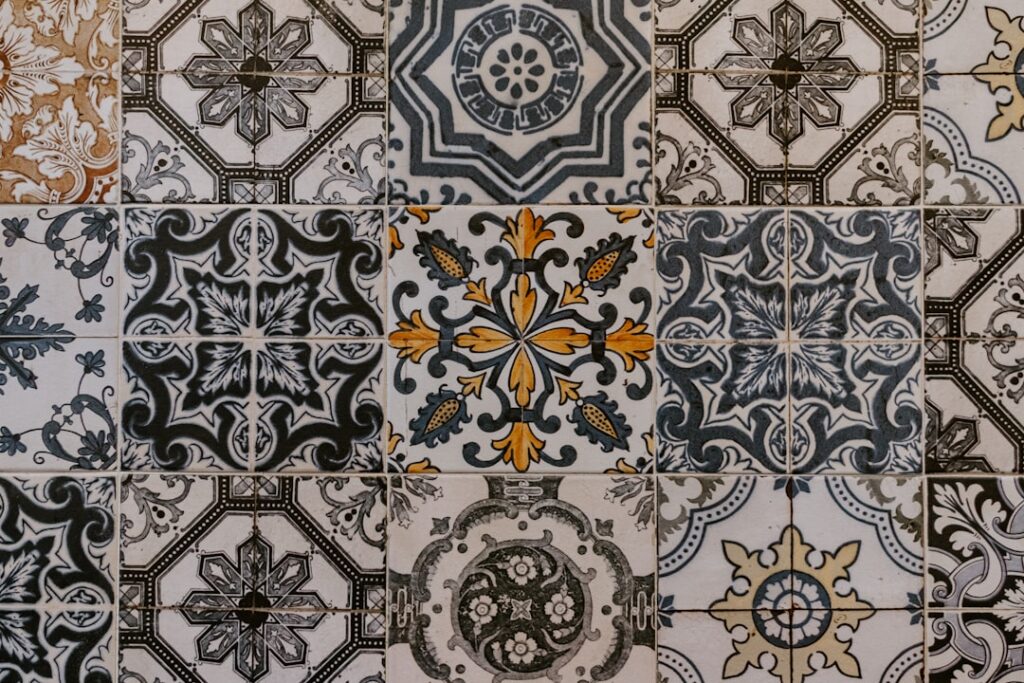
Genuine Victorian encaustic tile is stunning, expensive, brutally cold underfoot, and prone to cracking if your subfloor flexes. Victorian tile effect laminate flooring gives you the same intricate geometric patterns and rich heritage color palettes without the grout lines, the frigid surface, or the four-figure installation bill. High-definition printing reproduces the classic star, hexagon, and checkerboard motifs of 19th-century British hallways and porches, then seals them under a tough wear layer that clicks together like any modern laminate. It’s a clever way to add serious character to a room on a realistic budget.
Part of our Tile & Grout guide — explore the full guide →
- The Look: Heritage Patterns, Modern Convenience
- Where Victorian Tile Effect Laminate Shines
- Popular Pattern Styles
- What It Costs
- Buying Checklist
- Installation Considerations
- Victorian Tile Laminate vs. Real Encaustic Tile
- Care and Longevity
- Design Pairings and Styling Tips
- Is It Right for Your Home?
The Look: Heritage Patterns, Modern Convenience
Victorian tile designs are all about geometry and symmetry. The originals used unglazed clay tiles in contrasting colors laid into repeating patterns — think black-and-white diamonds, terracotta-and-cream borders, and busy multicolored medallions. Tile effect laminate captures these motifs plank by plank, so the pattern assembles as you install, no individual tiles or grout required.
The best products print in high resolution with a matte, slightly textured finish that mimics the chalky surface of real encaustic tile. Cheaper versions look glossy and flat, which reads as fake. Look for muted, slightly aged colors rather than bright primaries; authentic Victorian tile has a softened, historic palette that laminate should echo.
Where Victorian Tile Effect Laminate Shines
This flooring earns its keep in spaces where you want a design statement but need practicality.
- Entryways and hallways — the traditional home for Victorian tile, and the biggest visual payoff
- Downstairs powder rooms — pattern adds drama to a small footprint
- Mudrooms and boot rooms — heritage looks that hide dirt between cleanings
- Kitchens and pantries — warmer and quieter underfoot than real tile
- Period-home renovations — restores character without the cost of authentic restoration
Because the pattern is busy, it works best as an accent zone rather than wall-to-wall through an entire open floor plan. A patterned entry that transitions to plain wood-look laminate in the living areas is a popular, balanced approach.
Popular Pattern Styles
When you shop, you’ll find a handful of recurring design families:
- Black and white geometric: The classic checkerboard or star pattern. Timeless and high-contrast.
- Terracotta and cream: Warmer, earthier, evoking country cottages and farmhouse porches.
- Blue and white encaustic: Softer, Mediterranean-influenced, popular in bathrooms.
- Multicolored medallion: Busy central motifs with decorative borders for maximum period drama.
- Faded vintage: Deliberately worn, muted patterns for a lived-in, reclaimed feel.
Order enough of a single dye lot to complete the room. Pattern laminates rely on precise color repeats, and mixing batches can throw off the alignment and shading.
What It Costs
Tile effect laminate sits in the same price range as wood-look laminate, driven by durability rather than the printed design:
- Budget (AC3, 7mm–8mm): $1.29 to $2.09 per sq ft
- Mid-grade (AC4, 8mm–10mm): $2.19 to $3.49 per sq ft
- Premium (AC5, water-resistant core, embossed): $3.59 to $5.90 per sq ft
A 60 sq ft hallway in a quality AC4 product runs about $130 to $210 in materials. Compare that to genuine Victorian-style encaustic tile at $8 to $20 per sq ft plus specialized installation, and the savings are dramatic. Add 10 to 12 percent for waste, since pattern matching creates more offcuts than plain planks. Professional installation adds $2 to $5 per sq ft, though many patterns install fine as a DIY project.
Buying Checklist
Prioritize these specs so your statement floor also survives real traffic:
- AC4 rating minimum for hallways and entries, which see heavy foot traffic and grit
- Water-resistant or SPC core for bathrooms, mudrooms, and kitchens
- Matte, textured finish to mimic real encaustic and reduce slipperiness
- Square-edge or micro-bevel depending on whether you want seamless pattern flow or defined tile lines
- Realistic print resolution — inspect samples closely for crisp, non-pixelated pattern edges
Ask whether the design uses a repeating plank or a multi-plank pattern that requires specific sequencing. Multi-plank patterns look more authentic but demand careful layout planning.
Installation Considerations
Victorian tile effect laminate installs as a floating click-lock floor, but pattern alignment adds a step ordinary planks don’t. Dry-lay a section first to understand how the design repeats and where borders fall. Center the pattern in the room or align it to the main sightline from the front door for the most polished result.
Acclimate the boxes for 48 hours, use a quality underlayment with a moisture barrier over concrete, and leave a 1/4-inch expansion gap at every wall. Because entries and bathrooms are prone to moisture, seal the perimeter and any pipe penetrations with a laminate-safe silicone in wet areas. Number your boxes and follow the manufacturer’s sequencing diagram if the pattern requires it.
Victorian Tile Laminate vs. Real Encaustic Tile
It’s worth being honest about the tradeoffs, because the two are genuinely different products. Real encaustic tile is a lifetime floor — the pattern runs through the body of the tile, so it can be sanded and resealed for a century. It’s also cold, hard, unforgiving on dropped dishes, and expensive to install correctly, requiring a rigid, crack-free base and skilled tile setting. Laminate reverses every one of those traits.
- Warmth: Laminate feels warmer underfoot; encaustic tile is cold without radiant heat
- Comfort: Laminate has slight give; tile is rock-hard on legs and dropped items
- Cost: Laminate runs a quarter to a third of installed encaustic tile
- Installation: Laminate floats and clicks; tile demands mortar, grout, and expertise
- Lifespan: Real tile can last a century; quality laminate lasts 15 to 25 years
If you’re restoring a listed historic home for the long haul, real tile may be worth it. For nearly everyone else — renters’ hallways, budget renovations, or anyone who wants the look without cold feet and a big bill — laminate is the sensible call.
Care and Longevity
Maintenance mirrors any laminate floor and is far easier than grouted tile. There’s no grout to scrub, seal, or watch discolor. Sweep or vacuum regularly, and damp-mop with a laminate-safe cleaner. Avoid vinegar, wax, and steam mops. In high-traffic entries, place a low-profile mat at the door to catch grit that would otherwise scratch the wear layer.
With an AC4 or AC5 rating and reasonable care, expect 15 to 25 years of service. That’s a long run for a floor that delivers the drama of Victorian tile without the cold feet, the cracking, or the cost.
Design Pairings and Styling Tips
A patterned floor is a strong statement, so keep the surrounding elements calmer. In a black-and-white geometric entry, pair the floor with plain white walls, a simple console, and a single bold light fixture; let the floor be the star. Terracotta-and-cream patterns love warm walls in cream, sage, or soft ochre and pair beautifully with natural wood furniture and rattan. Blue-and-white encaustic looks crisp against white beadboard in a bathroom or a farmhouse mudroom.
Border treatment matters too. Some homeowners run a plain dark laminate border around the patterned field to frame it like a rug, which looks especially sharp in square entryways and powder rooms. Wherever the patterned floor meets a plain floor in an adjoining room, use a clean threshold strip in a matching or complementary tone to make the transition look deliberate rather than accidental.
Is It Right for Your Home?
If you love period character but want warmth underfoot, easy installation, and a budget you can defend, Victorian tile effect laminate is a smart choice. Use it as an accent in entries, powder rooms, and mudrooms, choose a muted authentic palette with a matte finish, and don’t skimp below AC4. You’ll capture the soul of a 19th-century hallway with none of the headaches of the real thing.
Prefer to explore on your own?
See how new flooring looks in your actual room in seconds — free, no signup.
Try the free Floor Studio →