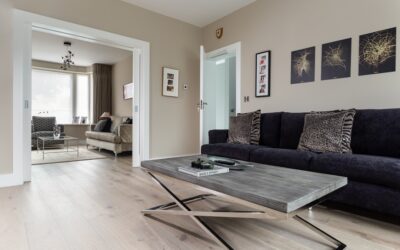
The easiest way to date a renovation is with brand-new flooring. A thoughtful vintage flooring choice does the opposite — it gives a new space the feel of a hundred years of history the moment you walk in. Whether you are restoring an 1890 farmhouse or trying to add character to a 2015 tract home, vintage and vintage-look floors can transform a room like no other single decision. The trade-offs are real: authentic reclaimed products cost more, behave differently, and require installers who know what they are doing. This guide covers what qualifies as vintage, where to source it, what to expect to pay, and how to tell the real thing from a modern imitation.
- What Qualifies as Vintage Flooring
- Reclaimed Wood Flooring: The Gold Standard
- Where to Source Authentic Reclaimed Wood
- Antique and Vintage-Look Tile
- Restoring Original Floors
- Pros of Going Vintage
- Cons and Honest Trade-Offs
- Vintage-Look Engineered Options
- Installation Considerations for Real Reclaimed
- Final Advice for Vintage Buyers
What Qualifies as Vintage Flooring
The term covers three distinct categories, and the price and performance differ significantly across them.
- Reclaimed (authentic vintage): Actual old wood, tile, or linoleum salvaged from deconstruction. Typically 75+ years old.
- Restored: Original flooring still in the home, sanded and refinished to showcase its age.
- Vintage-look (reproduction): Modern products designed to mimic antique styles — wide plank with chatter marks, encaustic cement tile reproductions, hand-scraped engineered hardwood.
Each has a place depending on budget, authenticity goals, and how much patience you have for sourcing and installation. Genuine reclaimed material takes months to source for a whole-house quantity; reproductions ship from a warehouse in three days.
Reclaimed Wood Flooring: The Gold Standard
Authentic reclaimed wood comes from old barns, mills, factories, and warehouses. Chestnut, heart pine, oak, and maple are the most common species, each with distinct grain, color, and marks that cannot be reproduced.
Expect $12 to $35 per sq ft for material alone, with premium antique heart pine or American chestnut pushing $40+. Installation adds $6 to $12 per sq ft because boards must be sorted, planed, and sometimes custom-milled before install. Total installed cost ranges from $20 to $50 per sq ft — roughly three to five times the cost of new hardwood.
The performance trade-off is real. Reclaimed boards may have nail holes, wormholes, and splits that need filling. Moisture content varies, so acclimation takes 2 to 4 weeks rather than the standard week. Finishes must be chosen carefully to preserve the patina — many owners apply only hard wax oil to keep the wood’s natural tone rather than a glossy urethane.
Where to Source Authentic Reclaimed Wood
A few established dealers handle most of the US market.
- Pioneer Millworks (New York): heart pine, oak, chestnut, since 1990
- TerraMai (Oregon): reclaimed from Asian and domestic industrial sources
- Carlisle Wide Plank Floors (New Hampshire): wide plank antique and new
- Elmwood Reclaimed Timber (Kansas): barn wood and antique boards
- E.T. Moore (Virginia): heart pine specialist with authentic antique stock
Local architectural salvage yards (Historic Houseparts, Second Use, ReStore) also carry floorboards, though quantities are limited. Buying locally saves on shipping but requires flexibility — you work with what they have.
Antique and Vintage-Look Tile
Real antique encaustic cement tile from early 1900s European and Moroccan sources runs $25 to $50 per sq ft when you can find it. Sourcing is limited to salvage dealers and specific European importers.
Modern reproductions solve the availability problem. Cement Tile Shop, Granada Tile, and Zia Tile sell handmade encaustic cement tiles in traditional patterns for $10 to $18 per sq ft. Installed cost runs $18 to $30 per sq ft because these tiles need sealing and careful installation. For a vintage look at a lower price, ceramic and porcelain reproductions of patterned cement tile start at $6 per sq ft from brands like Merola and Bedrosians.
Restoring Original Floors
If your home already has old hardwood, the best antique floor is the one you already own. A full sand and refinish runs $3 to $8 per sq ft and typically brings 50 to 80-year-old oak or pine back to life better than any new product.
The catch is wear layer. Solid hardwood can usually be sanded 3 to 5 times over its life, losing 1/16 inch per sanding. If previous owners have already refinished twice, you may be close to the top of the tongue-and-groove and a full replacement is your only option.
Pros of Going Vintage
Character is the obvious benefit, but several other advantages matter.
- Genuinely unique — no two reclaimed boards are identical
- Old-growth wood is denser and more stable than most new lumber
- Sustainability story is strong — reusing existing material avoids new harvest
- Adds resale value in historic homes and higher-end markets
- Patina deepens with age instead of wearing out
- Regional provenance — your heart pine may come from a specific town or era
Cons and Honest Trade-Offs
The downsides are enough to rule out reclaimed and antique floors for many households.
- Cost is 3 to 5 times new hardwood
- Long lead times — 8 to 16 weeks typical for full-house quantities
- Irregular dimensions require skilled installers who can adapt
- Some boards unusable after inspection; budget for 15 to 20% waste vs 7 to 10% for new
- Nail holes and splits need filling, adding labor hours
- Finish choices are more limited if you want to preserve patina
- Replacement boards decades from now may not match current stock
Vintage-Look Engineered Options
If the budget doesn’t allow true reclaimed, modern engineered hardwood with hand-scraped or wire-brushed finishes in vintage tones delivers 70% of the aesthetic at 20% of the cost. Brands like Provenza, Shaw Epic Plus Reclaimed Collection, and Hallmark Alta Vista offer wide-plank engineered products with chatter marks, saw marks, and variegated coloring inspired by antique sources.
Expect $6 to $12 per sq ft material, $9 to $18 installed. The product is not genuinely vintage but will pass the standing-room test in almost any home.
Installation Considerations for Real Reclaimed
Find an installer who has done reclaimed before and ask for references you can visit. Boards may vary in thickness by 1/8 inch or more, meaning each row gets planed or shimmed during install. Nails from previous installs need to be removed with care. Subfloor prep matters even more than with new wood because uneven boards telegraph subfloor defects.
Use a face-nail installation with rose-head or cut nails on planks over 6 inches wide. Blind-nailing alone on wide reclaimed boards can allow cupping over time. A good installer will know when to face-nail and when to glue-assist with urethane adhesive.
Final Advice for Vintage Buyers
Order a sample box from any dealer before committing to a full order. Authentic reclaimed varies significantly by lot — the photos on the website may not match what ships three months from now. For a real antique installation, visit the dealer’s yard if at all possible and hand-pick boards. Many of the best dealers welcome this and will set aside material for a weekend of selection. Budget 15 to 20% over your expected sq ft for waste, and plan on a 3 to 6-month timeline from order to finished installation. Done right, vintage flooring is the rare home improvement that appreciates in character as the years pass rather than simply wearing out.
Prefer to explore on your own?
See how new flooring looks in your actual room in seconds — free, no signup.
Try the free Floor Studio →