When a concrete step, driveway, or floor develops cracks and chips, a vinyl concrete patch is one of the easiest and most durable ways to fix it. This specialized patching compound bonds tightly to existing concrete and resists shrinking, cracking, and weather, making it a favorite for both indoor and outdoor repairs.
Unlike plain cement mixes, the vinyl additive gives the patch flexibility and strong adhesion, so repairs hold up under foot traffic, temperature swings, and moisture. This guide explains what the product is, where to use it, and how to apply it correctly for a lasting fix.
What Vinyl Concrete Patch Is
Vinyl concrete patch is a blend of fine sand, portland cement, and a vinyl resin additive. The vinyl component is the key ingredient: it improves bonding strength and adds a degree of flexibility that ordinary concrete patch lacks. That flexibility helps the repair resist cracking as the surrounding concrete expands and contracts.
The compound comes ready to mix with water in most cases, and it can be feathered to a thin edge or built up in layers for deeper damage. Because it adheres so well, it works on surfaces where a basic sand-and-cement mix would struggle to stick.
Where to Use It
- Hairline and moderate cracks in driveways, sidewalks, and patios.
- Chipped or spalled steps and stair edges.
- Small holes and gouges in concrete floors and garage slabs.
- Worn corners on curbs, thresholds, and slab edges.
- Surface defects before applying a coating or floor covering.
For very deep holes, large structural cracks, or areas where water actively flows, a different product such as a sand mix concrete or a hydraulic cement may be more appropriate. Vinyl patch excels at surface and shallow repairs rather than rebuilding large missing sections.
Tools and Materials You Will Need
Gather everything before you start so the patch does not begin setting while you hunt for tools. A typical repair calls for a basic, inexpensive set of supplies.
- Vinyl concrete patch compound
- Clean water and a mixing bucket
- A margin trowel or putty knife
- A wire brush and a stiff broom or shop vacuum
- A cold chisel and hammer for undercutting cracks
- Work gloves, safety glasses, and a dust mask
- A bonding agent if the manufacturer recommends one
How to Apply Vinyl Concrete Patch
Surface preparation is everything. A patch is only as good as the bond beneath it, so take time to clean and shape the damaged area before mixing anything.
- Remove loose debris, dust, and crumbling concrete with a wire brush, chisel, and vacuum.
- For cracks, widen and slightly undercut the opening so the patch keys into the concrete rather than sitting on top.
- Dampen the area with clean water if the product directions call for it, but leave no standing puddles.
- Mix the compound to the consistency specified on the package, usually like thick peanut butter or a smooth paste.
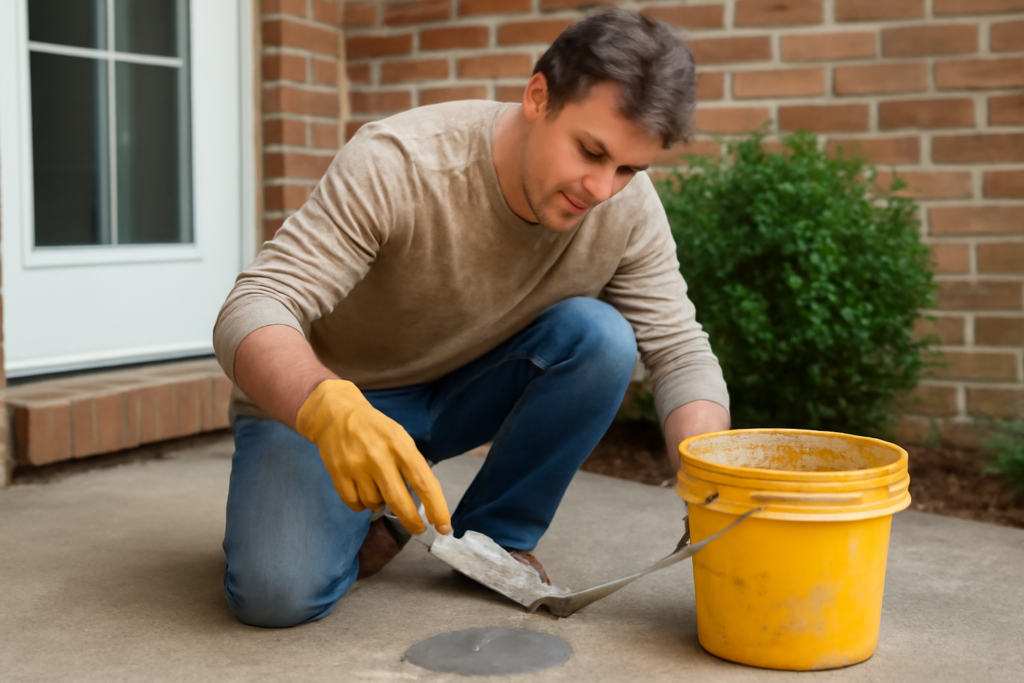
- Press the patch firmly into the repair with a trowel, filling completely and pushing out air pockets.
- Build deep repairs in layers, letting each layer set as directed before adding the next.
- Smooth and feather the surface to match the surrounding concrete, then finish the texture as desired.
Drying and Curing Time
Most vinyl concrete patches set firm within an hour or two, but full curing takes longer. As a general guideline, keep light foot traffic off the repair for at least a day and avoid heavy loads or vehicle traffic for several days, though exact times vary by product, thickness, and weather. Cooler temperatures and high humidity slow the process.
In hot, dry, or windy conditions, the patch can dry too fast and crack, so misting it lightly with water during the first day helps it cure properly. Always defer to the curing schedule printed on your specific product, since formulations differ between brands.
Safety and Smart Handling
Concrete patch is a cement-based product, and wet cement is caustic. Protect yourself throughout the job and treat the material with the same respect you would give any masonry product.
Wear gloves to keep the mix off your skin, since prolonged contact can cause burns, and put on safety glasses to guard against splashes. Mixing and removing old concrete creates fine dust, so a dust mask or respirator protects your lungs, and working in a ventilated area is wise indoors. Keep the product away from children and pets, wash any skin contact promptly, and follow the manufacturer’s safety directions on the package.
Tips for a Long-Lasting Repair
A few habits separate a patch that lasts years from one that pops out in a season. Always clean the surface thoroughly, because dust is the enemy of adhesion. Match the patch thickness to the product’s recommended range, building deep repairs in layers rather than one heavy pass that can crack or sag.
Time your work to moderate temperatures when possible, avoiding freezing conditions and the hottest part of the day. For exposed outdoor repairs, consider sealing the cured patch and surrounding concrete to slow water intrusion and freeze-thaw damage. Done with care, a vinyl concrete patch blends in well and holds firm.
Vinyl Patch Versus Other Repair Products
Knowing when to reach for vinyl concrete patch instead of another product saves you frustration. For thin, feathered repairs and surface defects, vinyl patch excels because it bonds well and can taper to a fine edge. For active leaks or water pushing through a crack, hydraulic cement is the better choice, since it expands and sets even underwater.
For deep holes or rebuilding a missing chunk of slab, a sand mix or concrete resurfacer designed for thicker application may serve better. Self-leveling compounds are the right tool for smoothing a large, uneven floor before a new covering. Matching the product to the job is half the battle, and vinyl patch is the go-to for the common, shallow cracks and chips most homeowners face.
When to Call a Professional
Vinyl concrete patch handles cosmetic and shallow structural surface repairs nicely, but it is not a cure for serious problems. Wide structural cracks, heaving slabs, sinking concrete, or damage caused by water under the slab point to underlying issues that a surface patch cannot solve.
If a crack keeps reopening, runs the full depth of the slab, or is accompanied by movement, consult a concrete contractor or structural professional. For ordinary chips, gouges, and modest cracks, though, a vinyl concrete patch is an affordable, durable fix most homeowners can complete in an afternoon.
Prefer to explore on your own?
See how new flooring looks in your actual room in seconds — free, no signup.
Try the free Floor Studio →